Category: Uncategorized

  • What Platforms Are You Familiar With? (Discussion Invite)

    Today I wanna know what platforms you’re familiar with.

    What Platforms Are You Familiar With?

    Major social media, Professional Tools, e-commerce tools, and cloud services.

    The Power Players: Which Social Media Platforms Actually Matter in 2026?

    Fresh off the end of a strong 1st quarter of 2026, it’s getting more clear what social media platforms are the ones that really matter. There’s 3 specifically that come to mind, and they’re Youtube, Facebook, and Instagram. If you learn to master even one of these platforms, it can be your introduction to a world that could be a really sanctuary for you digitally. Let’s discuss them a bit!

    The Power of Youtube – Sharing Your Stories Through Videos

    YouTube is one of the 3 platforms that I recommend because it’s such a powerful too to convert viewers into loyal subscribers! It does so through fostering emotional connections. There’s something that connects we consumers with one another when videos are introduced.

    Consider the fact that it also improves retention with your brand. There’s plenty of content that goes viral on digital platforms often, but it seems to stick when it buzzes on this platform in particular.

    It boosts engagement more effectively than facts alone because production takes precedence over evidence.

    Facebook: The Expansive Platform That Provides a Little of Everything

    I’m a little reluctant to admit, but Facebook might be the best platform to provide all the tools you would want in a singular space. I think of everything that’s considered an attractive feature with other platforms that are wildly more popular than this app, but it still delivers! You’re long-winded and prefer it that way? There’s no limits with text-based posts. Enjoy shortform content? They offer Reels too! The community group spaces are even more my speed personally.

    Instagram: The place that’s arguably the most mobile-friendly popular space

    Call it a shot in the dark if need be, but Instagram is a mobile tyrant when considering the way it’s designed. Something about it feels more welcoming of someone that prefers an app that they’ll typically use exclusively on mobile. Regardless on if you’re on that app with your phone or not, its a highly popular place that most media outlets reference for things they’re looking to experience. It started out as a still image friendly space and just continued to develop. It’s proving to continue it’s expansion to dominance even in this 2026 year.

    The Modern Creator’s Toolkit: Essential Tools for Getting Real Work Done

    When I was in junior high school, that was my first time being asked to work with computer programs to complete projects for a grade. This was first with bare minimum, yet agreed to be professional tools in Microsoft Word and Excel. It probably wasn’t enough demanded from this class to consider myself having sufficient training in these tools, but one program that stood out most for a project that had to be expected was Windows Movie Maker. Again, that being Junior High meant I was doing it at a mediocre level, but high school was the real game changer. And I don’t say this as someone who mentions it because the homework was tougher. My high school in particular had access to all the latest computers and programs to foster a truly professional environment.

    Your Digital Storefront Blueprint: Tools That Actually Convert

    E-commerce is the concept of a platform that specifically facilities the ability to be a merchant. What make it unique is that it allows you to conduct business without the need of having a physical storefront for support. There’s a chance you seen this before through the likes of eBay perhaps, or StockX maybe. Even a more popular merchant with Shopify. What you’re able to do though is sell items of any quality with these platforms. That could include new, Like New, and used status items. There’s people that go on to utilize these spaces to either generate some extra income or make a full time career out of it. Dropshipping without a doubt is one of the most popular methods of starting an online income.

    The Cloud Advantage: Why Everything Is Moving On

    The Cloud is a term least knowledgable about. It’s still worth observation when you consider how relevant it is in fictional culture and real life. It gets interesting to follow because it’s aligned with an agenda that reveals where tech society is leaning towards: less devices.

    You can see it getting more clear with the way some of the most essential technology is being remastered and built. I’ll throw a computer out for example. It’s gotten less bulky and needing less supporting gadgets to make it function. The transition to laptops might even support the concept even further.

    It’s easy to see what the benefits are with a cloud based program. There’s storage space that can be expanded or downsized if needed. I sometimes even forget that Cloud services are becoming so standard that they’re part of everyday operations without even being conscious of it. An example that’s a little more personal is one that goes back to around 2015. My college’s wrestling team was getting more digital in their approach with keeping track of progress. So what we would end up doing is record matches on our smart devices and paid for a Drobbox subscription. That way we would be able to access matches universally within the team. We could delete footage after recording and uploading to this cloud, and it led to one of our more successful seasons.

    1. Understanding the Concept of Platform Familiarity

    Platform familiarity is the act of understanding your workspace. It’s important to have this element to your career because it controls the ability to scale whatever campaign that is you’re looking to employ on the market/industry.

    This concept becomes clear for most internet personalities that we grow to love. Most of them start off in spaces as interns essentially and they go on to make their own platform. Some go on to prove that they really learned to make their time spent on those previous platforms serve them for a better future.

    We can apply this in other areas too. That becomes a factor in sports. For example, there’s real validity that’s given to people that believe in there being a such thing as home court advantage. Would you say that’s synonymous with platform familiarity? I’d say so.

    Familiarity impacts user experience and even productivity through confidence. There’s a confident nature in mankind that shows when someone is familiar with what they’re experiencing.

    2. Unveiling the Basic Components of a Platform

    Understanding the basic components of a platform is highly crucial with getting familiar with it. Let’s say you’re trying to get familiar with something that could host your intellectual property certainly and maybe even literally.

    We could look at something like what’s considered heavy hitters. That would be Social Media in this case. They’re all different in nature, but they still have commonalities that someone who isn’t loyal to one particular platform could learn from.

    What they have in common is that they require making accounts to access. That could be broken down. So you could say having an email account or phone number is a prerequisite. That’s less relevant than other things, but we can go in even liking features. That’s a method of interacting on these platforms to let other users know you appreciate what’s being created here.

    The functional aspect of platforms can range too. There’s some that are made with specific purposes in mind. Let’s tie it in with human senses. There might be a platform that’s designed to satisfy visual gratification and another could be for sound pleasures. The possibilities could be infinite in theory.

    You got the idea in mind but here’s where it gets more technical. Understanding the interfaces becomes important as well. If you’re not able to navigate these sections that you’re going to be spending time on, you’re not gonna get the full effect of whaybyhe platform could potentially offer you.

    That includes designs as well. If you’re not able to stand looking at the place you’re supposed to be spending a majority of your time on, it becomes counterproductive in many ways. That’s where things like color schemes play a role. Format designs. And everything else that contributes to a user’s experience.

    3. Exploring the Landscape of Popular Platforms

    The landscape of the space you’re going to be doing a majority of your existing on tells a lot. It communicates what’s in demand and where at mainly. It’s where doing temperature checks lets you know where your efforts are best spent at. Gaining synopsis’ on leading platforms becomes part of your business plan. Many believe that they’re held to a single industry when in reality there’s several. Whether they support directly or inadvertently, it becomes part of your business. If you choose to make this information priority it can even extend your life while on these platforms.

    Stats are something we care to follow with most things. Sports, business, entertainment. They help with adding context. Statistics that are generally welcomed and appreciated, regardless of what the platform is would usually be comprised of demographic data. Some of the important specifics usually fall under gender, age, and generations.

    That’s true with a bit of biased perspective as someone with a communication degree because having that specialized skillset becomes massively important in knowing who you’re talking to directly.

    Click here for a related video on social media stats and facts.

    Understanding trends and transformations that happen in the platforms you’re present on is another crucial point to your career. This is no different from getting a notification on your wifi friendly device. You get something that could potentially change your approach with how you conduct yourself and sometimes the way you interact with your audience.

    4. First Steps: Navigating User Interfaces Efficiently

    One of the first steps that you have to take towards platform familiarity is being able to navigate the interface that hosts your platform efficiently. This includes the buttons, icons, menus, bulletin boards, and anything that would be of importance for someone that plans on establishing a place in the platform provided.

    Since navigation is the trick here when making familiarity the goal with your platform, there’s some things you could do to make that easier for all involved.

    First is adding clarity through obvious visibility. Another is to avoid oversaturation. Next is to Keep memorability in mind. And Last is utilizing the benefit of categorization.

    What they all do is serve your purpose making to find information that’ll be provided by you.

    There’s some pitfalls that you could face that spawn in the form of trading practicality with visibility. That’s a mistake that’s most common with any platform. Especially when it’s hosted by a beginner. Most don’t think in terms of enhancing user experience in this way. It’s a small shift in management that could make a huge difference if actually employed.

    5. Customizing Your Experience: Personalization Options

    Customizing the experience for yourself becomes another way to bypass a hump that most people experience when it comes to getting familiar with the platform they’re operating on.

    Customizing for this benefit is a hack in a way because it’s tailored specifically for your experience and even if it’s to serve it’s purpose of adding value into other people’s lives, it has to be something that work’s for you first.

    There’s plenty of ways this concept can be made a lesson. There’s movies that come to mind, actual careers. Things along those lines that could help someone get the point here. To be something that helps this hit home a little more for someone, think of when someone puts their intitals on something that’s there’s while being on a team that has the same exact things. This form of customizing makes it easier to locate property as a member. Ultimately you save the hassle of having to go through other people’s things and can get straight to your rightful item.

    If we need to zoom out for our example and go to something a little more familiar (no pun intended) we can reference Myspace. In it’s early years it was and still can be considered an example for personalization on a famous place.

    6. Engaging with Platform Communities

    Engaging with platform communities is yet another method of getting familiar with the space you’re going to be inhabiting. It should always be seen as a resource tool. You have to truly understand what a community can do for the individuals.

    For many a community functions as a support system. You can expect to find healthy discussions on things that’ll help you understand what’s all tolerated and even expected on the platform.

    To let these things thrive, you have to plan on participating and contributing to the culture that makes up the platform. Effectively participating shows in leaving meaningful responses to moments that require them. It’ll show in going above and beyond. For me it’ll be through sharing things that supports the goals of everybody else in the group. That, and being as vocal about successes that everybody else could achieve as well.

    Community insights could also be something that’s leveraged for you as the platform member because it’ll host everybody inside the space. They’re all gonna be in different walks of life and that could make all the difference in what that experience will be for you as someone looking to get familiar with the platform.

    7. Safe and Secure Usage: Privacy Best Practices

    Being aligned with what the Safe and secure practices are with The platform you’re trying to get familiar with is another way to feel welcomed and have that sense of understanding with them.

    For many that are just looking to get started out with what this is, it’s typically found in the privacy settings. And their policies as a platform in general.

    Any platform that’s legit will usually have this type of information available.

    What it does will give you all the rules (for lack of a better term) with learning what your boundaries are in the space that you’re operating in.

    Most of them have rules and in order to succeed, you 1st have to be aware of what the limits are 
Within your group.

    That includes taking the necessary steps to safeguard your digital footprint.

    That can be in the form of trademarking your work, or even following copyright rules if need be. 
Things along those lines.

    The consequences of neglecting these security protocols can be tremendous. There’s been cases where people have gotten sued because they didn’t follow guidelines that were made clear. Another consequence is Even seeing jail time, sometimes. There’s times where violating certain policies get considered to be irreparable damage. That’s easily considered a devastating blow, and can be incredibly tough to come back from.

    8. Troubleshooting Common Platform Challenges

    Another way to get familiar with the platform that you’re looking to be established on is getting familiar with troubleshooting. Most platforms still have bugs and challenges that come with using them. You don’t want to be someone that just experiences it and not say anything. You have to look to embrace what these challenges are and find creative ways of getting past them. Being familiar with this aspect of the platform, makes it much easier to handle.

    Your troubleshooting happens usually with identifying the common challenges and solutions. So this would include more of your Q and A’s and FAQs that most people would ask.

    If you get in tune with what the problems are, You eventually become the solution the longer you stay and continue to add value on the platform.

    You will have resources for getting help and advice through different mediums that are sometimes provided by the platform owner themselves.

    And on the other side, you might also even be the resource tool. Understanding that becomes incredible too, because at that point, It will be a challenge for you to grow personally. And ultimately it leads to finding a way to properly Support the audience that you’re looking to serve. That’s whether you’re hosting the platform or just being a member of it.

    Looking to be resourceful, ends up being a skill that pays off tremendously. Resourcefulness can happen with the customer support team. 
Most of these platforms will supply some form of customer support that will answer tickets and any type of invoices or inquiries that someone who is a member or even a prospect, can speak with. They’re typically the most knowledgeable people.

    And to be Someone that can consistently communicate with them and work with them to have them serve you ends up being something that helps everybody else out too That’s part of it. That’s Because there’s a good chance that what it is you are going through is also something that someone else is experiencing. You can leverage it through being honest about what your experience was with dealing with someone that was trying to assist you with getting over any challenges that the platform was giving you at first.

    9. Realizing the Full Potential: Advanced Features and Integrations

    Last is mentioning that realizing the full potential of the platform that you’re hosting on becomes a valuable introduction to where the rest of your life could go.

    This includes exploring the advanced tools and functions offered on the platform itself. You’re finding the things that separate you from potential competitors. When you understand what makes your space so special, it adds an edge that not many can duplicate.

    You’re eventually gonna get to where you find creative ways to integrate your capabilities onto other platforms as well. From there your efforts compound and a snowball effect occurs.

  • How I See EQ Heat Evolving In The Future

    How I See EQ Heat Evolving In The Future

    Today I’ll be sharing how I see EQ Heat evolving in the future.

    1. Redefining Collaborative Opportunities: EQ Heat as a Hub for Artists

    EQ Heat is transforming into a go-to platform for recording artists looking to collaborate.

    I see it being something close to a servicing spot that can connect recording artists looking to work. I’ve seen countless accounts on the likes of social sites such as Threads with people looking to connect with rappers, singers, musicians, and similar artists. They appear to get engagement that’s worth checking out too! Not to mention I’ve even gotten a few accounts that commented under a few posts of mine claiming they’ve heard some of my work already. Again, I haven’t put too much weight on social media since a majority of my focus has been on this site, but I see it being something that gets more attention from me moving forward. started off with creating a feature booking page

    2. Bridging the Gap: Facilitating Remote Creative Teams

    I may be looking a bit farther than what’s considered realistic, but I absolutely see expanding EQ Heat’s capabilities to support remote teams for content creation being an option. There’s so many directions I’m trying to take this place. With that means I’m also trying to acquire more manpower to assist with all the ideas I have. I’ve had others with other brands that I attempted to launch not work out. Whether it was not what the people I started with have it play out how they thought it would, or something I could’ve done differently. It didn’t work. However, this is one of my better creations, and the hype is starting to get much more real. So I could see this site working out to where more people will legitimately want to join the team, no matter where things are at once the announcement’s made. Regardless, expansion is the plan. That’s actually why I also wanna emphasize that the opportunity will be more universal in allowing it to be remote work. My knowledge and tools with working digitally feels well enough to facilitate such a possibility.

    3. Prioritizing Music Theory and Artistic Discussions

    I take pride in EQ Heat not being a brand that feeds into gimmicks and such to establish relevance. There’s been a few articles that’s been shared already which I feel make things appear a little more all-over-the-place than I’d like them to be, but that was somewhat expected at the beginning stages of this production. The most controversial I feel up to this point was being critical of Justin Bieber and his performance at Coachella. There wasn’t anything disrespectful about it, but I do feel we can take things much closer to music itself and explore my knowledge more about musical concepts. That’s actually the spark I’m sure is gonna help take things closer towards practical lessons that ages universally can learn from and modify their own approach if they find things relevant to what they’re going through in music.

    4. More than Music: Events and Merchandise through EQ Heat

    Is it possible to go deeper than the music? I guess we’ll find out. If “yes“ can be a definite answer. I see it happening with more merchandise being available. There’s some cool concepts that I’d like to employ for EQ Heat in the form of more things than just T-Shirts. Ideally it could be hoodies, maybe sweatpants, shorts, muscle tees, even socks. There’s plenty more I’m missing, but it’s only a start, even with all that.

    Live Events

    I don’t have full clarity on how I see this playing out, but to have EQ Heat present as a rep would be pretty cool. It would probably have to much further down the line because I mainly see it being possible with self promotion of a musical concert or something to that effect. The possibility seems fun to fantasize about, but as we continue to grow on here, it’ll seem ever more realistic I’m sure. But we’ll see where it goes.

    Final Thoughts

    Let’s explore my points again. I see EQ Heat being a platform with more collaborations possibly being hosted. Again, that’s probably gonna happen more through the likes of affiliate sponsors. I see that being most likely, but something even better could happen too. Creative Teams that’s available to collab remotely is another direction I see things being able to get taken to. There’s so much technology and hungry people that’s looking to get after a promising career in music. I truly see this platform being able to make that possible eventually. With that I also plan on more things relating to music theory in general to be discussed. I’m a student of music for the most part and see it being something that could be discussed as I continue creating things sonically. And of course more Brand Merch and Events!

  • Personal, Goal-Focused Partnerships Maintain Productivity, and Ethics That Allow Artists to Answer for Their Public behavior, harmful actions, and community impact

    Women closest to me would agree with this take. That’s just to get any possible validation that someone would think I need. But artistry is what I’m actively involved in so I may come across as biased. However you view me, I’ll be on the side of artists needing to be more accountable when it comes to the influence that gets exercised globally.

    All of Your Goals Are Personal

    All of your goals should be viewed as an extension of your values, interests, and passions. Far too many fall trap to creating them to meet other people’s expectations.

    There’s a co-dependent relationship that artists, fans, and the industry have to satisfy.

    You as the artist are already at a disadvantage when you take into account the amount of leverage that’s present for an artist. What I’m saying more artists need to do is lead with the things that intrinsically make them different from one artist compared to the next.

    Having that belief serve as a framework helps you move forward with every goal feeling personal to you. The partnerships that you seek out on the way to the top become uniquely personal with each one being built. Having this edge makes life an everyday journey that you’re always looking forward to.

    There’s not too many things you should take personally in life, but your goals are without a doubt one of them as an artist. Understanding they’re personal puts you in another league. (more…)

  • Why Would Someone Use Proton Mail? (Explained)

    Let’s discuss why someone would use Proton Mail. Now somebody somewhere is scratching their head at this asking “what does a mail service have to do with music?”. I’ll say that they’re likely new to musical theory in general, so focus up because it’s probably a lesson you’re gonna need the most.

    Why Someone Would Use Proton Mail

    The standard reasons why someone would use Proton Mail is because it’s supposed to provide enhanced privacy and security. From my experience, it was offered with having a business plan with a WordPress account. There’s a professional image that adds to the perception of a brand and/or individual. And it becomes even more attractive in being known to be universally accessible.

    Enhancing Privacy and Security

    An enhanced sense of privacy and security is a desired value for most.

    Security is something that we’re all taught to value whether it’s directly or indirectly.

    I personally cherish privacy over the other although they’re both very important to have at some point of your life.

    I realized that I wanted security for my group when I finally was aware of the teams I would become part of. Whether that’s in sports, being part of daycares, having classmates, or anything else related to those groups, seeing myself as a team player at the time revealed what was priority for everybody collectively.

    It worked out for me and everybody else because that was the best thing that could benefit the whole community. Didn’t matter if we knew each other well or not.

    Present a more Professional Image

    Presenting a more professional image wouldn’t hurt anyone.

    There’s a benefit in making this priority for any organization. For starters it creates a confident persona that benefits both the leader of the operation and I’m all too familiar with when it helps build confidence in prospects that end up becoming customers.

    Presence can make a world of a difference when focusing on trying to elevate your status. What something as simple as a (domain specific) email does is project a certain level of professionalism that should be the goal for any serious business.

    It’s more than focusing on your body language or posture here. All of that helps, but surprisingly enough, a majority of your professional appearance is actually through what you say! Add in the fact that tons of business is conducted online, and suddenly that becomes the reality for a large portion of the world.

    You can count on having this advantage to be able to deliver in providing a consistent form of communication. There’s a large amount of even professionals that prefer to communicate through DMs on social media and things like that, but there’s nothing like having a traditional route that helps you stand out among the crowd (which is the case in this new era of business being sculpted).

  • What Makes a Line Quotable or Replay-Worthy? (Answered)

    Today we’re gonna discuss what makes a line quotable and even replay worthy.

    Making Lines Quotable and Note-Worthy

    This can be approached from a consumer and creator perspective. Let’s say you have a favorite bar in a song or scene in a movie.  Solidifying them can happen several ways. A specific can be social media platforms that reward captions. Consider trying compilations too! Take a look at the replay feature on your favorite media device, and if you can picture pressing replay on the moment in question, there’s value within it without a doubt. Even following awards shows that honor things with dialogue worth remembering is an option.

    Mirroring successful captions on social sites

    Captions are amazing tell tale signs of what’s valued on the platforms they’re displayed on. I can personally confirm how much of a deal this was for my peers when I would have to see them everyday and social media played a role in our experience outside of school. The amount of focus that would be placed on having a clever caption was astounding! It would get tricky when there would be so many people that didn’t want to copy the same lines shared under the pictures they take.

    Compilations were only made for the best

    Compilations for inspiration are another method that could be utilized. If you’re trying to make one of your own, take notes on what earns high view amounts and exercise a little empathy in challenging yourself to figure out what made the person who created it choose the parts that made the cut.

    Getting reflective on the replay button

    It might sound funny, but think about what pressing the replay button really means. Specifically it would apply to music, so humor me. When you consciously select replay on whether it’s a single or album (even playlist), there’s something there. You’re enjoying something that you’re hearing. It’s a bit of a reach when we assume that it’s lyrics because it could be a melody that you’re appreciating, but this is inspired from my writing raps and storytelling series anyway, so it’s safe to assume in this case. Let’s put a spin on it though and assume you listen to smooth jazz or something without lyrics. That moment can be memorable and make the cut with a Reel or YouTube Short, so since they ideally loop in a way that has value every time it’s played again, maybe you have an ear for the section of a lyric less song and recognize the rift being popular. That small section that can be looped is now proving to hold true value!

  • When should a punchline be simple vs. layered and complex?

    When should a punchline be simple vs. layered and complex?

    Let’s discuss how punchlines should be handled.

    When Punchlines Should Be Simple, Complex, and Layered

    Punchlines should match the rhythm of the song’s beat. Same as with syllables, and how development works with learning words. The goal should be to match your existing materials. Whatever work is being offset should eventually get matched with your lyrics in this case.

    Matching the rhythm of a song with your lyrics

    Matching the rhythm of a song with your lyrics determines the punchlines that end up making the cut with the songs made. It might not be the most popular answer, but some regions have overtly simpler ways to speak. That influences how simple and even complex we perceive lyrics to be.

    Personal Thoughts

    If you think about how there’s beat switches and different nuances in the song you’re working with, there’s opportunity in that. It’s giving you a chance to explore new flows. You’re gonna find that most of what is shared knowledge wise is merely an opinion when discussing how intelligent it sounds or not. That same notion should be applied to deciding simple, complex, and layered punchlines. You can’t get in your own way when composing because you’re not 100% sure that your audience is tuned in to where you’re at intellectually. That should be why you’re choosing to share eventually. That’s me sharing my line of thought artistically.

  • What Role Does Timing Play In Delivering A Memorable Line?

    What Role Does Timing Play In Delivering A Memorable Line?

    Let’s discuss what role timing plays in delivering a memorable line. It’s something that’s not always focused on when it comes to rap, but it’s commonly refined with the greats of the genre.

    The Role Timing Plays In Delivering Memorable Lines

    Timing plays a large role in delivering memorable lines. Start with appreciating effective live performances. If you learn to find more things you like and pay special attention to any lyrics that are emphasized, it reveals what parts resonates best with the majority. Doing that can even assist with composing original lyrics yourself and build up a creation goal of making memorable lines in your music.

    Appreciating more live performances

    Live performances in many ways are very telling when it comes to timing of memorable lines. Thinking of some of the best ones will reveal what songs are picked, when transitions happen on set, what snippets get shared, and even what parts of the lyrics make the cut.

    Check out a festival and try to get in tune with how important time schedules are.

    It takes strategy on behalf of an entire team just to execute a successful performance.

    Focusing on the lyrics more happens naturally because in many cases, the artists don’t have a chance to perform the entire song, so they end up picking the most memorable moments of the song to impact the crowd best.

    Areas of Songs that fans appreciate most: The Storytelling

    Most songs that have lyrics people appreciate. It could easily be argued that it’s because of the stories they tell. We’ve mentioned before how storytelling is a critical component of rap in general. There’s a beginning, middle, and end. Depending on your strong point, you could make a name for yourself with specializing in strongly telling stories in a certain area.

    You’re gonna have surface level fans that appreciate the basics of your lyrics. That could be the bars, we could say. But being able to tell a story is easily considered an honor that’s championed among the more serious fanatics of the craft.

    Think of your favorite movie. It probably has an iconic scene that you remember: you have to see these moments as highlights that usually have more meaning than just what the moment is. Remember this: we the people determine the value of a moment. The chaos in it when applied to song lyrics is that there’s probably less people that can agree on what’s a profound message from the artist that wrote it.

    But picking the lyrics you like most from your work plays a role in the timing aspect of selection. This explains anticipation from an emotional lens, in where you expect certain parts because of what they deliver in the feelings department.

    Creating Original Lyrics

    Creating original lyrics becomes the byproduct of combining the original 2 points when you’re timing memorable moment. This is the case because of a belief I have in that people who create their own original work has a more emotional tie in with what’s created. Stick with me here, if you know the quality of your work and have a true understanding of what it took to create it, that makes executing it and revisiting the content performance more methodical. If you made it, you’re going to know when the moment is appropriate to execute whatever the line is, adding a dramatic effect, and anything else that enhances the quality of the performance.

  • What Actually Makes A Punchline Hit Hard Instead Of Feeling Predictable?

    What Actually Makes A Punchline Hit Hard Instead Of Feeling Predictable?

    Great comedy comes down to timing, delivery, and, most of all, the punchline. I’ve always found it fascinating how some punchlines get huge laughs, while others just get polite smiles or even silence. Knowing what makes a punchline hit hard, instead of feeling obvious or boring, turns out to be a blend of structure, surprise, and the natural rhythm of jokes. I’m going to dig into the reasons why certain punchlines really land and how they can move from predictable to unforgettable in comedy and everyday storytelling.

    A notepad filled with handwritten punchlines and joke setups, with a mug of coffee and a dimly lit, cozy background. The mood is creative and inviting, no people present.

    Understanding What a Punchline Really Is

    A punchline is the part of a joke or story where everything comes together, often with a twist or surprise. It follows the setup, which gets the listener thinking in one direction. When I share a joke, the punchline is what gives it that final hit, delivering either a surprise or a clever change in meaning. If there’s no twist, the audience can often see the ending coming from miles away, and that’s when it feels predictable instead of funny.

    • Setup: The information that leads the listener down a specific path, creating expectations.
    • Punchline: The part that suddenly changes those expectations, getting a reaction.

    This structure is used not only in stand-up comedy but also in writing, movies, and even everyday conversations. Understanding how this structure sets up an expectation, then flips it, has helped me appreciate why some lines make people laugh loud and others just fizzle out.

    What Actually Makes a Punchline Work?

    For me, the best punchlines are usually unexpected yet make sense in hindsight. A punchline that truly lands is one that isn’t where the audience thought you were going but, after they hear it, everything clicks into place and feels satisfying even in its surprise.

    • Surprise: The punchline should feel fresh and catch the audience a bit off guard.
    • Timing: The pause right before the punchline is really important. It gives the setup time to sink in and builds tension.
    • Relevance: The punchline should connect to the setup in a clever or meaningful way, even if the direction changes suddenly.

    When I try to write punchlines, I focus on how I can guide someone in one direction and then take a sharp, logical turn toward another. Making that twist believable, but still surprising, is at the heart of a punchline that hits hard.

    One thing I’ve noticed is that the most memorable jokes are often the ones where, even if people didn’t expect the punchline, they immediately see why it works. There’s a natural “aha” moment. This is often why classic jokes stay funny; they tap into a mix of logic and the unexpected at just the right time.

    Common Causes of Predictable Punchlines

    If I hear a punchline and I already know what’s coming, it falls flat for me. Predictability in punchlines usually happens when the setup is overused, or the wordplay is too familiar. Here are a few things that make punchlines easy to guess:

    • Using clichés or tired expressions.
    • Following joke structures that have already been shared too many times.
    • Relying on obvious rhymes or puns.

    Sometimes, I catch myself repeating old formats, and even before I finish the joke, I know it won’t get a big reaction. The moment the listener’s brain jumps ahead and fills in the ending, the laughter usually drops off.

    How to Make a Punchline Land: Real Tips from Experience

    Writing punchlines becomes more fun and rewarding when I push past the obvious and look for a unique twist. Here are some ways I’ve seen punchlines go from predictable to genuinely funny:

    1. Start with Your Own Experience: Drawing from real life often creates fun setups that people haven’t heard before.
    2. Subvert Expectations: I like to look at the most obvious ending, then ask myself, “What’s the exact opposite or a completely random direction I could take this in?”
    3. Keep It Brief: Long punchlines can lose energy. The shorter and tighter, the better.
    4. Use Wordplay Sparingly: I’m careful with puns, since sometimes they work, but too many in a row wear thin fast.
    5. Play With Absurdity: Sometimes, a punchline that veers into the surreal or nonsensical ends up much funnier than something that “fits” too neatly.

    For example, if I’m working on a joke about my cat and the setup is “My cat has been acting like a detective all week,” the easy punchline could be, “She’s been pausing for clues.” That’s pretty predictable. Instead, if I say, “Now she’s charging me by the hour and insists on wearing a tiny trench coat,” the twist feels unique and much less easy to predict.

    Another approach I use is playing with tone. Sometimes, a punchline lands harder when it’s said completely seriously, even if the content is odd or silly. That contrast itself can make things funnier than expected.

    Classic Punchline Types That Often Hit Hard

    Some punchline structures have stood the test of time. Here are a few that I’ve noticed consistently make people laugh, especially when given a fresh angle:

    • The Callback: Referring back to something mentioned earlier in the set or story. This pays off for listeners paying attention and creates a sense of clever timing.
    • The Misdirection: I bring the audience one way, then turn sharply in another direction. This classic style remains fresh with new setups.
    • The Double Meaning: Playing with words that have more than one interpretation. It works best when the double meaning comes as a surprise.
    • The Deadpan Delivery: Saying something completely wild as if it’s the most normal thing in the world. This often gets a laugh just from the contrast.

    Knowing these formats helps me recognize the risks of making them feel stale, so I try to introduce a detail or personal twist to keep things new and engaging.

    Challenges When Crafting Original Punchlines

    Writing strong punchlines comes with a few hurdles. I’ve bumped into these myself when trying to write stand-up or even casual jokes with friends:

    • Pressure to Be Unique: Trying too hard to stand out can make a line feel forced or complicated, which can actually dull the punch.
    • The “Freeze Up”: Sometimes, knowing the punchline has to be the big payoff can stop me from writing it at all. I’ve found making a list of several possible punchlines and picking the one that surprises me most often helps.
    • Audience Expectations: If I’m with friends who already know my sense of humor, I have to work extra hard to surprise them and get a genuine laugh.

    Getting over these bumps, for me, means writing a lot of drafts and testing them out in safe spaces. Hearing real-time reactions is one of the fastest ways I’ve picked up what works and what doesn’t. Sometimes, just saying the joke out loud helps me sense where it goes flat.

    Example: The Importance of Testing Punchlines

    Trying out material in open mics or even on social media has shown me that what makes me laugh while writing doesn’t always hit for others. The energy in the room, or even the tone in a text, can really switch up how a punchline lands. Sometimes, a line bombed at a big event ends up working perfectly in a quieter setting, so I keep notes when those changes happen and learn from them.

    I’ve realized that sometimes the context matters as much as the actual wording. A punchline that needs build-up in one environment may do better as a one-liner elsewhere. Flexibility and willingness to adapt are keys to getting the most out of a joke.

    Practical Ways to Develop Strong Punchlines

    I rely on a mix of practice and observation to improve how I write punchlines. Here are a few steps that work for me and might help anyone interested in learning this skill:

    1. Write Down Setups and Try Multiple Endings: I rarely go with my first punchline. Listing at least five options helps me get past obvious ideas.
    2. Read and Watch Comedians: Studying great joke writers can spark ideas and reveal patterns I might have missed.
    3. Workshop Jokes with Friends: I run lines by people I trust. Honest feedback helps me adjust timing and tweak wording to hit harder.
    4. Record and Analyze My Own Delivery: Sometimes a punchline sounds better in my head than it does out loud. Recording practice sessions helps me spot flat notes and improve delivery.

    I’ve found that teaming up with others is especially helpful. When I expect constructive criticism, it becomes easier to see when a punchline is just too predictable or could be tightened up. Sometimes, what doesn’t work for me gets a huge laugh from someone else, so sharing material broadens my understanding of what hits.

    Everyday Examples: Where Hard-Hitting Punchlines Show Up

    Most people think of punchlines in comedy routines, but they’re just as valuable in storytelling, writing, and even presentations. I notice good punchlines in funny ads that close with a memorable twist.

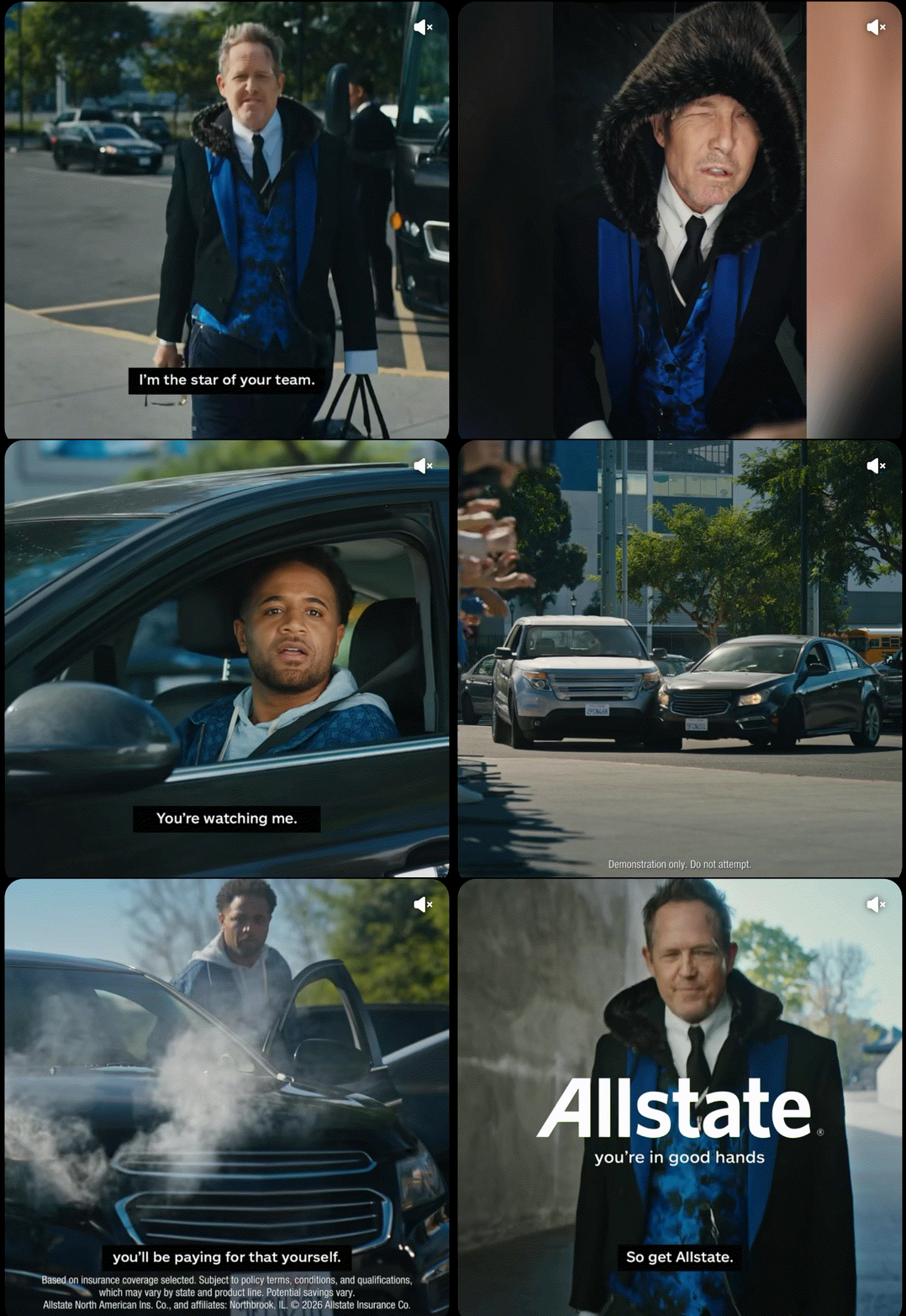
    “You’ll be paying for that yourself” was the punchline for me. Haha!

    Another are with books that use clever closing lines to break tension, usually with a subtle joke.

    Taking it even further would be when Hip hop offers some of the strongest examples of this same principle. You look at a well-structured rap song that can build anticipation through its verses before delivering memorable moments in the chorus or bridge. One example is Lupe Fiasco’s The Show Goes On, which demonstrates how song structure can strengthen lyrical impact and audience engagement.

    Even storytelling events that lets the payoff connect with a hidden detail from earlier.

    Comedians like Ali Wong and John Mulaney show this skill in every set, but I see it in everyday conversations too, like the friend who always comes up with just the right unexpected reply to break everyone up at the dinner table.

    Even in business meetings or speeches, slipping a surprising punchline at the end of a story can wake up the room or reinforce a point in an unforgettable way. It’s a tool that goes far beyond comedy clubs.

    Frequently Asked Questions

    Question: How do I stop my punchlines from being too obvious?
    Answer: I avoid common expressions or puns and instead ask myself, “What’s a totally different way to end this setup?” Trying several alternatives before picking one usually helps.


    Question: Are some punchlines just naturally funnier than others?
    Answer: Some structures work more reliably, but it’s the unique twist or personal touch that usually makes them unforgettable. Experimenting with new angles keeps things fresh.


    Question: Does delivery matter as much as the words?
    Answer: Delivery counts for a lot. I pay attention to timing, pauses, and tone, since they all help set up the audience for maximum effect.


    Bringing It All Together

    I keep coming back to the basics: a great punchline is clear, surprising, and feels fresh. Focusing on setups that invite a twist, staying aware of worn-out formats, and practicing my delivery has helped me get better reactions. When I work hard to switch directions just when someone least expects it, I find the punchline lands in a way nobody forgets. Getting good at punchlines takes effort and playfulness, but it always makes stories and jokes more memorable.

  • How Emotions Shape Melodies: Understanding The Connection

    How Emotions Shape Melodies: Understanding The Connection

    Let’s discuss how emotions shape the melodies that we tend to love.

    How Emotions Shape Melodies

    Emotions shape our favorite melodies with the assistance of harmony, tempo, and pitch. These all act as enhancers to strengthen the impact of some of our strongest feelings. There’s predictable traits and qualities that each one provides. It’s because of this knowledge that makes emulating them possible. Understanding this ultimately lets an artist get into different pockets when composing music. And listeners are able to hear the songs differently based on what they feel.

    Learning how to intentionally apply these ideas is a major part of melody writing, especially when trying to create songs that connect with listeners emotionally.

    The Emotional Language of Melody: Decoding Feelings Through Harmonic Structures

    Melodies could easily be considered reflections of our emotions. They’re a blend of different qualities that reveal how we really feel. There’s people in the world that aren’t yet completely honest with themselves, so it’s music that becomes the real mirror for what’s inside. And not all the time does it take being in tune with the lyrics (if there are any) to truly get an idea about how you really feel.

    For songs that do include lyrics, analyzing the words alongside the melody can reveal another layer of emotion and help listeners understand the full message behind the music.

    There’s simple to complex compositions that are very telling in this scenario. So let’s say that there’s an instrumental or beat that incorporates a switch, and you’re aware of it. That switch should mean that there’s qualities you have about yourself that’s bipolar in nature at least. Consistency becomes a factor too in where if you get to where you’re a fanatic of harmonies that are typically simple to understand, one would rightfully believe that you’re easy to get too.

    There’s a case study I began creating before this actually, so it might be released at some point, and if so, I’ll interpret the emotions that are conveyed. That, or maybe even share the feedback that’s shared about the music. If this is an area of music that you are entertained with as well, you might even fare better with finding someone who deciphers song lyrics. It can be highly informative, and help you appreciate the music that much more. Keep in mind: this has to be with songs that have lyrics (based off my recommendation)

    Tempo and Emotion: The Heartbeat of Melodies

    Tempo and emotions are considered the heartbeat of melodies because that’s literally how our hearts are monitored. Simply being aware of how the heart itself works educates us on what to expect from some of the music that we discover. Something that has a super low BPM for example could easily be expected to help put someone to sleep or just relax, and that works on the ladder too: high tempos should get a person moving at a much faster than normal rate.

    I can attest as someone who deals with slightly high blood pressures could validate this. A good majority of my life up to this point has been at fast pace. That includes doing plenty of runs, workouts, and even eating in ways that would contribute to moving at these speeds. If I were to go through the catalog of music that got me through these times of life that I’m referring to, I’m willing to bet that the tempo of these songs would match my claims too.

    Tempo shifts happen much more frequently in music. And it’s proving to be true off my observation since about the early 2020s to now. One of the most iconic for me as a candidate if we’re talking about which song could qualify is that from ASTROWORLD: Click Here for the song

    To break that song down even further in relation to this message, it has a siren-esque intro that’s heavy on the lyrics and keeps somewhat of a low tempo that eventually speeds up the flow. A good majority of the world’s heard it already a bunch of times, so the effect isn’t exactly the same as when it first dropped, but when that was the case, it was iconic!

    Pitch and Emotional Resonance: Crafting Moods with Highs and Lows

    The pitch and emotional resonance is similar to the tempo of a song, but still has unique differences. Most would instantly go straight to thinking that pitch is limited to the literal range that a vocal is able to produce. There’s a unique command that happens when pitch is distorted. Typically when it’s raised, that wakes up someone who’s listening. It adds an urgency without time being a factor.

    It’s interesting to say the least when you dissect the effects that certain voices and even instruments have on the ears. We hear a certain tone and can picture what the person sounds like behind the audio. Sometimes you’re right in that guess, and other times, not so much. Low tones typically paint the image of a heavier set person delivering the vocals. Higher pitches commonly get associated with a female. Eliminate the vocals and that still remains true. Tubas for example, they physically have a larger design and the sounds they produce match our earlier comparison with lower sounds being from people with a large physical presence.

    Symbolically speaking, emotions mimic pitches. They slide on a scale that has ranges. Picture a xylophone. The sounds it creates sound different from left to right. It’s funny because you can even picture the facial structures it takes to make these sounds, and it would be incredibly difficult to mix around what we agree that a certain emotion could create. A high pitch has to be from someone making a face that resembles a smile more than a frown. And that applies to all genres of music!

  • The Role Of Logo Music Production In Brand Identity

    The Role Of Logo Music Production In Brand Identity

    The Impact of Audio Branding: Elevating Brand Identity through Logo Music Production

    Audio branding is one of the single most important things you’re going to learn in home music production.

    It makes up your brand identity. You have to understand the importance of that to really appreciate what it can do.

    Your brand audio wise is going to be the sound’s genetic code. Your audience will have a distinct memory with your sound.

    Drums, Guitars, Piano Strings, these are all sounds that will make up the sound that most people will hear when they think of your brand. That can be highly impactful when that should be the goal when building your fanbase. Tack on lyrics and anything extra, you then get an even greater responsibility on the image of your brand. Not to sound psychic but that tells a story of how powerful music can be in how you’re perceived. It taps into emotions that helps in these ways.

    Understanding the Importance of Brand Identity: How Audio Branding Fits In

    Audio branding is an aspect that‘s really under-appreciated when you’re defining brand identity.

    But to really understand what it is, you have to also understand what the traditional aspects are as well.

    This typically includes your principles, values, amongst other intrinsic things.

    Don’t forget your external attraction points either! These are the Things that are seen visually by other people.

    Your logos, the way you dress, it could even be your dances. 
They’re things you’re known for doing.

    There’s a variety of Things that are aesthetically pleasing that’ll help set you apart from other musicians and performers alike. 


    One aspect that‘s highly important are your audio cues. I define them as your ad libs and catchphrases.

    They honestly set a good majority of artists apart from the next Joe Blow that decides to create music.

    Being compared is something that’s going to happen inevitably, and it happens at all stages of your career.

    Your adlibs could possibly change, although when you create it, it usually sticks. 


    There’s not many people that change it, but that doesn’t mean it can’t.

    Sometimes it’s a high screech. It can be a unique tone.

    Even a co-sign from a familiar ambassador for whatever gender you choose can be the cue.

    It’s usually added into a mix of some sort.

    And that applies whether it’s a song you create, or even a video production with an intro.

    There are different times that your audio queue will speak for itself.

    In many ways, you could think of it as having your own bat signal.

    It’s Something that puts your stamp or trademark on anything that’s Including you as the recording artist. 


    The emotionally engaging experience of your brand is the culmination of all these things.

    So to have a Great idea of how all that works is ideal, But if you’re also looking just to increase the Development of your brand’s experience, You will benefit greatly from Being in tune with your own emotions.

    If you can understand yourself, then it will be much better and easier to understand others.

    You’re gonna continually pour into yourself in a way where it’s going to continue to grow and flourish.

    And with that, it invites other personalities. 


    This is when you really start to expand (and even add) more layers to who you are personally because you‘re captivating the attention of other people that might not necessarily be the same as you, but they appreciate who you are.

    And if you’re doing your job, then you’re also looking to grow with them as well.

    But when you’re growing with them, you’re going to be including the emotions that they experience too within your craft.

    Psychological Impacts of Logo Music: Creating emotional connections through sound

    Creating emotional connections through your sound is a psychological impact when you’re creating what’s known to be logo music.

    Depending on what the artist is shooting for, there will be intentional feelings that eventually become extracted subconsciously from listeners when they’re in the process of composing.

    This is where being in touch with your internal values and principles become a factor with the messages that are shared.

    They ultimately bring out something from the people who are listening as well. 


    These things that motivate you become part of your brand, And with the marketing efforts that you incorporate with them, it creates brand familiarity.

    That brand familiarity is highly important When you’re creating in this process, because: the more you create sonically, It feeds your visual as well.

    This gets to where People, Include what I like to call a ‘yin yang effect’, where once they see your visuals, they think of the music that you have behind it.

    It works vice versa too, where the music that you create becomes a reflection of the visuals that you put out as well too.

    If I were to recommend an artist something that they can do just to get the listeners to really remember what they’re putting into their music, It’s: creating a challenge within your art.

    Challenges are one of the things that stick with people for the long term, Because you’re either going to accomplish that goal or you’re not.

    And these have an effect that can be traumatic in nature or blissful.

    It’s important to remind you: it boils down to the results that they got. 


    These results stick with them. They‘ll remember that because they ended up getting an activity posed through the media that you create as an artist.

    A last point to make, that’s arguably most important is the brand recognition.

    Specifically how it translates to emotional loyalty. 


    When people decide to attach themselves and align with your brand, they will gain numerous experiences.

    Potentially Your brand could be the difference in whether they are enjoying life as they continue going on about it or dislike what they’re going through.

    You become either a blessing or a burden at this point, And when they continually recognize and see your brand, whether it’s posted on social media or even Seeing on a flyer in the streets of the city, The people that become aware of what your brand is, are going to see how others feel when your brand comes up.

    It can be that or What they feel already with the experience they have with your brand already.

    
So with that, their Emotional loyalty can either be solid or fickle, But that really boils down again to what it is that your brand did for them Individually. 


    So use that creativity If you’re in tune with the demographics, of what, type of people actually support your brand.

    You continually focus on serving them, and You’re going to start experiencing real power and feeling the fruits of nurturing your identity.

    Case Studies of Effective Audio Branding: Exploring real-world examples highlighting success and challenges

    Today I want to discuss an effective producer I believe qualifies for branding their audio at a professionally high level.

    That audio artist is Metro Boomin.

    Metro Boomin is an Atlanta-based producer that has a plethora of hits which could be studied.

    And that’s to anybody that would like to get an idea of effective audio branding. 


    But I picked Him, because He does what this lesson is about, At a level that’s worth Studying, especially if you are learning about Audio branding still. 


    One of the projects that he’s put out that I feel qualifies the best is with the Across the Spider-Verse project.

    This is fairly recent Although the movie’s been out for a few years now.

    But because of his catalog and how popular the music that he produced, blew up to be, I believe it opened up doors for other productions outside of music alone to incorporate his style and flair into their projects.

    This qualifies for audio branding at an effective level, if you ask me.

    We can look at some of the songs that he produced that would have led him up to that point, And it won’t be too much trouble to find records that he produced, which would go on to be gold and platinum, even diamond before the time of getting the deal with Sony for the Spider-Man movie.

    And he’s not the only producer that is able to do this, I believe.

    There’s some I believe are just as qualified and capable, granted, the same circumstances where they have A highly respectable catalog.

    Those producers Could be. 
Mike will Made It, Tay-Keith, hit-boy, and Even some more classic names, like Jermaine Dupree. 


    There’s just a bunch where once you have a sound that’s stamped, it’s almost a guaranteed hit with an artist that gets on that beat.

    They become a signature in a way that becomes a product in itself.

    The Role of Sound in Differentiating Brands: Setting brands apart from competitors with unique soundscapes

    Sounds are an important part of differentiating brands apart from each other.

    They do this through Creative means.

    Some have regular jingles that gets played typically whenever any type of advertisement or marketing campaign is employed. 


    Others can even be even more simple in the case where they have audio recordings that reflect the views of the brand that they are pushing at that point in time.

    The specific differentiator (in this case) could be as minuscule or large as you want it to be.

    It can cover the familiarity of a specific voice, Or The speed of the sound.

    It could even be the method of how the sound is available to be shared.

    
It depends on how particular you want to get as the person who manages the audio portion of your brand.

    It’s important to have this presence with any brand you create though.

    That’s because it adds variety to your methods of Promotion.

    One of the most common (and perhaps always be that way) is the text version. 


    So having your Reading materials that represent your brand is probably the most common.

    Everybody has to read to some effect, but the next would be, most likely, the audio—something that you can listen to.

    It could be visuals as well, but 
Audio is up there with the important variations of media and brand development.

    So, Putting this type of effort towards adding variety to your brand is, without a doubt, worth your time.

    FAQs

    How does a sound logo (a short musical signature or audio logo) help a brand stick in people’s minds better than just visuals alone?

    It’s effective additions to our senses and getting more bang for buck for lack of better terms maybe, but it sticks with challenging our memories in creative ways.

    If someone couldn’t picture something in the moment, but can hear the sound that’s associated with the brand, it suddenly becomes easier to tie with the imagery.

    It’s incredibly helpful with visual projects to have exclusive sound that belongs only to the production.

    Imagine watching a movie or your favorite tv show without any music whatsoever in the final cut.

    It’s hard to picture it being the same.

    That should be a great idea of how powerful the adding of things as simple as a musical score which actually is not far from common to be presented with the logo of some of pop culture’s beloved productions.

    What emotions and values do you want your brand’s music to convey when someone hears it?

    The emotions and values that you want to communicate through your brand’s music should be situational in observation. It should reflect the same feelings you have when thinking about the intention behind it. There’s studies and research available that could suggest which pain points are most effective, and with that type of information, you can craft messages that are able to be conveyed through that emotion.

    IMG_0135.png

    That information should give you better understanding with what narrative to move forward with when creating each song. This actually supports the earlier point about where creating music that matches a video works well for the recording artist, because they have screenplays available to reflect on and guide them through the concept of each track.

    The goal for this brand is to provide meaning with each sound. If you connect our brand logo to a particular sound, it’s stamped that we’re part of it. Ultimately it’s discovering identity within an industry with plenty of different sounds and such that could be categorized.