Today we’re gonna discuss the 3 levels of creativity. It’s something that perfectly aligns with the enjoyment of music and felt it was appropriate in discussing. If you subscribe to the thought of the people making and enjoying music have to be somewhat creative to progress in it as an industry, you’re gonna enjoy this.
What are the 3 levels of creativity?
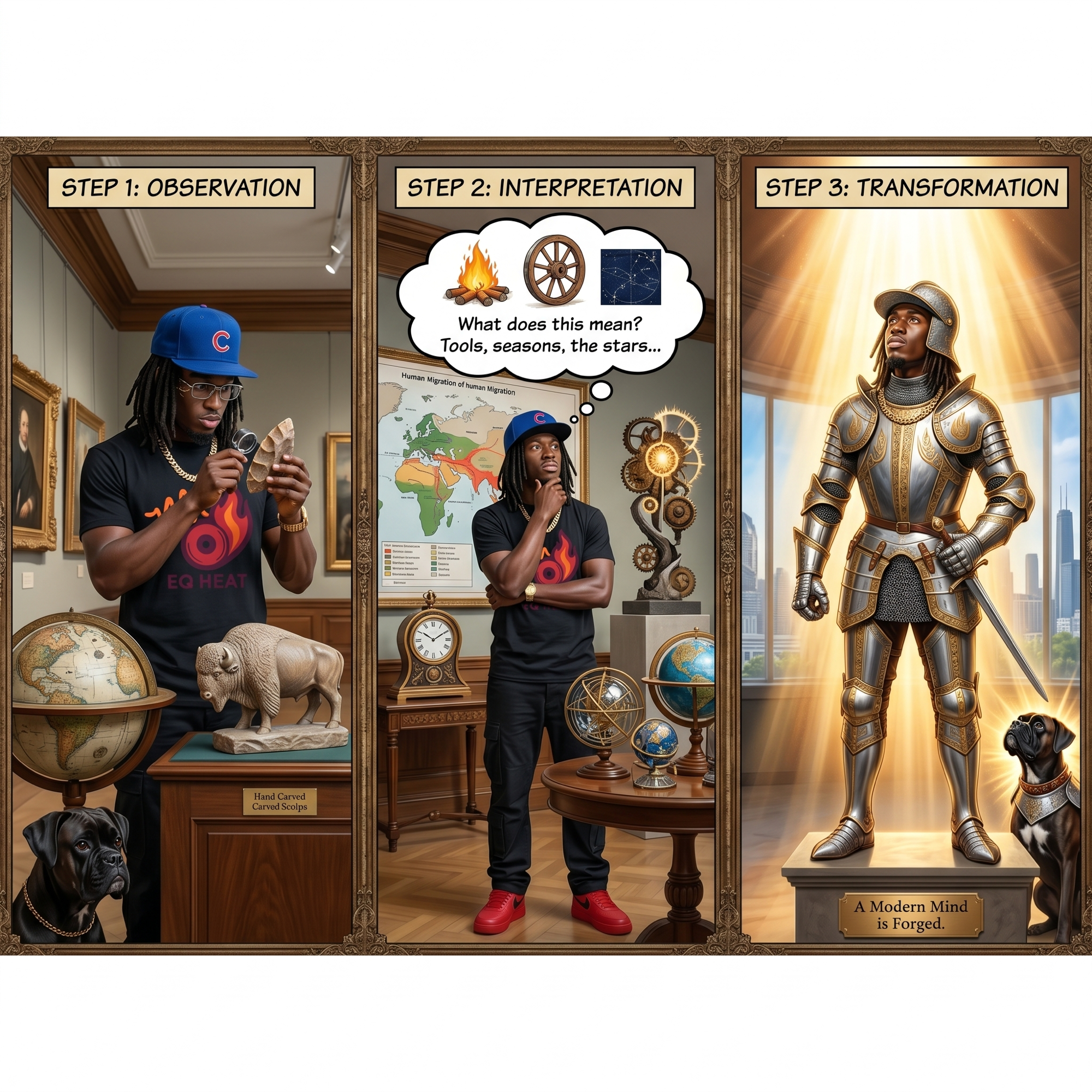
Observation
Interpretation
Transformation
Observation
Observation is one of 3 levels of creativity. It’s relevant because reveals your starting point as a creative. You have to be able to identify things that could be taken to the next level. That’s a genuine skill that plenty of teams champion. It’s auditing in a way. If you can see the potential value in what’s in front of you, it paves the way for a much bigger scenery.
Interpretation
The next step in creativity is interpretation. This is where you show off possibly the most originality that’ll be revealed eventually. To interpret is to decipher, you’re decoding what the message or symbol really is. This has to be done on a personal level first before it can be manipulated. You have to let the artwork speak to you first, and after that, when it’s shared with others, you can reasonably expect different interpretations be made. That’s actually part of the fun if you struggle with being understood clearly like I do at times.
Transformation
Transformation is the last step of creativity by my definition because that’s why creations are meant to do—transform! After you accept whatever part of the process of creating, transformations happen within yourself, but I’d encourage you to see it for the industry more.
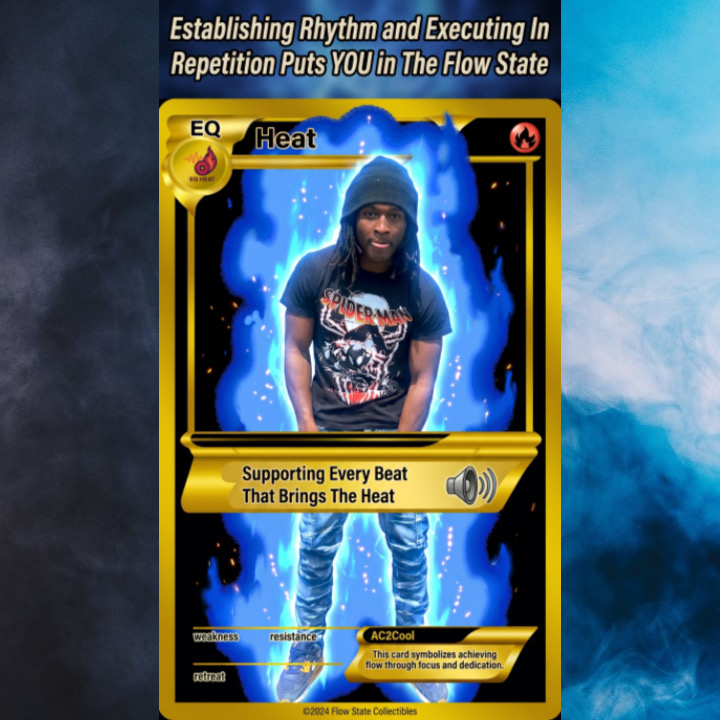
Entering your flow state requires establishing rhythm before it happens. Reaching this point then Leads to a necessary emphasis in repetition that’ll last for a certain duration to have that’s actually worth something.
Establishing Rhythm
Rhythm could be considered your footing when it comes to music making. Think of it being similar to skipping rocks across a pond or stream. The placement of the rock is arguably the most important move of the process, and from there you duplicate the motion. And ultimately what that does is create a trail. In music terms, that could be paralleled with the duration of the song.
Making Music
Making music is an amazing thing that holds real prestige globally. Musicians are highly influential and demand a level of creativity that’s nothing short of professional when performed. There’s people from all different walks of life that got their start in making music differently. For example, I started getting acquainted with music in elementary school when I started performing with a band. I can’t recall if any of the music we did was original because most of the songs I remember were renditions of popular sounds already. Fast forward to 2026, we’re in an era where music can be made with the assistance of DAWs and even ChatGPT! It’s really coming down to finding a section of music that you appreciate most and committing to making yourself a student to progress in that field. It can be that simple.
Is there a word for adding lyrics to a song that was originally instrumental?
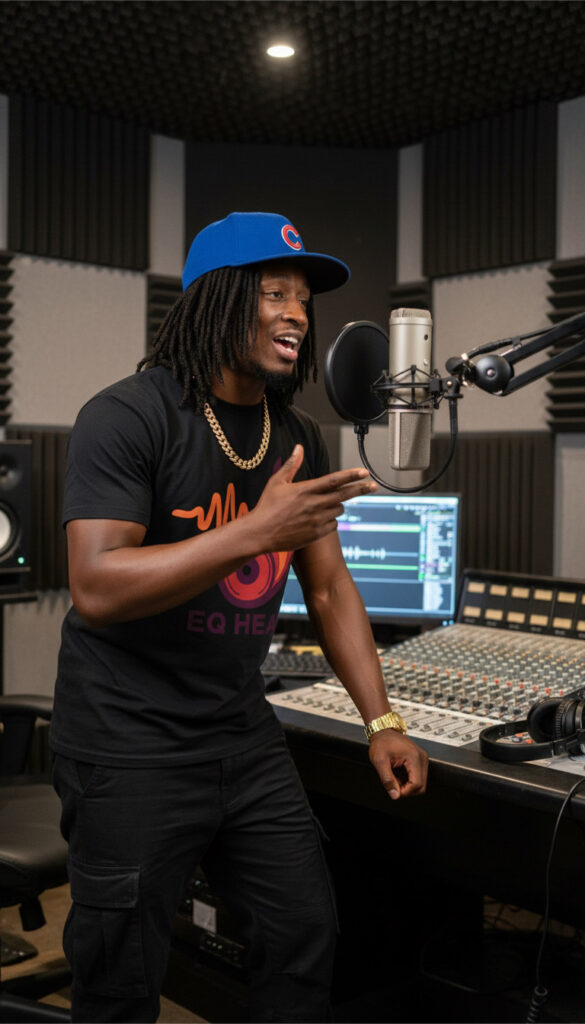
Vocalization is the term that we’re gonna move forward with when we’re creating lyrics to some of our favorite instrumentals. It’s one of the foundations of creating music: determining the point when lyrics are added, and what to add exactly. This is a quality that easily falls in the responsibility of a great rapper.
TIP 1 – Place Your Rhyme
Placing your rhyme is what’s dependent on your flow state. If you reach this point, adding rhymes to the instrumental becomes much easier.
Have you ever heard a song where it felt like every word added was almost effortless and appropriate with each placement? That’s what a flow state could be equated to.
You’re going to be able to write rhymes for rap much better when you discover what puts you in your flow state.
There’s not much that can define it at a black and white level, but there’s things you can do to encourage a much likelier flow state.
You can do things like exercising to instrumentals through freestyling for example. That gets you in a flexible state lyrically.
TIP 2 – Fill In The Scat
The scat is nothing more than the filler for your lyrics. There’s usually punchlines placed at the end of a line and they typically prove to be the high point a song.
Finishing bars have an effect like none other because of how memorable they can shape up to be.
It’s not passionate to encourage anybody to try and just fill in lines with meaningless talk, but if the goal was to structure a complete rap song, this step clears up the confusion of getting from point A to B in lyric construction.
TIP 3 – Compromising
Compromising is another aspect of creating lyrics that’s not discussed enough. It’s a real scenario that many artists face.
You get placed in the position to share a bunch of meaningful messages, but only so many end up making the cut since you’re only working with a few minutes at best.
The time gets shorter when you’re only discussing features. Your step in this process becomes conflict management.
You have to start asking yourself the questions to move your focus along.
It might show in questions like “Does this really fit here?”, “Do I need to save this for a different instrumental?”, questions like that.
This is the point at when you are practicing compromise.
Understanding the “Original Motion Picture” Label: A Marketing and Legal Perspective
The phrase “Original Motion Picture Soundtrack” has become one of the most recognizable labels in entertainment history. Whether attached to blockbuster films, cult classics, or streaming-era releases, the tagline signals authenticity, exclusivity, and official association with a film property. While many consumers casually recognize the phrase, its deeper importance stretches across marketing psychology, legal protection, branding strategy, and cultural identity.
There’s a clash between authenticity and imitation. In entertainment marketing, the “Original Motion Picture” label actually serves a purpose that relates. It distinguishes an officially licensed soundtrack from unofficial compilations, covers, remixes, or imitation products.
Much like an artist defending their originality in rap music, film studios use the label to establish legitimacy and ownership.
Defining “Original Motion Picture”
In soundtrack terminology, “Original Motion Picture Soundtrack” generally refers to music officially connected to a film production. This may include songs appearing directly in the movie, orchestral scores composed specifically for the film, or curated tracks licensed by the studio.
The key word is “original.” It communicates that the soundtrack is not merely inspired by the movie, but directly tied to the actual production. During the vinyl and cassette eras especially, unofficial albums often attempted to capitalize on popular films by releasing sound-alike recordings or cheaply assembled compilations. The “Original Motion Picture” label became a commercial stamp separating authentic studio-approved releases from imitators.
That concept connects when I think of my city. I’ll instantly think of talents and skills that feel almost exclusive to my hometown. I feel the reputation that travels because of the members of my community’s genuine skill and authority in different things we value. Other people from different regions catch on and suddenly our location becomes stamped.
In a similar way, studios demand recognition for official soundtrack products because those releases represent the authentic creative work tied to the film itself.
The Evolution of the Label in Entertainment History
The soundtrack industry grew rapidly during Hollywood’s Golden Age. Early film scores from composers like Danny Elfman and Ice Cube helped establish music as a major cinematic identity tool. As soundtrack albums became profitable commercial products in the mid-20th century, studios recognized the need for branding language that protected authenticity.
By the 1970s and 1980s, soundtrack albums evolved into major cultural events. Projects connected to films like Rocky 4 or An American Tail became entertainment products powerful enough to overshadow the movies themselves.
The phrase “Original Motion Picture Soundtrack” then became more than a descriptor. It transformed into a prestige marker.
“might have to blow up the spot”
This evolution parallels to hip-hop slang. Let’s go with the caption above: “blowing up the spot” can mean drawing massive attention to a location, person, or event. Soundtracks operate similarly for films. A successful soundtrack amplifies visibility, extends cultural relevance, and turns a movie into a multimedia experience.
The Legal Badge of Authenticity
Beyond marketing, the label also carries legal implications tied to intellectual property rights and licensing structures.
When a soundtrack carries the “Original Motion Picture” designation, it typically confirms authorization from the film studio or copyright holder. This affects:
master recording ownership
synchronization rights
publishing royalties
distribution agreements
trademark protections
Let’s go with a metaphor as an example. I could make a bar that contrasts a platform and one of the features it holds. Let’s say I paint it in a negative perception. That in itself could represent competition between brands, technologies, or even intellectual properties. Cuz maybe I could be campaigning for another company with similar products and ideas. And because I can smear another company’s reputation in a entertaining way, it could create separation with possibly serious implications.
That’s actually why studios fiercely protect official branding. Unofficial endorsements can dilute market value and confuse consumers.
Trademark law becomes especially important here.
The film title itself is often trademarked, and attaching “Original Motion Picture” reinforces the legitimacy of the product in the marketplace.
Copyright law also protects the compositions and recordings within the soundtrack. Composers, orchestras, producers, and performing artists all maintain contractual stakes in the release.
Several disputes throughout entertainment history have revolved around soundtrack ownership, royalty allocation, or unauthorized reproductions. Questions about who controls the “official” version of a soundtrack can determine millions of dollars in revenue.
That idea aligns with a success scenario that shouldn’t be much of a surprise to most: Success creates legal complexity.
As soundtrack revenue grows through streaming, merchandising, licensing, and collectors markets, disputes over ownership and authenticity become increasingly important.
Marketing Psychology and Consumer Perception
The “Original Motion Picture” label also has a powerful psychological effect on audiences.
Consumers associate the phrase with:
legitimacy
emotional connection
cinematic immersion
collectibility
nostalgia
The wording reassures fans that they are purchasing a genuine extension of the film experience.
This mirrors the same drive in confidence I’ll show moments of. I’ll campaign for an old school philosophy when it comes to working and believe I need higher pay as a result.
I’m sharing my thought process for a moment in where I believe a specific reputation and performance name deserves a separation in benefits.
Soundtracks gain similar added value through official branding. Consumers are often willing to pay more for an officially recognized soundtrack than for generic alternatives because authenticity itself carries emotional and cultural weight.
Studios intentionally market soundtracks as part of a film’s identity package. Trailer music, theme songs, and orchestral motifs become branding devices just as important as posters or logos.
For example:
Eye of The Tiger is close to inseparable from Rocky films.
Black Panther used soundtrack curation as a cultural marketing event.
I have the song Somewhere Out There etched in my memory because of the film An American Tail, and because of how well the franchise did, I’m sure it subconsciously plays a role in my belief of positive feelings that also equals success.
The soundtrack becomes part of the movie’s commercial DNA.
Streaming Era Changes and Future Trends
Today’s soundtrack industry operates differently because streaming services have transformed music consumption.
Platforms like Spotify and Apple Music now organize soundtrack albums digitally, often preserving the “Original Motion Picture Soundtrack” label for discoverability and branding consistency.
However, modern streaming has also blurred distinctions between:
official soundtrack albums
inspired playlists
fan-made compilations
algorithm-generated collections
This makes authenticity branding arguably even more important than before.
Let’s talk about bots for a moment. Suddenly they become especially relevant in the streaming age. Audiences increasingly navigate automated recommendation systems, AI-generated content, and mass digital reproduction. The “Original Motion Picture” label functions almost like a verification badge, reassuring audiences that the soundtrack represents the official artistic product connected to the film.
Future soundtrack trends will likely emphasize:
immersive branding
collectible vinyl releases
cross-platform music marketing
AI-assisted soundtrack production
multimedia franchise integration
As franchises expand across gaming, streaming, social media, and virtual environments, soundtrack branding may become even more central to intellectual property identity.
Conclusion
The phrase “Original Motion Picture Soundtrack” represents far more than a decorative marketing tagline. It operates as a legal identifier, a branding mechanism, a psychological trust signal, and a commercial authenticity badge.
Hopefully they help illuminate ideas because they consistently focus on originality, reputation, legitimacy, and the consequences of commercial success. Bots, respect, money, and visibility metaphorically parallel how entertainment companies protect official soundtrack branding in competitive markets.
Ultimately, the label succeeds because audiences value authenticity. Just as artists defend their originality in music culture, studios defend the authenticity of their cinematic musical identity through the enduring power of the “Original Motion Picture” designation.
There’s been plenty of people that are still trying to figure out the best way to earn money while being self employed. This can be a real challenge because it doesn’t matter how much money you make in today’s world. It’s how you earn it.
Flat Rate: Pay Me Once And We’ll Figure it Out
I chose flat rate payments early on when I would launch my first product and service. This is something that I’d recommend anybody taking this step early on in the launch of their business. It keeps things super simple and gets your feet wet in the other ways of making money.
Final Thoughts
Earning in the self employment sector of your career can be a highly empowering feeling. It challenges a side of yourself that likely wouldn’t be exercised if you choose to continue earning as an average employee. If there’s something I would recommend to someone that’s already familiar and wants a little more of an idealistic outcome, it’s: to Keep Flexibility In Your Methods Of Charging For Labor.
I call it idealistic because asking for someone to keep their options of payment may be considered a bit much, but part of reaching where you really wanna be is understanding what the bigger picture in things is. An example would be where you might challenge yourself to earning contractually eventually. It’s just another way and changes the way you respect finances in general. So putting yourself in positions to earn in different ways adds an element of power to your arsenal too.
With the assistance of AI, Mobile Friendly Apps, and various Training Resources, Technology without a doubt makes creating much easier.
AI: The Ultimate Outsourcing Tool
Artificial Intelligence is one of the most progressive pieces of technology to become public ever! It’s one of the most interesting tech additions to date, and led to some of the best discussions about its purpose in humanity.
Because I’m personally creating this post, I wanted to add a little more personality in sharing my gratitude for what the tool does. There’s controversy that’s circulated about AI in whether it’s improving product research, or just speeding up bad decisions. I say it’s both. What’s probably more interesting in my position on that opinion is that it’s neither for better or for worse. People are still allowed to adapt and make changes without feeling a robot is in complete control of their life.
Mobile Friendly Apps: My Solution To Fighting Mediocrity and Being Obsolete
Mobile Friendly Apps are another improvement in technology that makes creating much easier.
Apps are short for “application” and are typically considered a condensed version of an existing website.
We can build off the previous example with AI to understand why mobile apps should be appreciated even further.
In today’s modern age of technology it’s almost considered obsolete to gave an all that’s not AI infused.
Mobile apps have a purpose of satisfying a form of location freedom that most people love to exercise.
It’s having the convenience of being able to to take care of business on the go.
Training Resource Tools: The Most Practical Guide for Learning how to Create
Training resource tools are yet another form of technology that’s been improved throughout the years to help creatives actually create.
Let’s get meta in a sense where we already appreciate the fact that training resource tools can educate you on how to create.
Wanting to be the teacher of a certain subject typically involves creating strategies.
In most cases those strategies become a game of telephone that’s passed down from one potential leader to the next.
The person that fully understands the purpose of that strategy can market it best.
If you’re the one creating this guide, this is where you absolutely have to be able to see where your information is going to be helpful for your prospects.
That helps you understand what content goes into your source material and everything.
This is inspired off a question that I’m sure most casual fans of sports in general: Why do most people think Basketball is the best sport to watch?
Being someone that thankfully is able to claim a sport that falls in the same overarched umbrella of e-sports, basketball is able to be discussed in better detail in this case.
Let’s discuss my point in better detail though.
Scoring is easier to follow/less penalties to keep up with/strategies could be considered more simplistic/ more opportunities to watch them compete
More Opportunities To Watch Basketball Players Compete
One of the things that makes basketball one of the best sports to watch is because there’s so many opportunities to watch athletes compete.
Let’s go with the NBA for example. On average you get about 60-70 games that happen in season.
If we keep this same point of emphasis as relevant, then let’s compare it to a worthy rival like the NFL. Those players can only be watched maybe 20 times a year. And that’s if they make the Super Bowl.
There’s conversations that stem from basketball (specifically in relation to the NBA) about the quality of competition. I believe that makes a difference in a bunch of different factors in keeping the sport fun to watch. In my opinion I’d argue there were both more influential players in terms of play style and possibly philanthropy. Going off the playing ability though, it’s way many more players and even casual civilians that could reference legendary players from previous eras in basketball than perhaps any sport for that matter.
The game mechanisms for what modern sports games even suggest that it takes more skill to shoot the perfect 3 or expose handles that can shake a defender off you—just another minor point.
Let’s discuss the validity of my two points I made on exactly how a team can get to the Super Bowl: Keeping Cap Space Open and Having an Ambitious System for team performance.
Keeping Cap Space Open as a Professional Sports Team
Keeping your cap space open as a potential option that could be utilized when you’re a professional sports team vying for a championship is one of the most empowering weapons that could be exercised.
A potential salary cap is simply seen as the financial boundaries of (in this case) an athlete that signs with a team. It works in conjunction with what’s considered the team’s budget. The team has a set amount of money that they’re able to dish out to their roster. In this case with the NFL, it could be considered a relatively new concept when you look at how the development of these situations have changed throughout the lifespan of its league.
Moving With an Ambitious Performance System in Sports
An ambitious performance system in sports proves to be one of the best methods to assure a team that’s part of a competitive league makes the championship event. That applies to the Super Bowl too. When you’re trying to break down how to be the best, for most it breaks down to mindset, learning, leadership, and teamwork. I’d say that majority is spot on in most cases. The mindset is the framework that gets you to buy into whatever your team’s program is. Learning ability is synonymous with being coachable in a sense where you’re able to pick up something that a coach is trying to teach you for the better. Leadership proves that you have members who can eventually replace others and take lead with situations that need to be handled. And last with teamwork, it’s needed to dictate a culture in where teammates can work with each other. It’s co-existing, but more. It’s accepting a partnership that’s expected to produce fruits. In many ways it’s like business. Keeping these things in mind allows for both individuals and entire teams to hit ambitious goals.
Call it consistency if you’d like, but I got another beat I ended up crafting some lyrics to. Here’s the beat:
I got a chance to dissect and cross check to see if my 2nd opinion’s say so about the 2 factors were in agreement or not. I was given this:
Being intentionally loose
Being intentionally loose isn’t a description that I’ve heard from many people when describing a beat that’s produced, but I would get what the goal is. It’s not rocket science here in where looking to achieve this effect is usually meant to execute freely. There’s cases where people need to lock in and focus on the moment to a seriousness that’s tough to match, but when you’re trying to get the opposite effect, it’s executing with knowledge that you perform your best when you’re not thinking too much about the moment.
Conversational
The next point that was made about this beat was that it’s very supportive of conversation.
I’d agree that it’s the case. You look at details that make all the difference in suggesting that’s true with runtime. That’s all I could convincingly believe to be supportive of that truth.
Rhythmic Driven
Having a rhythmic vibe is something I particularly like, but it can sometimes be the toughest beat for me to work on at times. I get it if someone wants to confidence check me about that. I’m just being a little transparent in that regard. Durk however has a specialty in this department. Because we’re also mentioning another Chicago native, it’s a scenario where this particular sound should be more natural for those locked into this specific part of hip hop culture.
I’ve gotten better at flowing in rhythmic beats though. Personally it takes more takes to manually sync my vocals with these sounds (not similar to Lil Durk type beats) during recording sessions.
Similaic Friendly
My last point is what I call being similaic friendly.
Let me break down what that means exactly. Let’s get a basic grammar lesson in. A simile is the act of describing moments with actually using the words “like” and “as” for support. When I call this beat similaic friendly, it satisfies the previous descriptions of this beat in being able to be loose and hold a conversational tone. I do the same at times and attempt having monologues over this sound. If I find myself having several explanations that include the uses of similes, I’ll categorize it with this title.
Final Thoughts
Ultimately I agree with the analysis. It suits my tendencies when crafting lyrics.
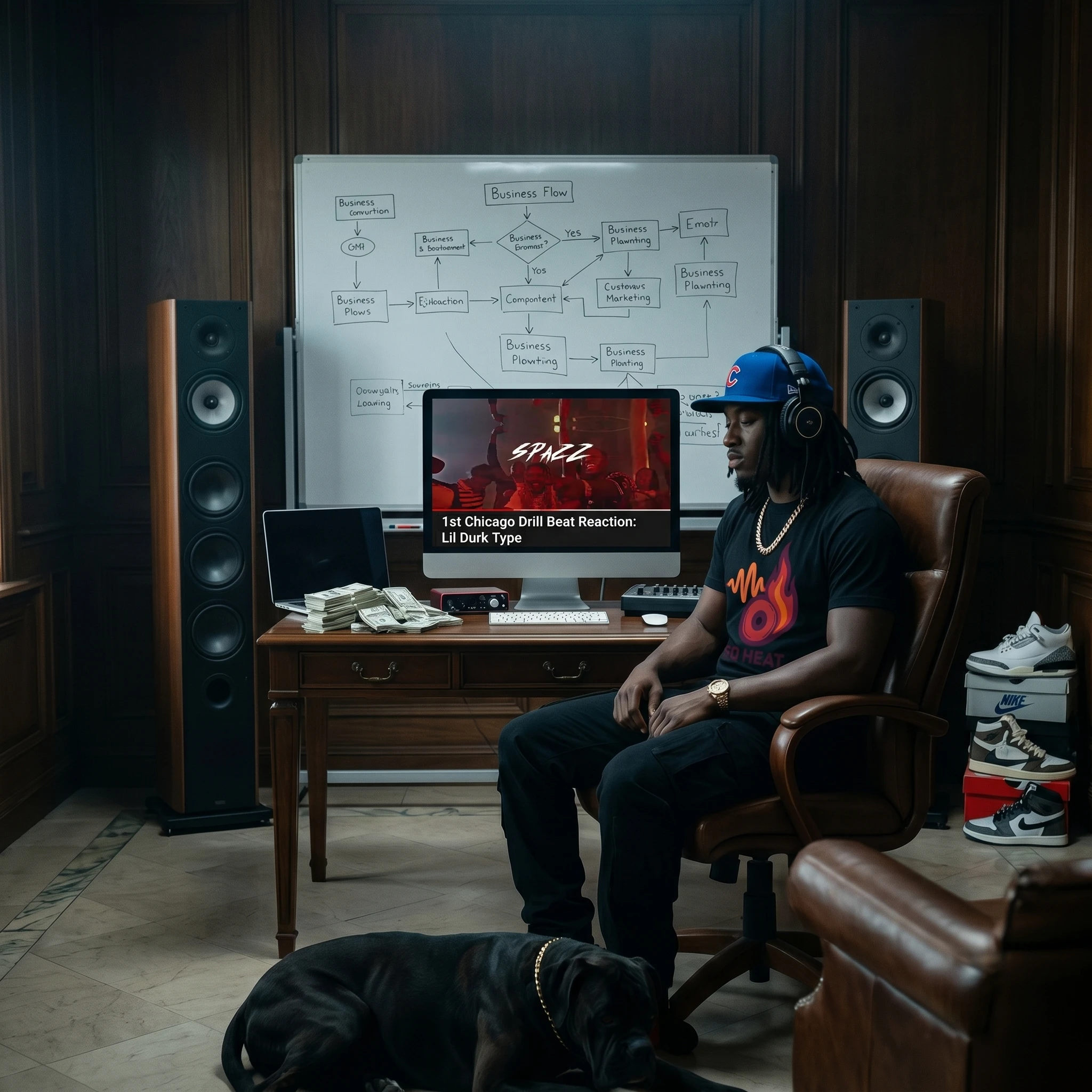
I want to start a series where I react to beats that I find on YouTube. Specifically beats that I could see myself actually rapping on.
Being Built to Outlast Tough Environments
This beat speaks to me in a way where it invokes a feeling of being built to outlast tough environments. It only makes sense because it’s a Chicago Drill beat.
I reflect on what it takes to survive and eventually thrive in Chicago areas. It’s really what you make it. The sooner you figure that out, the quicker your experiences become more appreciated. I look at what my experiences were and a great majority of it was self made.
I chose my enemies, challenges, and ultimate adversity. There’s no shift away from that grind, and that’s what my experience in this area becomes so valuable of an asset. People that succeeded from my area won’t tell you by any means that their experience was easy. What some will tell you though is that being able to pick their struggle made all the difference in becoming a better individual later on in life.
Support in explaining and embracing the meaning behind violent actions
This beat tells me that I can freely talk about violent thoughts that cross my mind. It’s up to me to provide the context and all possible details with it.
It brings me to an interesting discussion that usually stems from talks of violence, whether it’s from the media or members of your local community, it’s an inevitable talk that’s bound to happen. Most people wanna know if violence is innate or a social construction.
I’d be lying to say that I have the universal answer to someone that might ask me this specific question, but I can tell you that it’s something that works more in your favor when it’s embraced.
The opportunity to progress and make a career out of violence has developed way beyond what it used to be merely decades ago.
Intense Nostalgia in Reflections
Giving this beat some time to really sit with me surprisingly brought out some emotion of nostalgia in many cases.
I challenge my ability to think in this space when it comes to this beat, but in my early 30s it doesn’t quite feel natural just yet, but I feel it’s worth attempting to dissect this feeling.
I’m at that space where everybody’s grown, but not many wanna grow up just yet. Nostalgia I’d say is a great reason for this phenomenon. We’ve had trends that are considered absolute dinosaurs in comparison to the 2 other generations in front of us.
Sustained Generational Potential
This beat reminds me of my own past generations, also the direction that it could be taken to if it were attacked by another person in my family tree.
That may be a bit tricky of a title for the casual reader, but it’s simply addressing generational goals that’s been set before me and where I see them heading after. Being a Black American makes our struggle pretty predictable for the most part. The bright side is that it’s not a disappointing reflection for everybody after time passed for us all.
I feel optimistic about the attempt of contributing to the pursuit of generational wealth with actually the assistance of my community in Wealthy Affiliate.