How Do You Write a Project Plan?
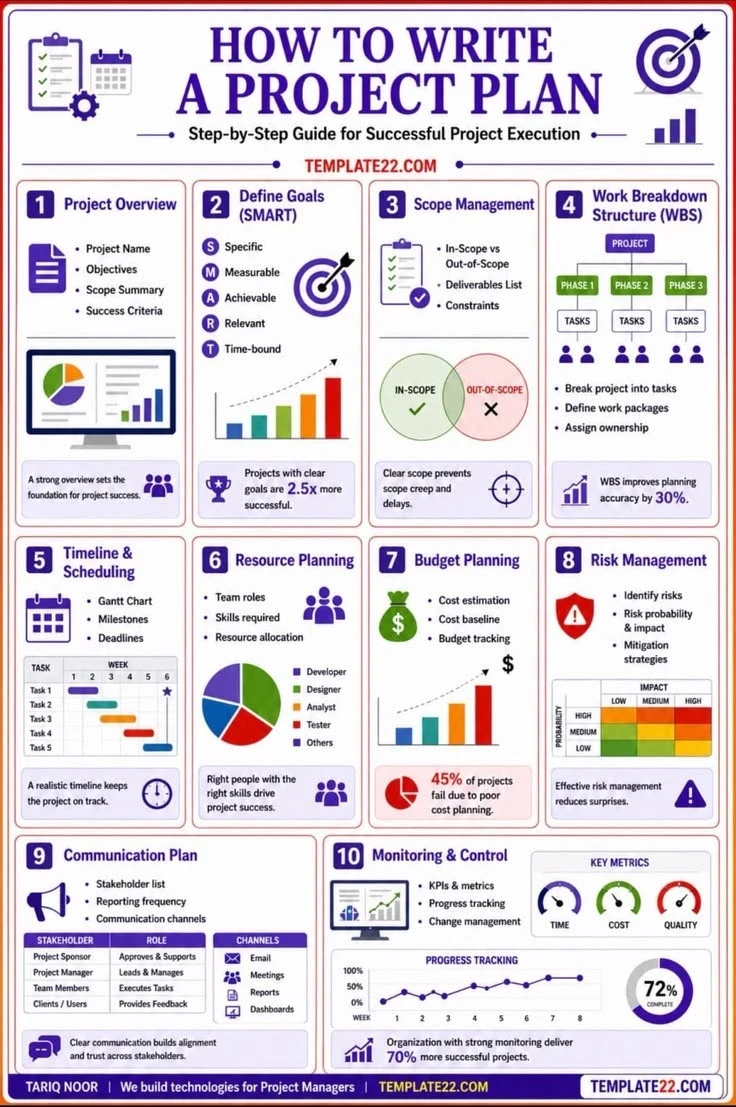
To write a project plan, organize the project into four main phases: initiating, preparing, executing, and closing. Initiating establishes what the project should accomplish and why it matters. Preparing turns that idea into actionable tasks, deadlines, responsibilities, and resource requirements. Executing involves completing the planned work while monitoring progress and making necessary adjustments. Closing confirms that the objectives have been met, records the final results, and identifies lessons that can improve future projects.
Is Initiating a Part of the Project management?
The initiation phase is where a project develops from an idea into something worth pursuing. Before preparing schedules or assigning tasks, clearly identify what the project is expected to accomplish. This begins with defining the central problem, opportunity, or goal behind the project. Understanding the broader project life cycle can help you recognize which resources, deliverables, and expectations should be established before production begins.
Knowing why the work matters makes it easier to determine which actions belong in the plan.
During initiation, consider the people who will benefit from the project, the resources it may require, and the limitations that could affect its completion. It is also helpful to identify the main decision-makers and anyone whose participation will be necessary. These early considerations can reveal whether the project is realistic before substantial time or money is invested.
The project’s intended outcome should then be translated into a clear objective. Instead of using a broad goal such as “grow the business,” the project could aim to “launch an affiliate-marketing campaign that generates its first sale within 90 days.” A specific objective gives the team a measurable destination.
By the end of initiation, you should understand the project’s purpose, expected outcome, basic scope, primary stakeholders, and definition of success. These decisions create the foundation needed to prepare a practical project plan.
What is a Project Management Plan?
The planning phase turns the project’s purpose into an actionable roadmap. After deciding what the project should accomplish, identify the work required to reach that outcome. Breaking a large objective into smaller tasks makes the project easier to understand, assign, and complete.
Each task should have a clear deadline, an assigned person, and any resources needed to finish it. Those resources may include money, equipment, software, information, or assistance from other people. Tasks should also be placed in a logical order because some work may need to be completed before another part of the project can begin.
Planning also means anticipating possible problems. Consider what could cause delays, increase costs, or prevent the desired result. Building extra time into the schedule and developing alternative actions can help the project continue when unexpected situations occur.
The project plan should establish how progress will be measured and how often it will be reviewed. Milestones can divide the project into meaningful stages, while measurable targets show whether the work is moving in the right direction.
By the end of this phase, the project should have a defined scope, task list, schedule, budget, responsibilities, milestones, and risk plan. Thorough preparation gives everyone involved a shared understanding of what must happen next.
I Say The Execution Plan Is More Important Than The Planning Phase
Execution is probably more important than planning because it prioritizes production. A well-prepared plan can provide direction, but the project only begins producing meaningful results when someone takes action. It’s dependent on overall focus and work quality.
Until the tasks are performed, even the strongest plan remains a collection of ideas and expectations.
Having a productive pre-work routine is ideal. Organizing resources, reviewing objectives, and preparing for potential problems can make the work easier. However, preparation should support execution instead of continuously postponing it. Spending too much time refining the plan can create hesitation, introduce unnecessary concerns, and make someone feel unprepared to begin.
Execution also provides information that planning cannot always predict. Once the work starts, you discover which tasks are realistic, where problems exist, and what needs to be adjusted. Those discoveries allow the project plan to improve based on experience rather than assumptions. Progress should be monitored during this phase, but reviewing the plan should never replace completing the work.
The objective is not to follow every original detail perfectly. It is to continue producing while making thoughtful adjustments along the way. Planning creates the path, but execution moves the project toward its destination. There is no preparation strategy that can substitute for taking action.
My Thoughts on Monitoring in a Project
The monitoring phase should be treated as the analysis step in the process. It’s logging most of the progress that you’re going to see. Your execution phase could easily be seen as the planting session and monitoring is just watching things grow after placing every seed in the best possible spot that it could be to grow properly. This can be a dangerous step to spend a bunch of unnecessary time because this can lead to what I call analysis paralysis.
Closing First Project
Closing your first project becomes much easier when you know what successful completion is supposed to look like. This is where you can return to the project map you created during the preparation phase. That map should include your tangible goals, important milestones, available resources, and an exit strategy that explains how the project will officially end.
Your assets can include completed work, saved documents, research, equipment, finances, digital tools, and people who helped move the project forward. Review these assets to confirm that everything has been delivered, stored, transferred, or accounted for. You can also compare the finished results with the goals you established at the beginning. If your goal was to publish an article, launch a campaign, make a product, or complete a service, reaching that clear outcome gives you a natural closing point.
An exit strategy keeps you from continuing a project simply because you never decided when to stop. It can tell you when to publish the finished work, hand responsibilities to someone else, collect payment, archive important materials, or move into a maintenance phase. Even if every detail did not go exactly as planned, you can still close successfully by documenting what was completed, what remains unfinished, and what you learned.
Closing the project provides several benefits. It creates a sense of accomplishment, frees your attention for the next goal, and gives you a completed result that can become an asset for future projects. It also allows you to evaluate the process while the experience is still fresh. Your first project does not have to be perfect. It needs to reach a clear finish line and leave you better prepared to execute the next one.