
Category: Ways to Make Money

  • How to Make Money Fast: Tips and Strategies

    How to Make Money Fast: Tips and Strategies

    Making authentic music is already believed to be through power, money, and respect. But what if you need to make money fast?

    There’s times when making money quickly becomes more than just a goal—it becomes a necessity.

    Whether you’re trying to cover an unexpected expense, fund a new opportunity, or simply build momentum toward financial freedom, the ability to generate income in a short amount of time is a valuable skill.

    Over the years, I’ve noticed that the people who consistently find ways to make money fast aren’t necessarily the smartest or the luckiest. They’re usually the ones who recognize opportunities, act quickly, and use the skills they already have instead of waiting for the “perfect” situation.

    One lesson that’s stayed with me came from helping someone else accomplish something I never achieved myself: producing a conference champion. That experience reinforced the idea that success often comes from creating value for others. The same principle applies to making money. The fastest income usually comes from solving someone else’s problem, meeting a demand, or providing a service people already want.

    If your goal is to earn money quickly, here are several strategies that can help while also laying the foundation for long-term financial growth.

    Start With Skills You Already Have

    One of the biggest mistakes people make is believing they need to learn an entirely new skill before they can start earning more money.

    In reality, your existing experience may already be valuable.

    Think about skills you’ve developed through work, hobbies, education, or personal interests. Writing, graphic design, video editing, tutoring, photography, fitness coaching, music production, social media management, and consulting are just a few examples.

    As someone who has spent years building websites, creating content, producing music, studying business marketing, and developing brands, I’ve learned that every skill can become an income source when it’s packaged correctly. Many of the abilities that originally started as hobbies eventually became assets that could support future business opportunities.

    Instead of asking yourself, “What can I sell?” ask, “What problem can I solve today?”

    Sell Things You No Longer Need

    One of the fastest ways to generate cash is by selling items that are collecting dust.

    Many households contain hundreds or even thousands of dollars’ worth of unused possessions.

    Examples include:

    • Electronics
    • Musical equipment
    • Video games
    • Collectibles
    • Furniture
    • Clothing
    • Sporting equipment

    While selling unused items isn’t a long-term income strategy, it can provide immediate cash without requiring additional training or investment.

    Offer Local Services

    People often overlook opportunities that exist right in their own communities.

    Local services can include:

    • Lawn care
    • Snow removal
    • House cleaning
    • Pressure washing
    • Pet sitting
    • Dog walking
    • Furniture assembly
    • Moving assistance
    • Car detailing

    These services require relatively little startup capital compared to many businesses and can often generate income within days instead of months.

    The key is reliability. Showing up when you say you will, communicating professionally, and delivering quality work often leads to repeat customers and referrals.

    Turn Freelancing Into Immediate Income

    Freelancing allows you to exchange specialized skills for payment without building a traditional business first.

    Common freelance services include:

    • Copywriting
    • Graphic design
    • Website development
    • Video editing
    • Voice-over work
    • Music production
    • Marketing consultation
    • Administrative support

    The advantage of freelancing is that you can often begin with minimal overhead while gradually increasing your rates as your experience grows.

    When I began creating online content, I discovered that consistent practice didn’t just improve my skills—it expanded the number of opportunities available. Every project became another example of experience that increased my credibility.

    Create Digital Products

    Digital products usually require more upfront work, but they can continue earning money after they’re finished.

    Examples include:

    • E-books
    • Online courses
    • Printable templates
    • Music beats
    • Stock photos
    • Graphic assets
    • Website templates
    • Digital planners

    As someone involved in music production and online publishing, I’ve come to appreciate the scalability of digital products. Once they’re created, the same product can potentially be sold repeatedly without needing to recreate it each time.

    That doesn’t necessarily make it the fastest option initially, but it can become one of the most efficient income streams over time.

    Use Affiliate Marketing to Earn Commissions

    Affiliate marketing involves recommending products or services and earning a commission when someone makes a qualifying purchase through your referral.

    This approach works especially well if you already create content through:

    • Blogs
    • YouTube
    • Social media
    • Email newsletters
    • Podcasts

    Rather than promoting everything available, focus on products you’ve genuinely used or thoroughly researched. Authentic recommendations build trust, while overly promotional content often drives people away.

    Throughout my experience building content-focused websites, I’ve found that creating genuinely helpful articles creates more sustainable results than chasing quick commissions. When readers trust your recommendations, everyone benefits.

    Take Advantage of the Creator Economy

    Today’s creator economy offers more opportunities than ever before.

    Content creators can generate income through:

    • Advertising revenue
    • Sponsorships
    • Brand partnerships
    • Merchandise
    • Membership communities
    • Exclusive content
    • Donations
    • Digital downloads

    Whether your passion is music, gaming, education, fitness, technology, or entertainment, consistently producing valuable content can eventually open multiple income streams.

    Building my own brands has reinforced an important lesson: audiences usually connect with consistency before they connect with perfection. Publishing regularly creates more opportunities than waiting until every project feels flawless.

    Increase Your Earning Potential Through Continuous Learning

    Fast money often comes from skills you’ve already developed.

    Future money comes from the skills you’re developing now.

    Investing time into learning subjects like:

    • Sales
    • Marketing
    • Artificial intelligence
    • Video production
    • Search engine optimization (SEO)
    • Copywriting
    • Public speaking
    • Business management

    can dramatically increase your income potential over the long run.

    My background in business marketing, combined with years of creating online content, has shown me how valuable continuous learning can be. Markets change, technology evolves, and consumer behavior shifts. Staying adaptable makes it easier to identify new opportunities before they become crowded.

    Avoid “Get Rich Quick” Thinking

    Many advertisements promise instant wealth with little effort.

    In reality, sustainable income almost always comes from creating value.

    If an opportunity sounds too good to be true, it deserves careful research before investing your time or money.

    Instead of chasing shortcuts, focus on developing systems that repeatedly generate income. Small, consistent improvements often outperform risky attempts at overnight success.

    Build Momentum Instead of Chasing One-Time Wins

    Making money fast can solve an immediate problem, but lasting financial success comes from creating momentum.

    Ask yourself questions like:

    • Can this customer become a repeat customer?
    • Can this service become a business?
    • Can this product be improved?
    • Can this skill lead to higher-paying opportunities?
    • Can today’s income create tomorrow’s investment?

    These questions shift your focus from simply earning money to building long-term financial freedom.

    Final Thoughts

    Learning how to make money fast isn’t just about finding quick cash—it’s about recognizing opportunities, taking action, and creating value wherever possible.

    Some methods, like selling unused items or offering local services, can produce income almost immediately. Others, such as affiliate marketing, content creation, freelancing, and digital products, require more patience but offer far greater long-term potential.

    The most effective strategy is often a combination of both. Use fast-income methods to meet immediate financial needs while simultaneously building assets that continue generating income in the future. By consistently developing your skills, helping others solve problems, and investing in opportunities that align with your strengths, you put yourself in a stronger position not just to make money quickly, but to keep making it long after the immediate need has passed.
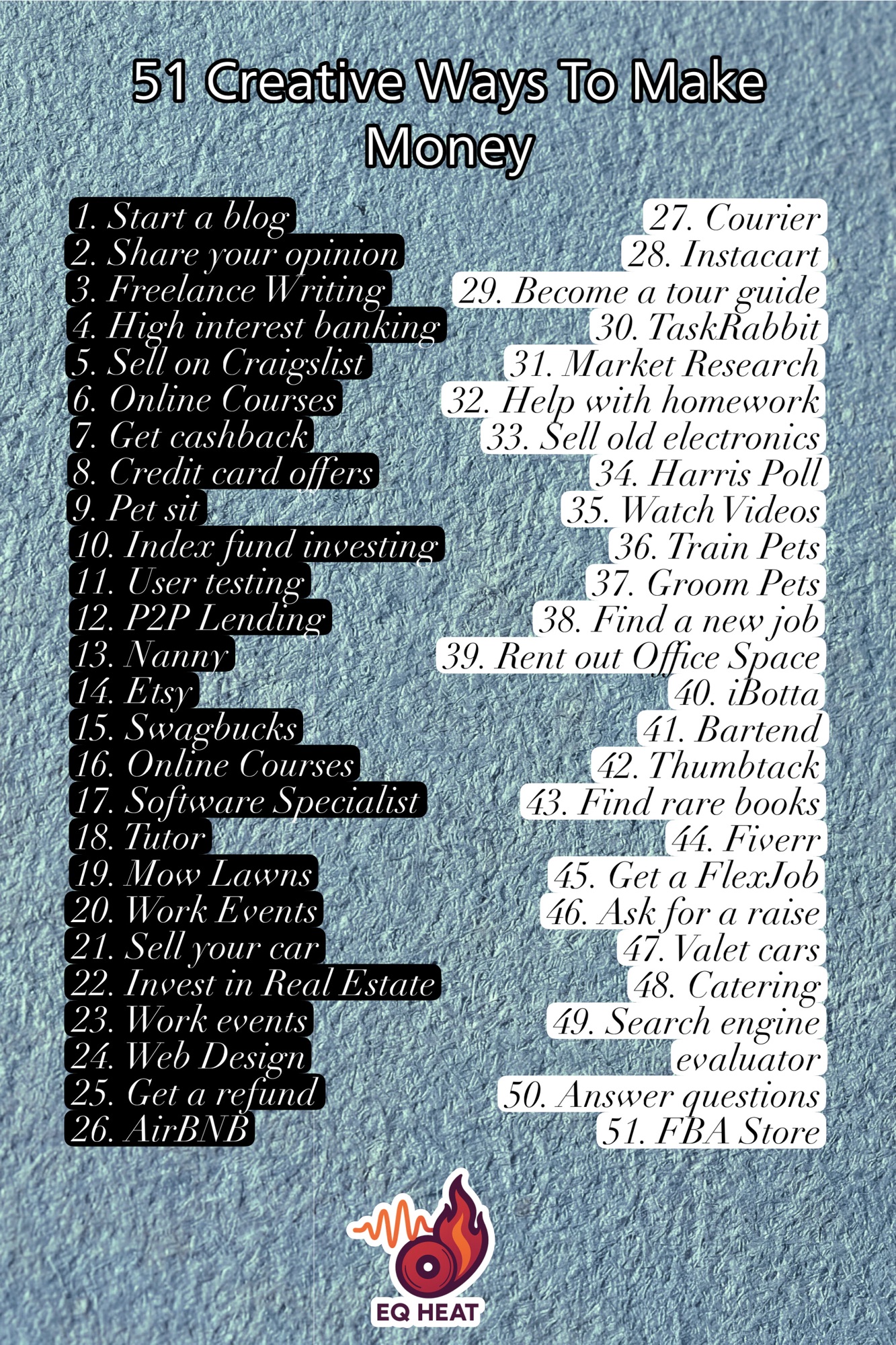

  • Creative Ways to Make Money Using Your Skills

    Creative Ways to Make Money Using Your Skills

    Everyone has a skill that can create value. It’s just one of the ways to make money out of the other hundreds of thousands.

    The challenge isn’t always becoming more talented—it’s recognizing that what comes naturally to you may solve a problem that someone else is willing to pay for.

    I’ve learned this firsthand through years of pursuing entrepreneurship while building brands around my own interests.

    Instead of trying to chase every trending opportunity online, I found that lasting motivation came from developing businesses centered around what I already enjoyed doing.

    Whether that meant producing music, studying hip-hop culture, creating content, or learning affiliate marketing, every new skill eventually became another asset that could generate income.

    The more your income is connected to your abilities rather than just your time, the more opportunities you create for yourself.

    Skills can be packaged, improved, and sold repeatedly in ways that traditional employment often can’t match.

    Turn Your Knowledge Into Educational Content

    One of the most overlooked assets people have is experience.

    You don’t have to be the world’s leading expert before teaching others. If you’ve already solved problems that beginners are currently facing, your knowledge has value.

    Educational content can take many forms:

    • Written articles
    • Video tutorials
    • Podcasts
    • Online courses
    • Digital guides
    • Workshops
    • Webinars

    Throughout my own journey of building websites and publishing articles, I’ve discovered that documenting what I learn not only reinforces my own understanding but also creates long-term content that continues helping new readers long after it’s published.

    Teaching doesn’t always require standing in front of a classroom. Sometimes it simply means sharing lessons you’ve learned through real experience.

    Package Your Skills Instead of Selling Hours

    Many people immediately think of freelancing when they want to earn money with a skill.

    While freelancing certainly works, packaging your knowledge often allows you to earn beyond hourly rates.

    Examples include:

    • Templates
    • Checklists
    • Digital downloads
    • Music sample packs
    • Design assets
    • Business frameworks
    • Printable resources

    Instead of performing the same work repeatedly, you create something once that can continue generating income over time.

    This approach becomes increasingly valuable as your audience grows.

    Build a Personal Brand Around Your Expertise

    People often buy from individuals they trust.

    A personal brand allows your personality, experience, and reputation to become part of what you’re offering.

    It’s capitalizing off your unique design.

    Rather than trying to appeal to everyone, focus on becoming known for solving a particular type of problem.

    For me, building businesses around entrepreneurship and music has reinforced an important lesson: authenticity creates consistency.

    It’s much easier to create content regularly when it revolves around subjects you’re genuinely passionate about instead of topics chosen solely because they appear profitable.

    When your audience repeatedly sees valuable insights from you, trust develops naturally.

    Monetize Creative Talents

    Creative skills are far more marketable than many people realize.

    Artists frequently combine multiple income streams instead of relying on only one.

    Depending on your strengths, opportunities may include:

    • Music production
    • Songwriting
    • Graphic design
    • Photography
    • Video editing
    • Voice acting
    • Illustration
    • Animation
    • Writing

    As someone who has spent years producing music while building a brand centered around authentic artistry, I’ve seen how creativity extends beyond simply making art.

    Creative thinking also influences branding, marketing, storytelling, and audience engagement.

    The skill itself often opens doors to additional business opportunities.

    Create Digital Products

    Digital products remain attractive because they can be sold repeatedly without needing to recreate inventory.

    Examples include:

    • eBooks
    • Digital planners
    • Audio files
    • Beat packs
    • Stock music
    • Spreadsheets
    • Presets
    • Graphic templates
    • Business guides

    Although creating quality digital products requires upfront effort, they can continue producing revenue with relatively little ongoing maintenance once established.

    Over time, a collection of digital products can become an important component of a diversified income strategy.

    Offer Consulting or Coaching

    Some skills become valuable because people want personalized guidance.

    If you’ve developed meaningful experience in a specific field, others may gladly pay to shorten their own learning curve.

    Consulting doesn’t necessarily require decades of experience.

    It requires demonstrated results.

    One of the experiences that reinforced this lesson for me was helping produce a conference champion—a goal I hadn’t personally accomplished as a competitor.

    Watching someone reach that level showed me that valuable coaching isn’t always about personal accolades.

    Sometimes it’s about understanding how to help others unlock their own potential.

    People often seek someone who can identify blind spots they can’t see themselves.

    Combine Multiple Skills Into One Unique Service

    One of the biggest advantages entrepreneurs have is the ability to combine unrelated skills.

    For example:

    • Writing + SEO
    • Music + Marketing
    • Photography + Social Media
    • Graphic Design + Branding
    • Video Editing + Advertising

    The combination often becomes more valuable than either skill individually.

    I’ve found that blending music knowledge with content creation and digital marketing creates opportunities that wouldn’t exist if each skill remained isolated.

    Unique combinations are much harder for competitors to replicate.

    Build an Audience Before Selling

    Many successful creators focus on building trust first.

    An engaged audience often becomes more valuable than any single product.

    You can build an audience through:

    • Blogging
    • YouTube
    • Podcasts
    • Email newsletters
    • Social media
    • Community groups

    Over time, your audience begins viewing you as a trusted resource instead of simply another seller.

    That relationship dramatically improves the effectiveness of future products and services.

    Keep Improving Your Skills

    Your earning potential often grows alongside your abilities.

    Markets change.

    Technology evolves.

    Customer expectations increase.

    Continuous learning helps ensure your skills remain valuable.

    I’ve spent years studying entrepreneurship, affiliate marketing, SEO, branding, and content creation while continuing to develop my music career.

    Every new capability I’ve added has expanded the number of ways I can create value. What started as separate interests gradually became complementary skills that strengthened one another.

    Investing in yourself frequently produces the highest long-term return.

    Final Thoughts

    Making money with your skills isn’t about finding one perfect opportunity.

    It’s about recognizing the value you already possess and finding creative ways to package, market, and improve it over time.

    Whether your strengths involve creativity, communication, leadership, technology, education, or problem-solving, there’s likely someone looking for exactly what you know.

    The most successful people rarely rely on a single talent. Instead, they combine their experiences, continue developing new skills, and consistently create value for others.

    As your expertise grows and your reputation strengthens, your skills become more than personal abilities—they become business assets capable of creating opportunities for years to come.

  • Turning Hobbies Into Profit: Ways To Monetize Your Passion

    Turning Hobbies Into Profit: Ways To Monetize Your Passion

    There was a time when I viewed hobbies as something completely separate from making money. They were the things I did because I enjoyed them, not because I expected them to pay the bills. Over time, though, I started noticing something interesting. Many of the people I admired most had found a way to blend the two. They weren’t simply chasing profits—they were creating value through something they genuinely enjoyed doing.

    That realization changed how I approached my own interests. Instead of asking, “Can I make money from this?” I began asking, “How can I create enough value that people would willingly pay for it?” That shift in thinking made all the difference.

    If you’re interested in turning your passion into a reliable source of income, I’ve found that success usually comes down to three important ideas: identifying market demand, packaging your unique skill, and scaling gradually. Together, these principles create a practical path that allows passion and business to grow alongside one another.

    Start by Identifying Market Demand

    One of the biggest mistakes I see people make is assuming that because they enjoy something, there must automatically be a market for it. Passion is incredibly important, but demand determines whether your hobby can become a sustainable business.

    Whenever I’ve explored a new business idea, I’ve learned to spend time researching before investing heavily. I look at what people are searching for, what questions they ask repeatedly, and what problems they need solved. This helps me understand whether there’s an audience that already exists.

    For example, if someone loves photography, there are countless ways that interest could become profitable. Wedding photography, product photography, real estate photography, stock images, online tutorials, or editing services each serve different audiences with different needs. The hobby stays the same, but the market changes completely depending on who you decide to help.

    I’ve found that the best opportunities usually exist where three things overlap:

    • Something you genuinely enjoy.
    • Something you’re consistently good at.
    • Something people are already willing to spend money on.

    When those three circles intersect, you’ve found a much stronger foundation than relying on passion alone.

    Instead of trying to convince people they need your hobby, look for existing demand and position your skills where they’re already needed.

    Package Your Unique Skill

    Another lesson I’ve learned is that people rarely buy hobbies. They buy outcomes.

    Someone isn’t paying a musician simply because they enjoy making music. They’re paying for entertainment, emotional connection, production quality, education, or creative expertise. Likewise, customers don’t buy a fitness hobby—they buy improved health. They don’t buy graphic design because it’s fun—they buy stronger branding.

    Learning to package your hobby around the value it creates is one of the biggest turning points in monetization.

    As I’ve built online projects, I’ve realized that presentation often matters just as much as ability. The way you describe your skills, organize your services, and communicate your expertise influences how others perceive your value.

    Packaging your unique skill can include:

    • Creating beginner, intermediate, and premium service levels.
    • Offering digital products alongside personal services.
    • Developing courses, guides, or templates.
    • Building a recognizable personal brand.
    • Showing examples of previous work and real results.

    People also connect with authenticity. One advantage hobbyists have is genuine enthusiasm. Customers can usually tell the difference between someone who simply wants money and someone who truly enjoys helping others.

    I’ve discovered that sharing my own experiences, lessons learned, and personal journey creates far more trust than making exaggerated promises ever could. Real stories demonstrate experience in a way that generic marketing never will.

    Scale Gradually Instead of Rushing

    One of the most valuable business lessons I’ve learned is that growth doesn’t have to happen overnight.

    When excitement kicks in, it’s tempting to spend thousands on equipment, software, advertising, or inventory before you’ve earned your first dollar. I’ve learned that gradual growth often creates stronger businesses because every step is supported by actual customer feedback.

    Scaling gradually allows you to:

    • Test whether customers truly value your offer.
    • Improve your products over time.
    • Build confidence through small wins.
    • Reduce unnecessary financial risk.
    • Learn what customers actually want before expanding.

    This approach also makes mistakes much less expensive.

    Many successful businesses didn’t begin with huge investments. They started with one customer, then ten, then one hundred. Each stage provided valuable information that shaped future decisions.

    I’ve found it helpful to treat early sales as research just as much as income. Every customer teaches something about pricing, communication, quality, or expectations.

    Those lessons become incredibly valuable as your business grows.

    Build Credibility Along the Way

    Another important part of monetizing your passion is earning trust.

    People naturally feel more comfortable buying from someone who demonstrates consistent knowledge and experience. That’s why I believe it’s worth sharing educational content, documenting your progress, and showcasing real examples of your work.

    Credibility isn’t built through claiming expertise—it’s built by consistently providing value.

    Whether you’re writing articles, posting videos, publishing tutorials, or answering questions online, every helpful interaction strengthens your reputation.

    I’ve also learned that honesty matters just as much as confidence. If you’re still learning certain areas, it’s perfectly acceptable to say so. Customers appreciate transparency far more than exaggerated claims.

    Trust compounds over time.

    Diversify Your Income Streams

    Another realization I’ve had is that relying on a single source of income can make any business vulnerable.

    Once your hobby begins generating revenue, there are often opportunities to expand naturally without abandoning your original passion.

    For example, someone who enjoys producing music might eventually earn income through beat licensing, mixing services, online coaching, merchandise, sponsorships, digital downloads, affiliate marketing, or educational content.

    The same principle applies across countless hobbies.

    Diversification creates stability because different income streams can support one another during slower seasons.

    Rather than constantly searching for entirely new ideas, I prefer looking at ways my existing skills can solve additional problems for the same audience.

    Passion Opens the Door—Value Keeps It Open

    One lesson continues to stand out every time I study successful entrepreneurs and creators.

    Passion may be what gets you started, but consistently creating value is what keeps customers coming back.

    The people who successfully turn hobbies into profitable businesses usually aren’t chasing shortcuts. They’re continually improving their skills, listening to customer feedback, and finding better ways to serve others.

    Looking back, I don’t think monetizing a hobby is about turning something enjoyable into “just another job.” It’s about allowing your interests to create opportunities while helping other people at the same time.

    For me, the journey always comes back to three simple principles: identify genuine market demand, package your unique skill in a way people understand, and scale gradually as experience and confidence grow. Those ideas provide a practical roadmap that balances passion with sound business strategy.

    When you approach your hobby with both creativity and patience, you give yourself the opportunity to build something that is not only financially rewarding but personally meaningful as well.

  • How to Choose the Best Affiliate Marketing Ideas for Your Niche

    Affiliate marketing offers one of the easiest ways to earn income online without creating your own products. However, not every affiliate opportunity is worth pursuing. The difference between a website that earns consistent commissions and one that struggles often comes down to choosing affiliate marketing ideas that naturally fit your niche and audience.

    Rather than promoting every product with a commission, successful affiliate marketers focus on recommendations that provide real value. When your suggestions solve real problems, your audience is more likely to trust your content, click your links, and return for future advice.

    Understand What Your Audience Actually Wants

    Before looking for affiliate programs, spend time understanding your audience’s goals, frustrations, and interests. Every niche has unique challenges, and the products you recommend should directly help people overcome them.

    Ask yourself questions such as:

    • What problems does my audience frequently experience?
    • What products or services would save them time?
    • What tools help them achieve better results?
    • What purchases would they naturally make anyway?

    For example, a fitness website may recommend workout equipment, nutrition programs, supplements, and fitness apps. Meanwhile, a photography blog may focus on cameras, editing software, tripods, online courses, and cloud storage services.

    The closer your affiliate recommendations match your audience’s needs, the more likely they are to convert.

    Stay Within Your Niche

    One of the biggest mistakes beginners make is promoting products that have little connection to their content.

    Imagine visiting a website about gardening and suddenly seeing promotions for cryptocurrency software. Even if the commission is high, the recommendation feels out of place and can reduce trust.

    Instead, keep your affiliate offers aligned with your primary topic. When your content and promotions naturally fit together, readers are more likely to view your recommendations as helpful rather than sales-driven.

    A focused niche also helps establish authority over time. Readers begin to recognize your website as a reliable source of information instead of a collection of unrelated advertisements.

    Look for Products You Can Honestly Recommend

    Trust is one of the most valuable assets in affiliate marketing.

    Whenever possible, promote products you have personally used or thoroughly researched. Sharing genuine experiences allows you to explain both the strengths and potential limitations of a product.

    Instead of simply saying a product is “the best,” explain:

    • Who the product is designed for.
    • What problems it solves.
    • Where it performs well.
    • Situations where another option might be better.

    Balanced recommendations build credibility because readers appreciate honest opinions more than exaggerated marketing claims.

    Consider Commission Rates Without Making Them the Priority

    High commissions can be appealing, but they shouldn’t be your only deciding factor.

    A product with a smaller commission that consistently converts can often earn more than a high-paying product that few people actually buy.

    When evaluating affiliate opportunities, consider factors such as:

    • Commission percentage
    • Cookie duration
    • Average order value
    • Conversion rates
    • Brand reputation
    • Customer satisfaction

    A trusted company with quality products often generates repeat sales and stronger long-term income than an unknown brand offering unusually high commissions.

    Focus on Evergreen Products

    Some affiliate products remain useful year after year, making them excellent long-term opportunities.

    Examples of evergreen affiliate categories include:

    • Website hosting
    • Business software
    • Educational courses
    • Productivity tools
    • Financial services
    • Books
    • Health and wellness products
    • Home improvement equipment

    Because these products remain relevant over time, articles targeting them can continue attracting visitors through search engines long after they’re published.

    Adding evergreen affiliate content helps create a more stable income stream instead of relying only on temporary trends.

    Research Search Intent Before Choosing Products

    Keyword research can reveal exactly what people are searching for before making a purchase.

    Look for searches that indicate buying intent, such as:

    • Best…
    • Review
    • Comparison
    • Alternatives
    • Vs.
    • Affordable…
    • Beginner…
    • Top-rated…

    For example, someone searching for “best podcast microphone for beginners” is much closer to making a purchase than someone searching for “what is a podcast.”

    Creating content around purchase-focused searches allows your affiliate recommendations to appear when readers are actively looking for solutions.

    Evaluate the Company’s Reputation

    Your reputation becomes connected to every company you recommend.

    Before joining an affiliate program, research the business by looking at:

    • Customer reviews
    • Product quality
    • Refund policies
    • Customer support
    • Industry reputation
    • Length of time in business

    Recommending poor-quality products may generate short-term commissions but can damage your credibility with readers.

    Protecting your audience’s trust should always be more important than earning a quick sale.

    Diversify Your Affiliate Income

    Relying on one affiliate program creates unnecessary risk.

    Companies sometimes reduce commission rates, change their policies, or even discontinue their affiliate programs.

    Building relationships with multiple quality affiliate partners helps protect your income while giving readers more options.

    For example, instead of recommending only one email marketing platform, you could compare several reputable services for different budgets and business sizes.

    Diversification makes your content more balanced while reducing dependence on a single source of revenue.

    Create Helpful Content Around Your Affiliate Offers

    Affiliate links perform best when they’re supported by valuable content.

    Instead of publishing pages that simply list products, create content that educates readers first.

    Effective affiliate content includes:

    • In-depth reviews
    • Step-by-step tutorials
    • Buying guides
    • Product comparisons
    • Frequently asked questions
    • Case studies
    • Resource pages
    • Beginner guides

    When readers learn something useful before seeing your recommendation, they’re more likely to trust your suggestions.

    Helpful content also tends to perform better in search engines because it prioritizes the user’s experience.

    Monitor Performance and Improve Over Time

    Affiliate marketing is an ongoing process rather than a one-time setup.

    Regularly review your analytics to understand which products generate the most clicks, conversions, and revenue.

    Pay attention to:

    • Click-through rates
    • Conversion rates
    • Traffic sources
    • Top-performing articles
    • Seasonal trends
    • Reader engagement

    Use this information to improve existing content, update outdated recommendations, and identify new affiliate opportunities within your niche.

    Small improvements made consistently can produce significant growth over time.

    Final Thoughts

    Choosing the best affiliate marketing ideas isn’t about finding the highest-paying commission. It’s about matching quality products with the needs of your audience while building long-term trust.

    The strongest affiliate marketers focus on helping people make informed purchasing decisions rather than simply earning commissions. By understanding your niche, researching products carefully, creating genuinely helpful content, and continuously refining your strategy, you can build an affiliate marketing business that benefits both your readers and your bottom line.

    When your recommendations consistently solve real problems, affiliate sales become a natural result of the value you provide instead of the primary focus of your content.

  • Top 10 Affiliate Marketing Ideas to Boost Your Online Income

    Affiliate marketing has become one of the most accessible ways to earn money online. Whether you’re running a blog, growing a YouTube channel, building an email list, even Network Marketing, or creating content on social media, affiliate marketing allows you to recommend products and services while earning commissions from qualified sales or leads.

    The key to success isn’t promoting everything you can find. Instead, it’s choosing affiliate marketing ideas that match your audience’s interests and provide genuine value. When recommendations solve real problems, trust grows—and so does your earning potential.

    Here are ten affiliate marketing ideas that can help boost your online income.

    1. Build a Niche Authority Website

    One of the most reliable affiliate marketing strategies is creating a website dedicated to a specific niche.

    Rather than covering dozens of unrelated topics, focus on one area where readers consistently look for advice. Examples include personal finance, fitness, entrepreneurship, technology, music production, travel, or home improvement.

    Publish helpful guides, tutorials, comparisons, and product reviews that naturally incorporate affiliate links. As your content begins ranking in search engines, it can generate commissions around the clock.

    Why it works:

    • Attracts targeted visitors
    • Builds long-term trust
    • Generates evergreen traffic
    • Scales over time with quality content

    2. Create Product Comparison Articles

    People often search for the differences between two competing products before making a purchase.

    Comparison articles help readers make informed decisions while placing affiliate recommendations in a helpful context.

    Some examples include:

    • Software A vs. Software B
    • Bluehost vs. SiteGround
    • Canva Pro vs. Adobe Express
    • DSLR Camera vs. Mirrorless Camera

    By honestly discussing strengths, weaknesses, pricing, and ideal users, you increase your chances of earning commissions while maintaining credibility.

    3. Publish In-Depth Product Reviews

    Comprehensive reviews continue to be among the highest-converting forms of affiliate content.

    Instead of simply listing product features, discuss your experience using the product whenever possible. Cover:

    • Features
    • Pros
    • Cons
    • Pricing
    • Ease of use
    • Best use cases
    • Alternatives
    • Final recommendation

    Readers appreciate transparency, especially when you acknowledge both positives and limitations.

    4. Recommend Helpful Software and Digital Tools

    Many software companies offer recurring affiliate commissions, making this one of the most attractive opportunities for long-term income.

    Examples include:

    • Website hosting
    • Email marketing platforms
    • SEO software
    • Graphic design tools
    • AI writing assistants
    • Video editing software
    • Music production applications
    • Project management platforms

    Recurring commissions can create predictable monthly revenue as long as customers remain subscribed.

    5. Grow an Email Newsletter

    An email list gives you direct access to an audience that already trusts your content.

    Instead of constantly relying on social media algorithms, you can recommend valuable affiliate products through:

    • Weekly newsletters
    • Educational email series
    • Exclusive discounts
    • Product launches
    • Seasonal buying guides

    Focus on educating subscribers first. Promotional emails perform significantly better when they follow a consistent pattern of providing useful information.

    6. Create Educational Video Content

    Video marketing continues to grow across platforms like YouTube and short-form video apps.

    Educational videos naturally introduce affiliate recommendations while demonstrating how products actually work.

    Popular video ideas include:

    • Tutorials
    • Beginner guides
    • Product walkthroughs
    • “Best Tools” lists
    • Setup guides
    • Frequently asked questions
    • Mistakes to avoid

    Showing products in action often builds confidence more effectively than written descriptions alone.

    7. Build Resource Pages

    A resource page is a curated collection of products, services, and tools you personally recommend.

    Instead of scattering affiliate links throughout hundreds of articles, visitors can access everything from one organized page.

    Categories might include:

    • Business tools
    • Blogging resources
    • Podcast equipment
    • Camera gear
    • Music production software
    • Marketing platforms
    • Productivity apps

    Resource pages are easy to update as your recommendations evolve.

    8. Promote High-Ticket Affiliate Programs

    While smaller commissions add up, high-ticket affiliate programs can significantly increase your earnings from fewer sales.

    These programs often include:

    • Online courses
    • Premium software
    • Coaching programs
    • Business services
    • Professional certifications
    • Website development platforms

    High-ticket offers typically require stronger audience trust, making educational content especially important before recommending them.

    9. Repurpose Content Across Multiple Platforms

    One piece of content can become numerous affiliate marketing opportunities.

    For example, a single blog article can be transformed into:

    • YouTube videos
    • Pinterest Pins
    • Instagram carousels
    • TikTok videos
    • Facebook posts
    • LinkedIn articles
    • Email newsletters
    • Podcast episodes

    Repurposing expands your reach while maximizing the return on every piece of content you create.

    10. Solve Problems Instead of Selling Products

    The highest-performing affiliate marketers focus less on selling and more on solving problems.

    Ask yourself:

    • What challenge is my audience facing?
    • Which products genuinely solve it?
    • How can I explain the solution clearly?
    • What questions might readers have before purchasing?

    When your recommendations naturally fit the solution, affiliate links feel helpful rather than promotional.

    People are far more likely to purchase when they believe your recommendation exists to help them—not simply generate commissions.

    Tips for Long-Term Affiliate Marketing Success

    Regardless of which strategy you choose, several habits consistently separate successful affiliate marketers from everyone else.

    • Create high-quality, informative content before focusing on monetization.
    • Be transparent about affiliate relationships to build trust.
    • Regularly update older articles with fresh information and current recommendations.
    • Track which content generates the most clicks and conversions.
    • Diversify your affiliate partnerships instead of relying on a single company.
    • Continue learning about SEO, content marketing, and audience engagement.

    Affiliate marketing rewards consistency more than overnight success. Publishing valuable content over months and years creates a foundation that can continue generating income long after individual articles are published.

    Final Thoughts

    Affiliate marketing offers numerous ways to build online income, but lasting success comes from helping people make informed decisions. Whether you create niche websites, produce educational videos, grow an email list, or write detailed product reviews, the common denominator is trust.

    Focus on recommending products that genuinely benefit your audience, continue improving your content, and treat affiliate marketing as a long-term business rather than a quick-money opportunity. By consistently providing value and choosing affiliate partnerships that align with your niche, you can create multiple income streams while establishing yourself as a trusted resource in your industry.