Hip hop holds a special place not only as a music genre but as a powerful form of expression that goes well beyond entertainment. My experience shows that hip hop provides a voice for communities often overlooked, and its influence stretches into some of the most important social and political shifts. Whether I’m exploring tracks about systemic injustice or protests powered by bold lyrical statements, I see hip hop act as a mirror, reflecting the challenges and dreams of the people behind the music.
The Roots of Hip Hop and Its Social Voice
Hip hop began in the 1970s in the Bronx as a response to tough social and economic times. Block parties, rapping, DJing, graffiti, and breakdancing formed this unique movement. I find it interesting that even the earliest hip hop tracks tackled difficult topics, pushing for change in a way that felt real and immediate. Songs like “The Message” by Grandmaster Flash and the Furious Five brought attention to urban poverty, crime, and lack of opportunity, blending storytelling and reality into something people could feel on a personal level.
When I trace the early growth of hip hop, I see something much bigger than music. Hip hop turned into a form of protest, a way for young people to document their daily struggles in a society that often shut them out. Experiences of inequality and racism drove the genre’s message, giving many a reason to listen, reflect, and respond. Hip hop’s roots are grounded in resistance and hope, setting the stage for decades of cultural innovation.
How Hip Hop Shapes Social and Political Awareness
Hip hop’s ability to spark thought and action is super important. When I listen to songs from artists like Public Enemy or KRS-One, I’m reminded of how lyrics can deliver bold opinions on issues such as police brutality, racial profiling, and government corruption. Public Enemy’s “Fight the Power” was written as an anthem for resistance and remains an example of how music can get people moving and bring communities together.
Through mixtapes, street art, and performances, hip hop often spreads messages about civil rights, voter participation, and economic fairness. Many times, I’ve seen artists use their platform not just to entertain but to educate and motivate others to stand up for their rights. Whether the subject is war, immigration, or poverty, hip hop makes hard topics easier to understand and discuss. This impact isn’t just in the US—hip hop around the world brings people together over shared struggles for justice.
Major Moments: Hip Hop’s Role in Social Movements
Over the years, hip hop has played a part in many milestones related to civil action and protest. One example I think stands out is the link between hip hop and the Black Lives Matter movement. Rappers from cities across the United States responded to police shootings and racial bias with powerful songs and videos. Kendrick Lamar’s “Alright” turned into an unofficial anthem at rallies and marches, echoing the need for hope and collective struggle. Tracks like these brought national attention to social issues by combining catchy beats with meaningful storytelling.
During the Arab Spring, rap music played a key part in speaking out against oppressive governments. Artists like El Général in Tunisia recorded bold tracks that expressed anger at injustice and inspired thousands to demand change. Internationally, hip hop continues to be used by marginalized communities as a way to spotlight their stories. In this way, hip hop became a way for people around the world to share stories of resistance in real time and connect with each other across borders.
Elements of Hip Hop Culture: More Than Just Music
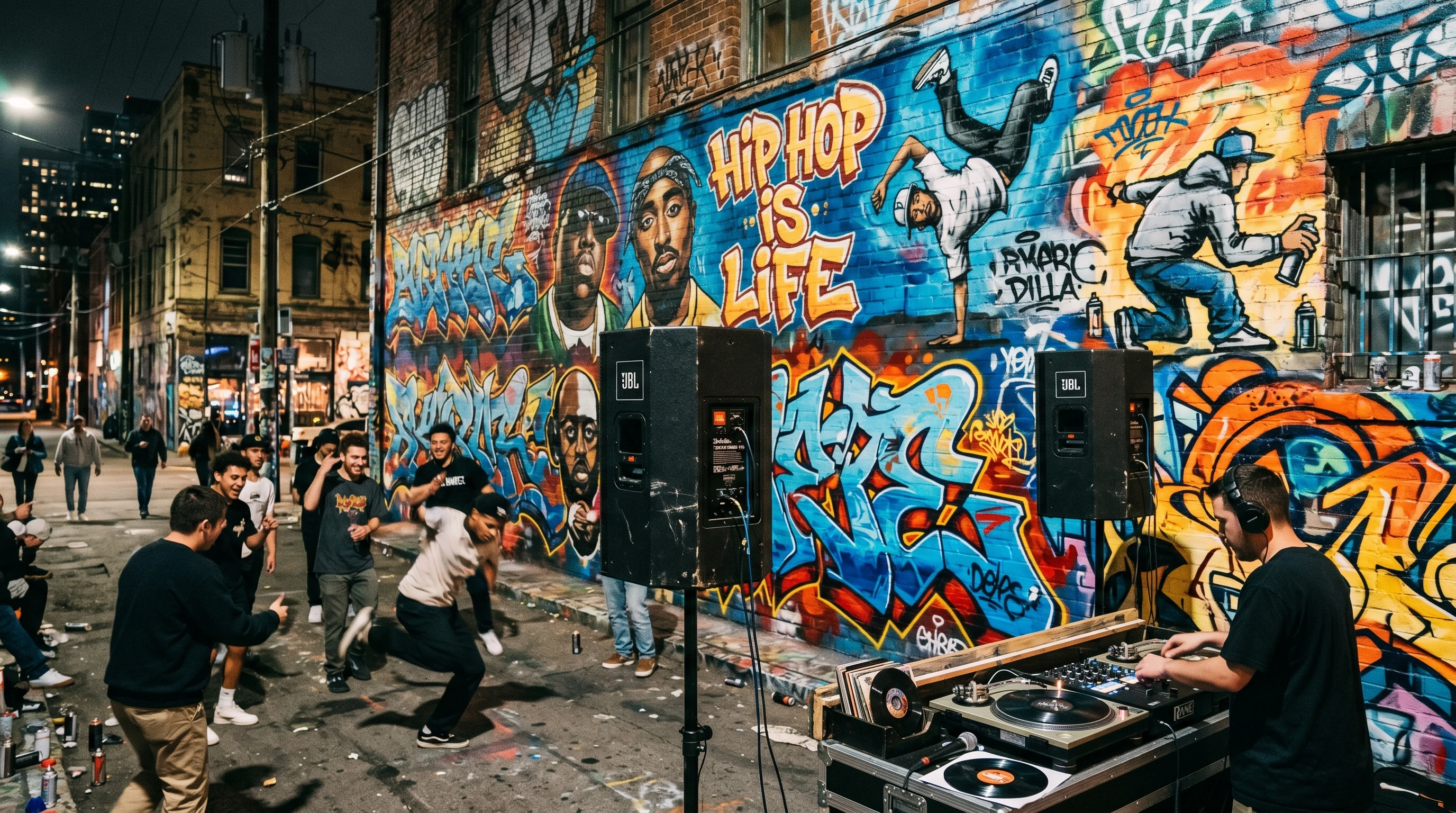
Many people know hip hop for its catchy rhythms and strong lyrics, but for me, it includes much more. The four main elements—rap, DJing, graffiti, and breakdancing—all play roles in building community awareness.
Beyond these core elements, hip hop fashion and its cultural evolution also plays a major role in expressing identity and social influence.
But Graffiti artists use city walls to make political statements visible to everyone. Dancers tell stories of survival and pride with their bodies, often in public spaces where everyone can watch. DJs sample speeches and news clips to link music with important moments in history.
As an art form, hip hop gives everyone, especially the young and the underrepresented, a chance to join cultural discussions. While not every element is overtly political, each one shows pride, unity, and a desire to speak up. Together, they offer a toolkit for challenging the status quo and building social bonds. Hip hop culture also teaches creative problem-solving and teamwork, allowing communities to get involved, share their voices, and learn from one another.
Facing Resistance: Challenges Hip Hop Artists Encounter
Speaking truth to power is not always welcomed. Hip hop artists sometimes face backlash, censorship, or pressure to tone down their content. Governments have tried to ban songs, block performances, or limit access to hip hop festivals out of fear that honest lyrics might motivate protest. In my experience, this only increases the determination of artists and fans to keep the stories alive. Some communities have worked hard to keep venues open and lyrics uncensored despite heavy policing or political pressure.
Another challenge is trying to balance the desire to spread a message with the commercial side of music. As hip hop grew more popular and profitable, some artists risked losing their original message in favor of radio hits. Still, there are many who find creative ways to speak on relevant issues while appealing to a wider crowd. Even with these obstacles, new generations are stepping up to keep hip hop grounded in truth and activism.
Hip Hop and Its Impact on Youth
One area where hip hop’s influence shines is in its connection with young people. Many public schools, afterschool programs, and community groups use hip hop to teach social skills, entrepreneurship, or even poetry. I’ve noticed students who might not get excited about traditional subjects suddenly become involved when they write rhymes, design album covers, or research hip hop history. These activities help youth see their experiences reflected in something valuable and positive.
Hip hop offers mentorship, with older artists guiding beginners on how to use their talents for both creative and activist work. Youthled cyphers, freestyle battles, and open mics offer safer spaces to express frustration and hope. Over time, these platforms help build leaders with a strong sense of social responsibility. Hip hop also fosters collaboration, encouraging youth to work as teams and build trust across backgrounds.
Nowadays, digital platforms allow even more young voices to share their music and messages globally. Home studios and social media let students set their own goals, showcase their lives, and organize for causes that matter to them. Hip hop serves not only as entertainment but as a dynamic tool for education and empowerment of the next generation.
Famous Tracks and Albums with Social Messages
Some classic and more recent music highlights hip hop’s power in political and social movements. I often go back to Tupac Shakur’s “Changes,” which narrates social challenges like racism and inequality. Lauryn Hill’s album “The Miseducation of Lauryn Hill” blends themes of love, self-respect, and activism. Nas’s “N.Y. State of Mind” looks at innercity realities, giving a raw account of daily struggles. More recently, artists like J. Cole with “Be Free” and Dave with “Black” use personal stories to talk about injustice and identity. These works keep the conversation alive, reminding me that progress happens when people share stories without holding back.
- “The Message” by Grandmaster Flash, Focuses on urban hardship
- “Fight the Power” by Public Enemy, Calls for civil resistance
- “Alright” by Kendrick Lamar, Hopeful anthem for the Black Lives Matter movement
- “Changes” by Tupac Shakur, Explores racism and hope
- “Be Free” by J. Cole, Personal plea for social justice
Frequently Asked Questions
Question: Why do so many political protests use hip hop music?
Answer: Hip hop provides strong, easy-to-repeat messages. Its beats and lyrics motivate people, and the style helps unify crowds with shared goals.
Question: Are all hip hop artists activists?
Answer: Not all artists focus on activism, but many feel a responsibility to speak about important topics from their communities. Some create music just for fun or entertainment, but their background usually brings some realness to their songs.
Question: Does hip hop have an influence outside the United States?
Answer: Definitely. Hip hop has grown into a global movement. Artists from France, South Africa, Brazil, and many other countries use rap, graffiti, and dance as forms of protest and social commentary.
Hip Hop as an Ongoing Force for Change
Hip hop holds an ongoing place in social and political movements. While trends in music mix it up over time, the commitment to storytelling and raising tough questions stays strong. Every time I put on a track that speaks honestly about life’s challenges, I’m reminded that hip hop’s real impact is about more than beats and rhymes. It’s about people finding their voice and building stronger communities together. Staying aware of hip hop’s power helps me track down the role music plays in shaping both personal and national stories. As hip hop continues to grow and reach new audiences, it reminds us that music is both a reflection and a driver of social change.
I really enjoyed reading this article and how it highlights hip-hop as more than just a music genre, but as a powerful form of expression tied to social and political change. It’s interesting how hip-hop has consistently reflected the realities of marginalized communities and given people a voice to speak about inequality, identity, and resistance. I also liked the way the article shows its global influence, not just in the United States but across different cultures and movements. It makes me think about how hip-hop continues to evolve today. Do you think modern hip-hop is still as politically active and socially conscious as it was in its earlier years?
My response might be a little confusing, but bear with me here. I think modern hip hop isn’t necessarily as politically conscious as it was in like the mid 2010s, but do believe it’s conscious socially. There’s been waves of situations that’s happened in just this year alone to back my claim up! Eventually the social awareness will influence politics, but that’s where I’d say we’re at now as a community.