Modern hiphop has experienced significant transformations since its early years. When I look at hiphop’s story, it’s easy to spot waves of activist energy, protest, and cultural reflection. Artists like Public Enemy, KRS-One, and Tupac helped shape what most people see as the “politically conscious” tradition in hiphop. Questions about whether today’s artists are as focused on politics and social issues as before come up a lot. I’m going to break down how modern hiphop approaches social awareness, what’s different now, and why I think these changes are worth paying attention to if you care about music that challenges and inspires.
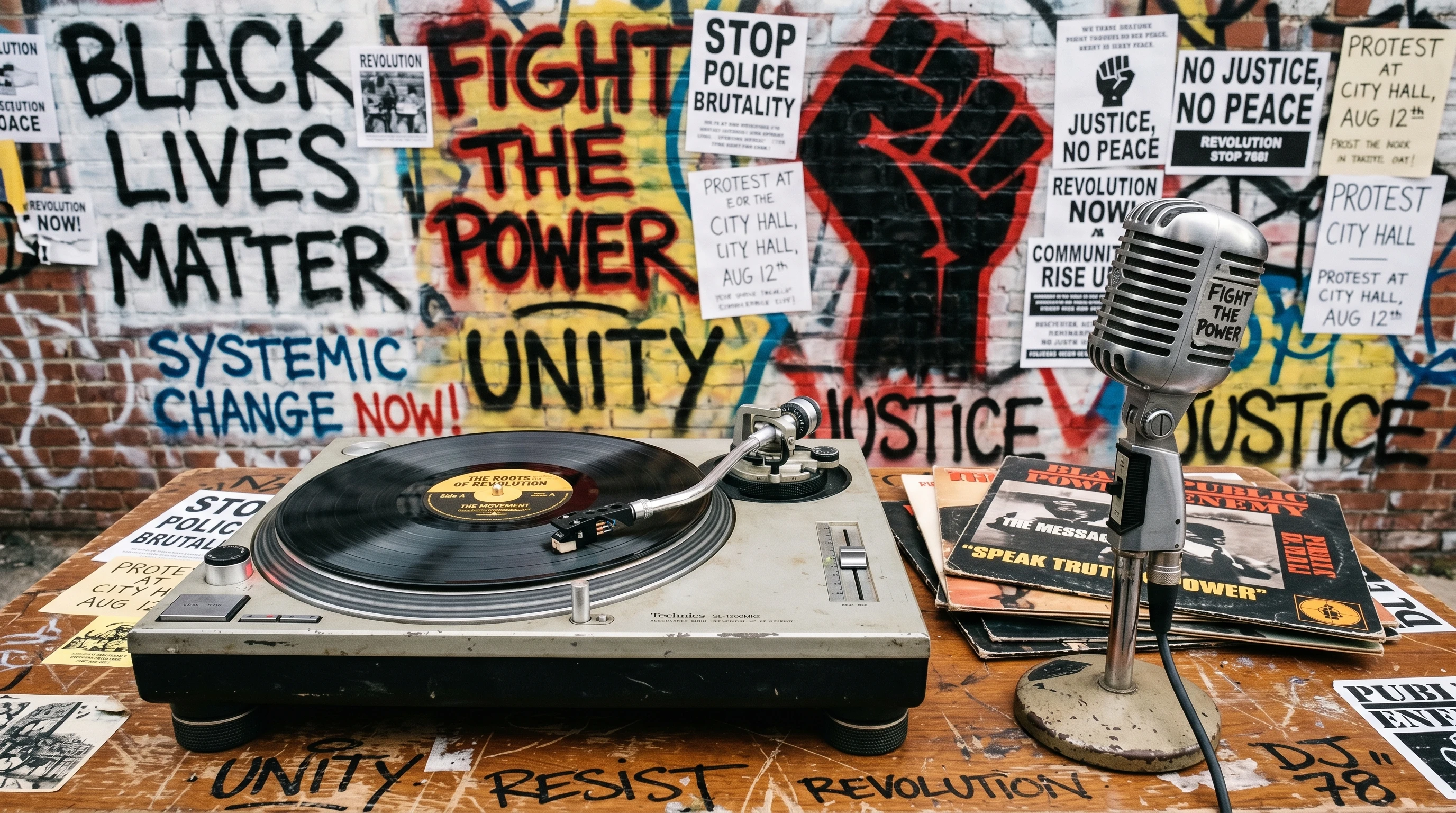
The Legacy of Political and Social Activism in Hiphop
Early hiphop, which grew out of life in New York City’s Bronx during the late 1970s and 1980s, took root in communities struggling with poverty and systemic neglect. A lot of the early records were full of raw social commentary. Grandmaster Flash & The Furious Five’s “The Message,” released in 1982, is a classic example; a song that describes the struggles of surviving in a broken system. As hiphop quickly spread, it stayed close to these themes.
By the late 1980s and 1990s, political and social consciousness was built into hiphop’s DNA. Groups like Public Enemy demanded attention for topics like racism, police brutality, and government neglect. In the 1990s, artists such as Nas, Tupac, Lauryn Hill, and Mos Def put personal and political stories front and center. Hiphop very openly battled inequality and told the stories mainstream media often ignored.
How Social Awareness Shows Up in Today’s Hiphop
Today’s hiphop scene is much bigger and more diverse than it was thirty or forty years ago. Some listeners argue that political and social commentary is less visible, but in my experience, it’s definitely still there. It just looks a bit different.
One thing that stands out is how modern artists balance entertainment, commercial interests, and meaningful messages. You’ll find plenty of tracks about personal struggles, trauma, and empowerment. Kendrick Lamar’s albums, especially To Pimp a Butterfly and DAMN., have led the way in using storytelling to explore institutional racism, identity, and mental health. J. Cole, Vince Staples, Rapsody, and Noname are other artists weaving social critique into their storytelling.
- Kendrick Lamar: Brings personal and collective struggles to the surface, focusing on systemic injustice in tracks like “Alright” and “The Blacker the Berry.”
- J. Cole: Takes a close look at addiction, class, and policing, with songs like “Neighbors” and “1985.”
- Megan Thee Stallion & Cardi B: Push for female empowerment, body positivity, and even touch on politics through their image and lyrics.
Even artists whose work seems less obviously “political” sometimes use interviews, social media, and public appearances to speak out about social issues. This blends hiphop’s activist tradition with the realities of global celebrity and commercial music.
Changes in Political Activism in Modern Hiphop
Looking at the last decade, the tone and format of hiphop’s political conversation has mixed it up. The mid-2010s saw a burst of openly political music, especially during the rise of the Black Lives Matter movement. Tracks like Kendrick’s “Alright” and YG’s “FDT” (with Nipsey Hussle) became unofficial protest anthems. These moments proved hiphop is still ready to respond powerfully when society faces something big.
Since then, messages have often gone back to being more personal, more coded, or focused on lived experience instead of direct protest slogans. There’s still a lot of activism, but it can be woven into stories about relationships, mental health, and overcoming adversity. Lil Baby’s “The Bigger Picture,” released in response to the George Floyd protests, is a good recent example of a track that bridges personal narrative and protest music. Instead of only rallying people with chants, artists now reach listeners by showing how social issues directly affect their real lives.
Why Social Commentary Still Matters in Hiphop
I notice that in today’s hiphop, even if there are fewer direct protest songs, there is plenty of focus on social identity, trauma, and resilience. YoungBoy Never Broke Again and Polo G use stories of street violence and survival to spark empathy and social awareness. Meanwhile, artists like Joey Bada$$ bring up nostalgia for 1990s activism, mixing it with critiques of gentrification and policing.
This approach makes sense in a world where social media gives artists new power to shape conversation. Now, hiphop can quickly respond to current events and highlight social issues before the news cycle catches up. Campaigns for mental health, prison reform, gender equality, and anti-racism are everywhere across the genre, even if they aren’t always stated in as many words as in the past.
Music videos, social feeds, interviews, and live performances all provide extra opportunities for artists to make statements or raise awareness, adding new layers to what “politically active” means in hiphop.
The Role of Audience and Industry Pressures
One of the big changes I see today is how audience expectations and industry pressure shape what gets released and promoted. The music industry has grown, and major record labels often care more about what will go viral than what will challenge listeners politically. This pushes some artists to dial back on the most radical messages, especially if they want crossover hits or global stardom.
But independent artists and those releasing on platforms like SoundCloud, Bandcamp, or YouTube keep the activist spirit really strong. There are still albums and singles produced with almost no commercial filter, targeting grassroots listeners who care about protest, community empowerment, and calling out injustice. These independent voices don’t always hit the charts, but they help spark bigger conversations.
Sometimes, even mainstream stars use their platform to boost activism without centering it in every song. Tyler, The Creator, Chance the Rapper, and Tierra Whack aren’t always labeled as protest artists, but they open up tough discussions around mental health, social identity, and overcoming adversity, showing that political involvement doesn’t only look one way anymore. It’s proof that real engagement can happen outside of traditional protest anthems.
The Future: How Social Consciousness Could Influence Politics
It’s not just music that’s affected by these changes. Hiphop operates as a huge cultural force. I’ve seen how music focused on personal stories still drives social awareness, which in turn ends up shaping how listeners look at politics. This is especially true for young people, who live day-to-day with the consequences of policy and injustice.
Whether or not every new artist writes direct protest songs, there’s a real trend toward music that asks people to look deeper at what’s going on around them. Socially conscious lyrics, storytelling about personal experience, and calls for justice all blend together to change how people think about politics. Even when songs talk about hardship, pain, or hope, they lay the groundwork for political movements to grow in the future.
As recent years have shown, hiphop still jumps into action when big moments demand it. Activism in music videos, online statements, or pop culture collaborations all show that the political legacy of hiphop is alive. Even if it’s less about big slogans and more about authentic lived experience, conscious hiphop isn’t going away anytime soon.
Common Questions on Modern Hiphop and Social Awareness
Understanding where hiphop stands on political and social issues can be confusing. Here are some questions I often hear, along with straightforward answers based on what I’ve observed and researched:
Is modern hiphop less political than it used to be?
Modern hiphop spreads out its social awareness in different ways than before. While there may be fewer direct protest songs, many artists stay aware of social issues and express them through personal stories and interviews.
Who are some of the most socially aware hiphop artists today?
Kendrick Lamar, J. Cole, Noname, Vince Staples, Rapsody, and Lil Baby are all known for touching on social and political topics in their work. There are thousands of others, especially among independent artists, who keep social commentary strong in their music.
Can hiphop really influence political change?
Hiphop has a long track record of raising awareness and energizing social movements. Songs and messages from artists regularly inspire protest, activism, and conversations that lead to real change. Recent social justice events have proven that hiphop’s influence is still powerful, especially when artists respond directly to what’s happening in the world.
Ways to Spot Social Consciousness in New Hiphop Releases
When you’re searching for music with a message, some strategies make it easier to spot which new releases still have that activist energy:
- Pay attention to lyrics: Even songs that sound upbeat or commercial can contain social commentary if you listen closely.
- Follow artists on social media: Many artists share their opinions, causes, and activism through posts, even if it’s not in their music.
- Check music videos and live shows: Visual storytelling can add subtle or direct social critique that’s not always obvious in the audio alone.
- Explore independent and underground scenes: Smaller platforms often have the most fearless and outspoken content.
Getting involved with hiphop means looking for voices that make you think, challenge your assumptions, or give space for stories that usually get ignored. That’s how hiphop keeps its edge. Modern artists can still be as socially conscious as ever, and it’s up to listeners to spot, share, and support that side of the culture.
I absolutely love this post because it opens a door for two different sides to have an open discussion and still be respectful to each others opinion. I will be asking a question here,but first I need to express my point of view. I look forward to continuing this with the utmost respect for both sides.
I appreciate the way you broke this down, there’s a lot of truth in what you’re saying about hip-hop having deep roots in social awareness and storytelling. Artists like Public Enemy, KRS-One, and Tupac Shakur really did use their platform to highlight real issues that weren’t being talked about elsewhere.
From a more conservative perspective, though, I’d gently add another layer to the conversation, because while hip-hop can be a force for awareness and change, it can also be used in ways that promote messages that aren’t always positive or constructive.
For example, some modern artists use their influence to amplify themes like violence, retaliation, or destructive lifestyles. Artists like YoungBoy Never Broke Again and King Von often tell very real stories from their environments, but those stories can sometimes blur the line between describing violence and normalizing it. That can have a powerful impact, especially on younger listeners who may not separate the two.
Even beyond violence, there are cases where the platform is used to push certain ideologies or personal agendas—whether political, cultural, or social, that not everyone agrees with. Artists like Cardi B, for instance, have been very outspoken politically, which shows how influential the platform has become, but also raises questions about how that influence is being used and received.
From my point of view, the platform itself isn’t the issue, it’s incredibly powerful. The question is how it’s stewarded. Music shapes culture, and culture shapes people, so there’s a real responsibility that comes with that kind of reach.
I do agree with you that socially conscious hip-hop is still alive, artists like Kendrick Lamar and J. Cole are great examples of using storytelling to challenge listeners and bring awareness to deeper issues.
I guess the question I’d be curious about is this:
Do you think modern hip-hop has more influence than ever, but less accountability for how that influence is used?
Would love to hear your thoughts, this is an important conversation, especially with how much impact the genre has today.
I would say modern hip hop has had just as much influence as it had when it first was created.
As far as accountability goes, that’s more of a reflection on the generations that came before what we considered modern hip hop to be.
Ultimately it’s their priorities that molds our perception of what it is today.
That applies to all public figures that were supposed to be role models. They shower in the likes of our teachers, coaches. And Even parents!
Accountability itself is interesting when you apply that to what hip hop is supposed to speak up on.
Specifically, this ties in with another discussion that I brought in that’s pretty similar. It relates to the difference between responsibility and accountability.
I say responsibility actually increased as time went on, but it’s opened the door to let people who choose to be more accountable to Flourish. They get more benefits and perks, and because it’s not represented as much as being responsible, It ends up showing what performing at a high level would be. And that’s something that is more innate, if you ask me.
It’s Just something you have to seek (being a more accountable individual) in order to get and achieve what’s considered success.
That influence is more of a reflection of what the followers are.
They’re people that follow others who are influential.
And Those influential individuals have a responsibility, but not all of them are accountable necessarily, and that’s not necessarily their fault. It’s just something that is what the reality would be for today.