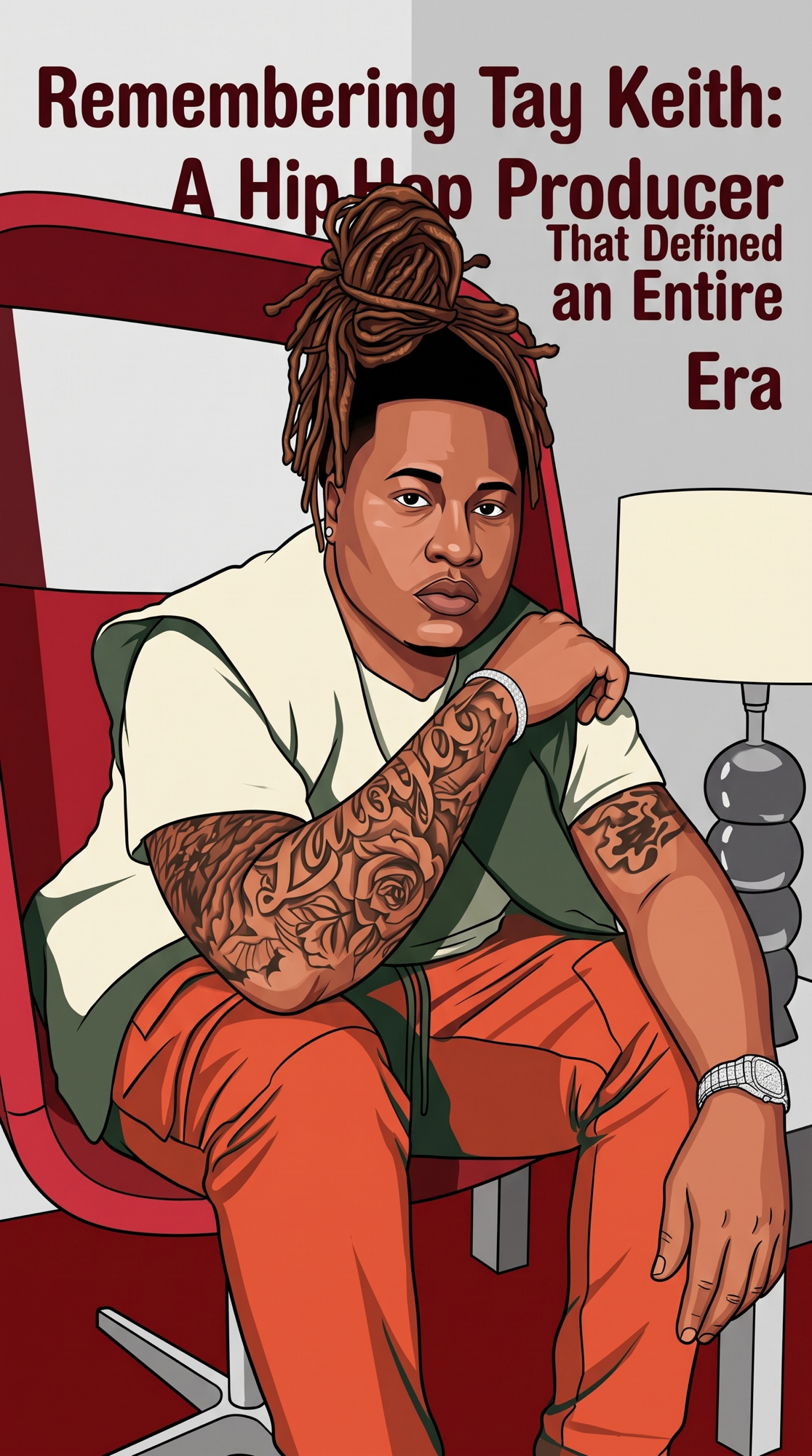
Tay Keith changed my perspective on what hip hop production could sound like. His beats shaped an era and influenced artists worldwide. When thinking about the last decade in hip hop, it’s almost impossible for me not to hear his signature producer tag in my head and remember how his sound sat at the heart of so many major hits. Tay Keith’s legacy will stick with listeners and artists for years to come.
How did hip hop production get changed when Tay Keith got active?
Hip hop production changed when Tay Keith got active because of the way his sound started to shift rap when he entered the game.
His style is known for being one that strips beats down to a minimal.
There’s not a whole lot going on. In terms of variety it keeps the Actual BPM itself simple.
You got High energy 808s that make it even more memorable. There’s rarely any slow paced songs.
Also throw in the aggressive snare rolls to where it just sounds really active of a sound. It explains why he ends up working and collabing with all these artists.
You got where most of the artists that do well end up having that same repetitive sound.
But with the success that he acquired through having artists do well and chart really high based off his beats, It ends up influencing the rest of hip hop culture because there’s going to be plenty of people that want to follow the trend for what works.
And as other artists are proving themselves on his beats, it makes choosing what style you’re going to Run with that much easier.
His Style ended up reshaping mainstream trap, Which is a crazy thought itself because trap rap itself isn’t That old in comparison to other styles of hip hop, and other pockets of rap. It created a higher quality.
It showed the content material, and different things that people in hip hop are demanding other artists to show. Specifically what they really care about.
The reshaping ends up being where you’re finding artists that are chasing records that could be played in a gym, Or any place where high activity is valued.
It Even influences personal life, culture beyond just hip hop because it inadvertently influences health.
Part of that is getting active.
So more active songs you make, the more likely people are going to want to work out to it. And that encourages just a healthier lifestyle.
Because it’s simple, it could be where you can get down to doing something that isn’t that complicated.
You don’t have to end up doing a Marathon, just to get a workout in.
You can listen to his music or listen to a beat that’s inspired by Tay Keith and go jump rope or something.
There’s just a lot more immediate and explosive activities that could be practiced as a result.
I think of being more of an anaerobic workout where you can do something in short sprints and get high value out of it.
There’s plenty of songs that you can think of where they don’t last that long, but They get very high paced.
They get plenty of Words into it, different feelings, pockets and just so much packed into a small section of one song.
We’re gonna find where artists gravitate towards his beat because energy is contagious.
This is where once you are finding that this is, what is getting plays in the clubs and getting added to different DJ set lists, you’re realizing you’re gonna eventually earn the connections you’re really looking to have.
Working with Tay Keith became Almost a guaranteed commercial success, Because of his track record.
His influence ended up carrying over to the next generation of producers and artists because there’s been a lot less going on with what is being trendy moving forward.
We’re talking past 2018, where when you look at the quality of beats and things that are on it, they’re not overly complex anymore.
They don’t seem to have a bunch of different things that overcomplicates the reasons we appreciate them.
It actually Explains where beat switches become a thing. You’re almost making 2 beats for one song, and with that, you’re not having a whole lot going on, but when you’re able to show that I can switch something up just a little bit more and have it be a different experience in one song, You feel that you get more value out of it.
It’s putting more bang into your buck for like of better terms.
Tay Keith’s legacy will Definitely be a reflection of one point that rap reached.
It’s tough to tell where else it’ll shift to or go, But it’s a very clear indicator that once his arrival was on the scene, things changed.
You can see what artists ended up rising and becoming prominent thanks to his work.
Everybody that had any type of influence off what he did up to the point of his passing felt his presence, for sure.
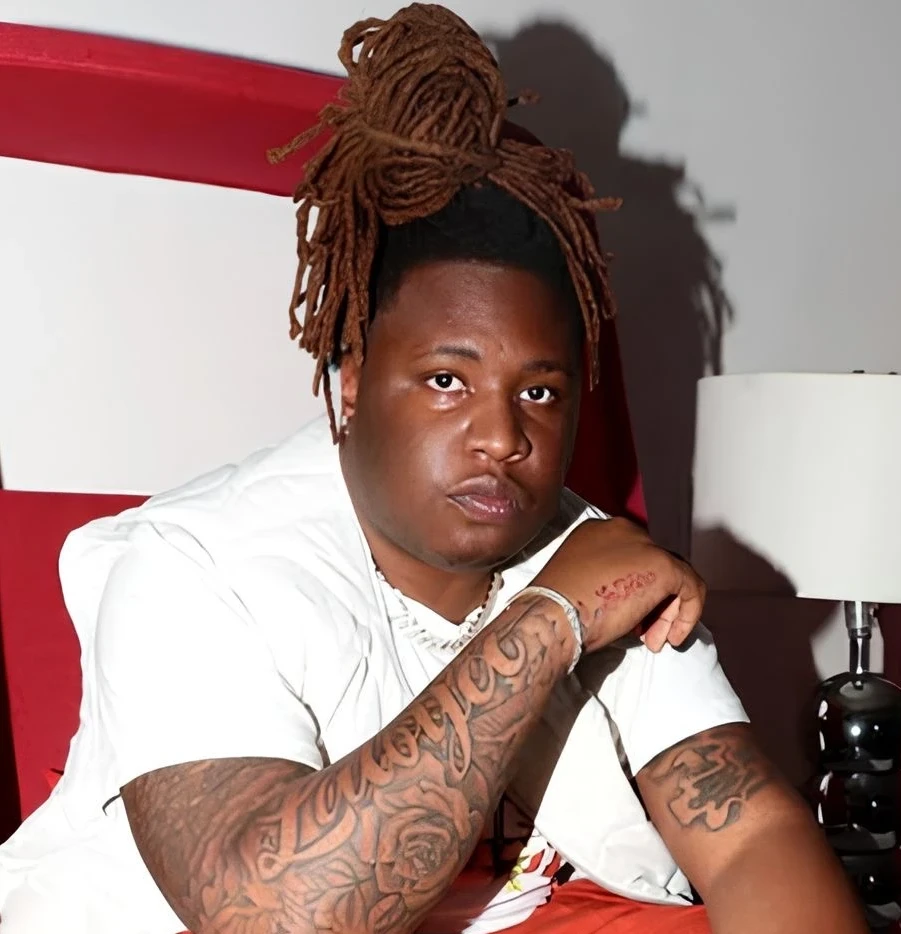 Photo Credits to: Pinterest
How Tay Keith Helped Shape a Generation of Hip Hop
When I tuned in to the radio or scrolled my playlists over the past decade, Tay Keith’s influence set the mood for countless memorable tracks. His production style feels easily recognizable, with crisp, booming basslines paired with clever samples. What stands out for me is how he didn’t just make “trendy” beats. He helped artists, both rising and established, create moments that shaped the music scene and touched millions of listeners.
Collaborating with stars like Drake, Travis Scott, Lil Baby, Young Thug, and BlocBoy JB, Tay Keith brought a sense of energy and bounce that made even familiar voices feel fresh. The beat for Drake’s “Nonstop” introduced millions to his work and started endless online conversations about his sound. From there, his touch became synonymous with some of the biggest hip hop moments of the late 2010s and early 2020s.
Tay Keith’s approach pushed boundaries. Instead of sticking to cookie-cutter formulas, he played with tempo, percussion, and space in ways that made tracks sound larger than life. I remember running into old friends and trading thoughts on “SICKO MODE” and “Look Alive.” His production pulled listeners in and showed the power of a great beat to define a cultural period.
Starting Out: Tay Keith’s Early Steps in Music
Tay Keith wasn’t famous from the start. Like many who end up shaping the industry, he began in his bedroom making beats for fun. He grew up in Memphis, Tennessee, a city with a deep connection to both hip hop and R&B. Early on, he teamed up with childhood friends and local artists to produce tracks that started getting traction online. His partnership with BlocBoy JB led to “Look Alive,” which would catch the attention of Drake and put him on the map.
Before the major label co-signs, Tay Keith put in long hours learning software, experimenting with sound kits, and building a reputation locally and online. This part of his story shows me how persistence pays off. Small wins, like getting a song played at high school parties or gaining attention in the Memphis rap scene, slowly stacked up until bigger opportunities arrived.
- Memphis Influences: Memphis has always had a gritty, bassheavy sound. Tay Keith learned from the legends around him and added his own energetic touch.
- Persistence: He sent out beat packs, worked with artists who were still finding their own footing, and kept developing his craft while waiting for his break.
- Internet Savvy: Posting beats online and connecting over social media played a big role in his early momentum.
Signature Sound and Production Style
The first time I heard a Tay Keith beat, everything clicked. His music usually starts with a hardhitting kick and snare, often backed by rhythmic hihats and catchy melodies layered in smart ways. He finds a groove within seconds and keeps the energy up throughout the track. I’ve found that this consistency makes his production both clubready and catchy enough to stick in listeners’ heads.
Tay Keith often samples from unexpected places, blending in sounds that add a sense of drama or nostalgia. He isn’t afraid to let silence play a role, allowing verses to breathe and hooks to land hard. The result is a track that feels built for both radio and major live performances.
- 808s and Bass: Strong bass is a trademark. Rather than just being loud, his 808s are tuned to fill the space in a punchy, musical way.
- AttentionGrabbing Intros: Many of his tracks start with a memorable drop or sound effect, which lets me know immediately who produced it.
- Producer Tag: “Tay Keith, **** these n****s up!” became a pop culture moment on its own.
Working With the Biggest Names in Hip Hop
Tay Keith’s name started popping up on projects with the industry’s most influential rappers. His network grew quickly after “Look Alive,” as artists heard his beats and wanted that same vibe for their own music. Collaborating with powerhouses like Beyoncé, Travis Scott, and Lil Nas X, his production style helped create songs that reached the top of the charts and found a home in everything from clubs to commercials.
Working at this level required flexibility and an ability to serve each artist’s unique style. For example, the beat he built for Travis Scott’s section in “SICKO MODE” matches the chaos and energy Scott brings to his album. On the other end, tracks like “Don’t Matter to Me” for Drake (featuring Michael Jackson vocals) show his skill in building smoother, more melodic soundscapes.
Each partnership in Tay Keith’s discography built his profile higher and gave fans even more moments to remember. Through all of this, he stayed grounded, often returning to work with artists from Memphis and supporting those he grew up with.
Common Hurdles When Making It in Hip Hop Production
Breaking into music production, especially in a competitive field like hip hop, comes with challenges. From my experience and everything I’ve learned about Tay Keith’s path, some of the most common hurdles include:
- Finding an Original Sound: Standing out when thousands of producers upload beats every day is really tough. Tay Keith’s sound was different and made artists want to work with him.
- Building Connections: Knowing the right people and having a network that believes in your work is super important. Collaboration and wordofmouth recommendations opened doors for Tay Keith.
- Technical Skills: Knowing how to use production tools and plugins, as well as developing a sharp musical ear, takes practice. Tay Keith kept learning and updating his sounds as he progressed.
- Staying Consistent: New trends come fast in hip hop. Being able to adapt while staying true to your style, the way Tay Keith did, is key to career longevity.
Small Studios, Big Results
Many iconic modern hip hop songs started in simple bedroom studios. Tay Keith began with basic gear and worked his way up. He’s proof that you don’t need a highbudget studio at first. Creativity and determination are what really matter.
Favorite Beats From Tay Keith: Fan Highlights
- Drake – “Nonstop”: This track brought Tay Keith’s style to a huge international audience. The minimal melody, booming bass, and infectious hook are unforgettable.
- Travis Scott, Drake, & More – “SICKO MODE”: Tay Keith had a hand in the multipart structure that made this song a charttopping hit and live show favorite.
- BlocBoy JB – “Look Alive” (featuring Drake): Arguably the song that kicked open so many doors for Tay Keith, and still energizes crowds years later.
- Moneybagg Yo – “Wockesha”: Mixing soul samples with contemporary drum patterns, Tay Keith balanced emotion with swagger in this standout.
How Do I Think Tay Keith’s Production Style Reshaped Modern Rap?
Tay Keith molded what I would eventually learn to be called the “lunch table” bounce.
It’s something you’re used to hearing if you ever sat at a lunch table in school and had someone who could drum with pencils or whatever.
The Lunch Table Bounce as I understand it to be is just a rapid fire repetition of making melodic beats.
This isn’t me making the beat, but it’s meant to be an illustration for beat quality that lets you know what’s considered on par with modern rap.
Watch Drumline if you need more reference, but Tay Keith had beats that could be replicated by those standards alone.
What that does is contribute to the Stadium Sized preparation that he has for artists that perform in crowds.
Hearing vocals for real rap fanatics is incredibly important and his type of beats allow that to happen.
It ended up defining an area because of how long the ran last under Tay Keith’s work.
Lasting for over nearly a decade being 2018-2026 proves that he had a repeatable process that could be capitalized with the right artist.
His name gained such a noted reputation that many people could even call out that the song they were gonna hear would be a hit because of his iconic tag.
When you get an intro that’s already expected to be a hit because of the producer.
Frequently Asked Questions
Here are some questions people often have about Tay Keith and his impact on hip hop.
Q: What made Tay Keith’s beats unique?
A: His beats usually have hardhitting drums, memorable melodies, and lots of energy. He combined Southern rap sounds with modern touches, which made his music stand out both online and during live shows.
Q: Which artists worked most closely with Tay Keith?
A: He produced for major stars like Drake, Travis Scott, Beyoncé, Lil Baby, and Megan Thee Stallion. He also strongly supported Memphis talent like BlocBoy JB and Key Glock, making sure his hometown always featured in his story.
Q: Can an up-and-coming producer still break out like Tay Keith did?
A: Absolutely. Sharing music online, networking with other artists, and focusing on developing your own sound remain some of the best ways to get noticed, just like Tay Keith did during his comeup.
Lessons From Tay Keith’s Legacy
Tay Keith’s story motivates me to keep pushing the limits of what music can be. He proved that real impact comes from a combination of skill, hustle, and originality. Big hits start with a great beat, but they also need a producer willing to take risks and help others succeed. His influence lives in every track he touched and in the huge number of young producers inspired by his work.
Every time I hear his producer tag or see an artist shouting him out, I’m reminded of the energy and excitement he brought to the scene. Thank you, Tay Keith, for the moments, the music, and everything you did for hip hop. Your influence is here to stay.
Rest in Peace, Tay Keith.