Today we’re gonna discuss how to write a project plan.
Determining the tasks within your system will be one of the most important steps you take.
Getting proficient in this area will reveal to you the actual scope of what is that you’re taking part in. Specifically in determining whether you have a large or small project on your hands. We’re gonna break these points down and learn how to write our project plans. Let’s get into everything:
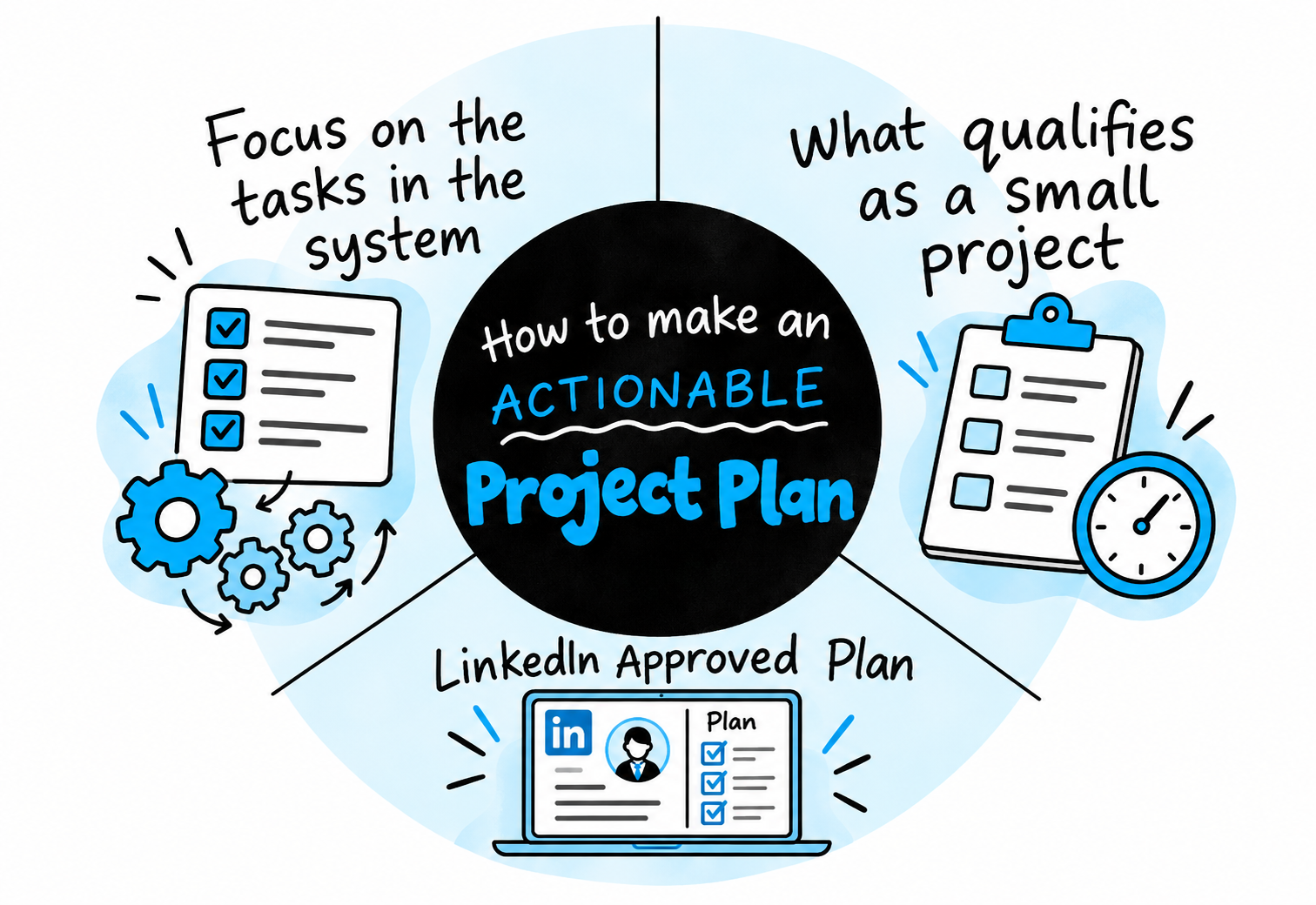
Focus on the tasks in the system
First thing that you absolutely have to do is focus on the tasks that make up your entire system’s structure. Your tasks is what you’re going to be spending a majority of your time doing when it comes to your project. There’s a start to finish timeline that makes up everything you’re trying to accomplish. Think of it as identifying and discovering what the actual work is within your project. The rest is simply “fluff” that makes what your final product should be appear complete. You’re gonna determine a few important things after you compile your list of tasks within your project. First is priority amount with each one! Find out which ones hold more weight on getting the entire project completed.
What qualifies as a small project?
A short timeline, a limited budget, a small team, and a focused, departmental scope.
There’s plenty more urgency that goes into a small project. Because there’s less time to complete each task that makes everything up, you typically don’t spend more than a day or two working on each step.
The budget involved is usually less flexible too because these projects are usually easier to determine when they end. What that means is there’s usually little to none of a room for making any additional tweaks to the work that has to be done.
Your team is also more condensed in comparison to a larger project because there’s usually less responsibilities as far as amount of tasks that need to be completed.
Remove your interest in how important each one is at this point and assume that everything is highly important since there’s less time given to finish. This also explains why the departments that make up your entire project is usually condensed as well too.
You don’t usually need a 4 bedroom house if you’re only going to be living with one other roommate.
LinkedIn Approved Plan Worth Considering
Step 1: Specify the goals and scope of the project.
Step 2: Identify Stakeholders
Step 3: Develop a Work Breakdown Structure (WBS) Break Down Tasks
Step 4: Create a Project Schedule Timeline
Step 5: Allocate Resources
Step 6: Develop a Budget
Step 7: Risk Management Plan
Step 8: Communication Plan
Step 9: Quality Management Plan
Step 10: Monitor and Control Plan
Step 11: Approval and Sign-off Review Plan
Step 12: Implement the Plan
Each step mirrors the larger grand scheme of what we’ve discussed up to this point.
Steps 1-4 are what I’d like to acknowledge as more of the prep work that’s usually underappreciated, yet still highly important and necessary with being effective.
5-8 gets the pen to the paper for lack of better terms in how you’re actually taking action on the things you already took the time in fact checking and screening candidates of resources that’s going to provide you with concrete results.
9-12 are steps that actually can be delegated depending on the team you’re working with. If you take the time to perform all of the previous duties leading up to this section, you’re putting yourself in a strong position to be the manager of things and focus more on effectively streamlining the work process.