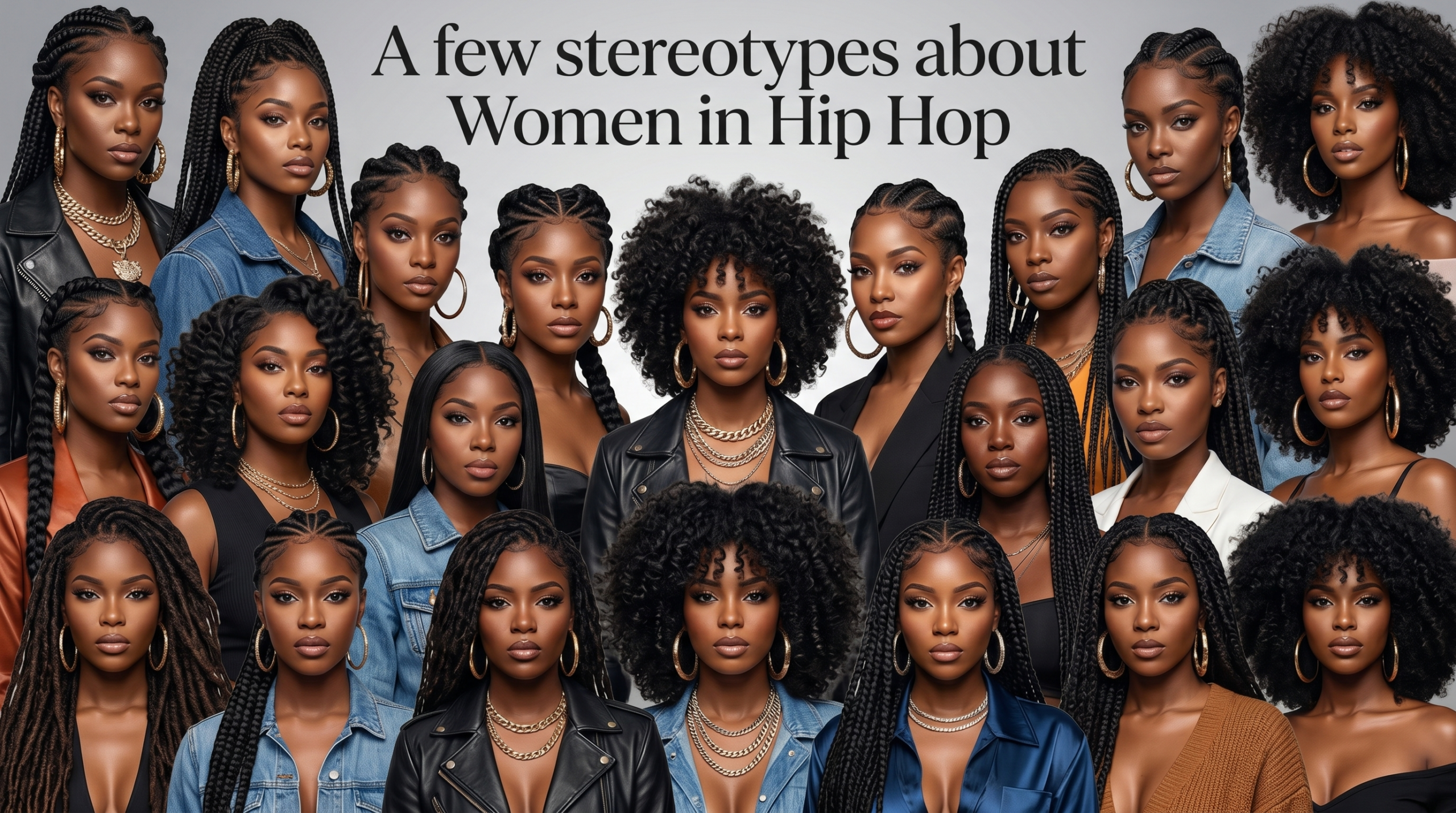
Let’s discuss what the stereotypes are about women in hip hop.
A few stereotypes about Women in Hip Hop
They contribute in very limited areas. There’s not many options for them to ethically succeed. The content they provide value in has to deal with sex for it to get sold. There not much parity when it comes to deciding who the queens are.
Do women only contribute to Hip Hop when sex is the topic?
Saying that women only contribute to Hip Hop when sex is the topic was just my initial impression of what I believed that stereotype to be. In conscious observance of this statement thought, I can’t fully support someone who thinks this way.
There’s female emcees that have straight bars without the need of mentioning genitalia at all. That’s not to say it’s always inappropriate though. I actually can appreciate when it’s fit into moments that really call for it. Watch Battle Rap Leagues if you need more confirmation. There’s women in leagues that feel like you’re hearing one of the guys rap.
You can even address the way they dress. There’s people that stereotype women in this area by assuming they can only progress with wearing provocative clothing. It actually feeds into another discussion about how image and sexuality are leveraged (sometimes misunderstood) in hip hop culture.
But that’s false. I’d even argue that some of the flyest women if we’re keeping it rap dress closer to masculine than they do feminine, and it works out really well.
There’s men that actually raised the bar and help defeat the stigma that’s attached to most women when it comes to hip hop. One example that stands out the most is a move made by Ludacris. He actually made a Netflix show that brings special attention to his daughters. People tend to neglect the fact that the people closest to hip hop icons inherit the special lens that’s placed on the artists. But in the case of that Netflix show with Ludacris, it sets his daughters up to where being themselves dictates what it means to be hip hop. Specifically as a woman eventually!
Is there really a lack of parity in Women’s Hip Hop?
I think there’s a lack of parity off initial impression of who the greats are in women’s hip, but that’s off rap music alone. If we expand the industries that hip hop has strong roots in, the list instantly gets more range. There’s tremendous leaders in sports, music, film, reading, and anything else. If you want a deeper look at how hip hop has shaped multiple creative spaces, check out this breakdown of its influence on contemporary art and media.
The lack of parity perception that I believe women in hip hop when applied to recording artistry comes from what priorities for females become at critical points of career growth. It’s tough to make the call 100% but I have a theory off what my reality’s been when observing feminine greatness, especially in hip hop. To put it bluntly: there’s not enough women standing the test of time and building a credible enough resume to acknowledge them as greats.
There’s not enough female representation in hip hop related industries
There’s a few things that I feel contribute to that lack of rep stereotype that seems to fit in with some of hip hop. My main point that I could easily stand on is earning potential. You can ask and take a poll on if you believe that women get paid well enough when they’re in hip hop related industries. I’m led to believe that it’s not the case. I say that because all the homegirls seem to be changing jobs left and right, but when it’s time to explain why that happens, they claim constantly that it’s for more money. It’s disappointing to witness at times because I’m not hearing enough about it being because they’re chasing a dream.
Unethical Methods of Promotion
The related stigma to women in hip hop needing sex to sell actually relates to another stereotype in which many are accused of unethically climbing the ranks of positions they start in. It’s unfortunate that it’s assumed by many, but it’s a common trend for others to ostracize that in which they don’t understand.
Final Thoughts
Let’s revisit what our stereotypes are when discussing women in hip hop again.
- They contribute in very limited areas
- There’s not many options for them to succeed ethically
- They have to sell the concept of sex to see any success
- There’s not many of them that are considered top tier status
These stereotypes aren’t just exclusive in lyrics. They’ve historically shaped how women are expected to present themselves visually too. It actually ties in pretty well with another article offered here titled How Has Hip Hop Fashion Changed Over Time.