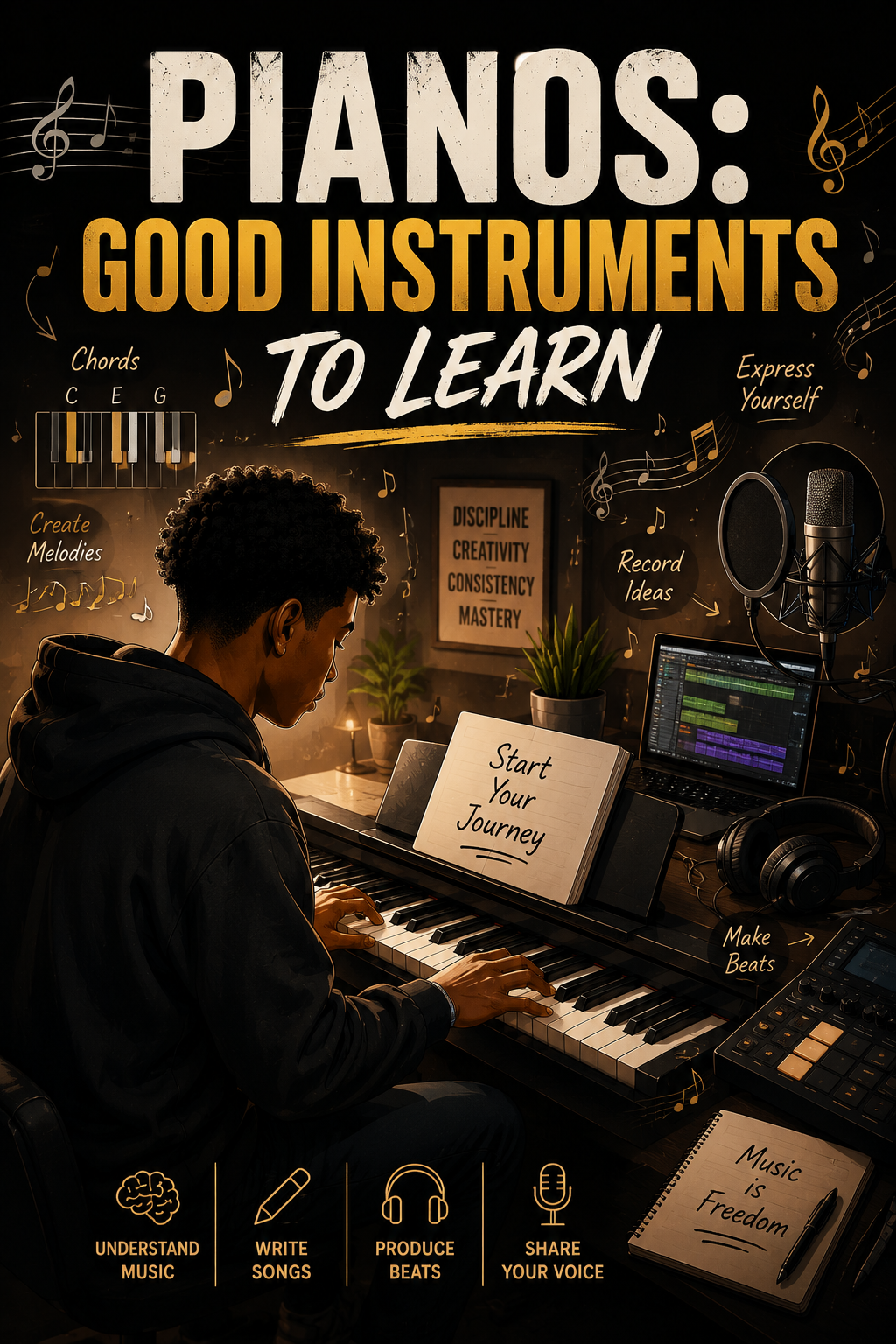
Learning an instrument can open the door to an entirely different understanding of music. You might want to make beats, write songs, perform for other people, or simply pick up a new skill that gives you a creative outlet. The difficult part is figuring out where to begin. There are plenty of instruments worth learning, but the piano has some unique advantages for beginners. Its visual layout makes musical ideas easier to recognize, and the skills you develop can carry over into songwriting, production, music theory, and other instruments. So, what makes an instrument a good one to learn?
What Are Good Instruments to Learn?
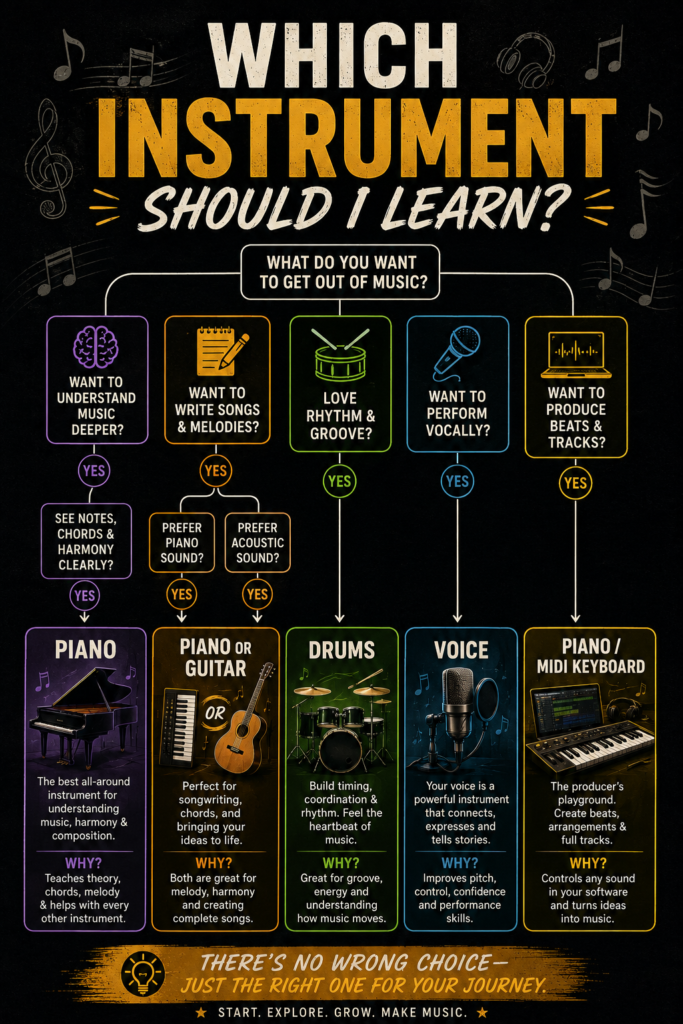
Good instruments to learn include piano, guitar, drums, bass, and even the human voice. The best choice depends on what you want to accomplish, but piano is especially useful because it visually introduces notes, chords, melodies, rhythm, and harmony in a way that can build a strong foundation for understanding music.
Piano Makes Music Easier to Visualize
One of the biggest advantages of learning piano is being able to actually see the relationship between musical notes.
A piano lays notes out from low to high in a repeating pattern. Once you begin recognizing that pattern, concepts such as scales, chords, octaves, sharps, and flats can become much easier to understand.
That visual element is useful even if becoming a professional pianist isn’t your ultimate goal.
Imagine you’re learning how a C major chord works.
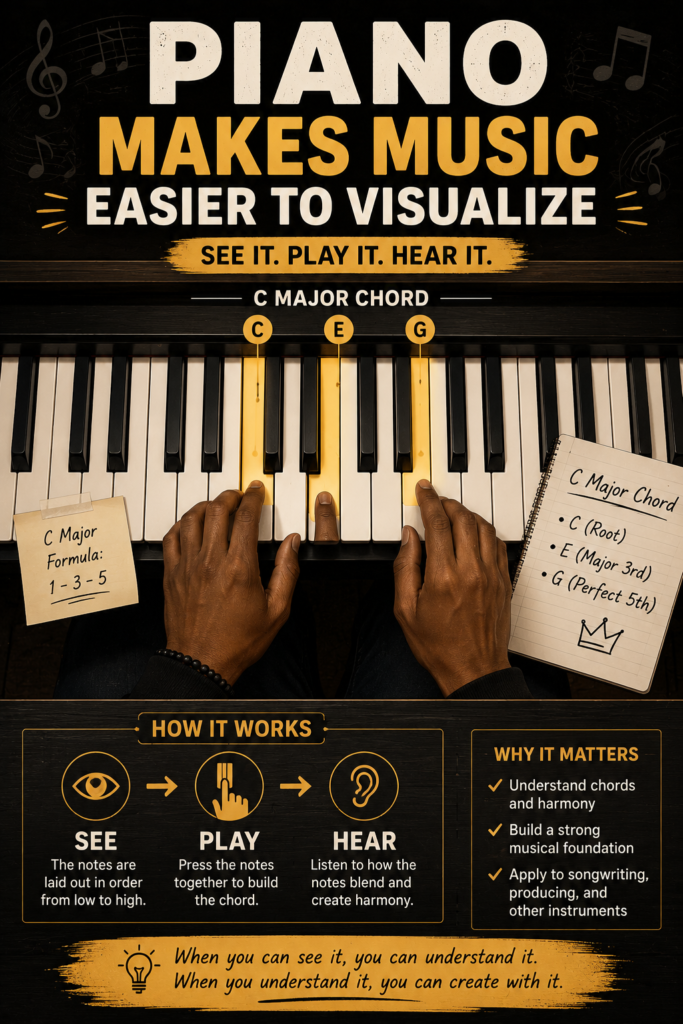
Instead of only hearing someone explain the relationship between C, E, and G, you can physically locate and play those notes on the keyboard.
Change one note and you can immediately hear how the chord changes.
For someone interested in producing music, writing songs, or creating melodies, that can be incredibly useful.
The piano essentially becomes a visual map of music.
You’re not just memorizing which keys to press—you can begin recognizing why certain combinations of notes sound the way they do.
Learning Piano Can Help You Understand Music Theory
Music theory can sound intimidating when it’s introduced as a collection of scales, intervals, chord formulas, and terminology.
Put those same concepts on a keyboard, however, and things can start making more sense.
Learning the piano can also make music theory easier to understand, especially as you begin recognizing scales for example.
These introduce you to the relationship between individual notes.
From there, you can start discovering how chords are built from those scales.
Eventually, concepts such as chord progressions, keys, harmony, and melody begin connecting.
You don’t necessarily need to become an expert in theory to benefit from this.
Even basic piano knowledge can help you understand music theory and recognize why one chord naturally seems to lead into another or why certain notes work better over particular chords.
That knowledge becomes especially useful if you eventually move into songwriting or music production. Instead of finding every musical idea through trial and error, you have another tool for understanding what you’re hearing.
Piano Is Useful for Songwriting and Creating Melodies
A piano can become a creative workspace.
You can sit down, experiment with a few notes, discover a melody and eventually build an entire song around it. You don’t even have to begin with a complicated idea.
A simple sequence of three or four chords can provide the foundation for a chorus, verse, instrumental, or beat.
That’s one reason keyboard instruments are so useful for songwriters. You can experiment with melody and harmony at the same time.
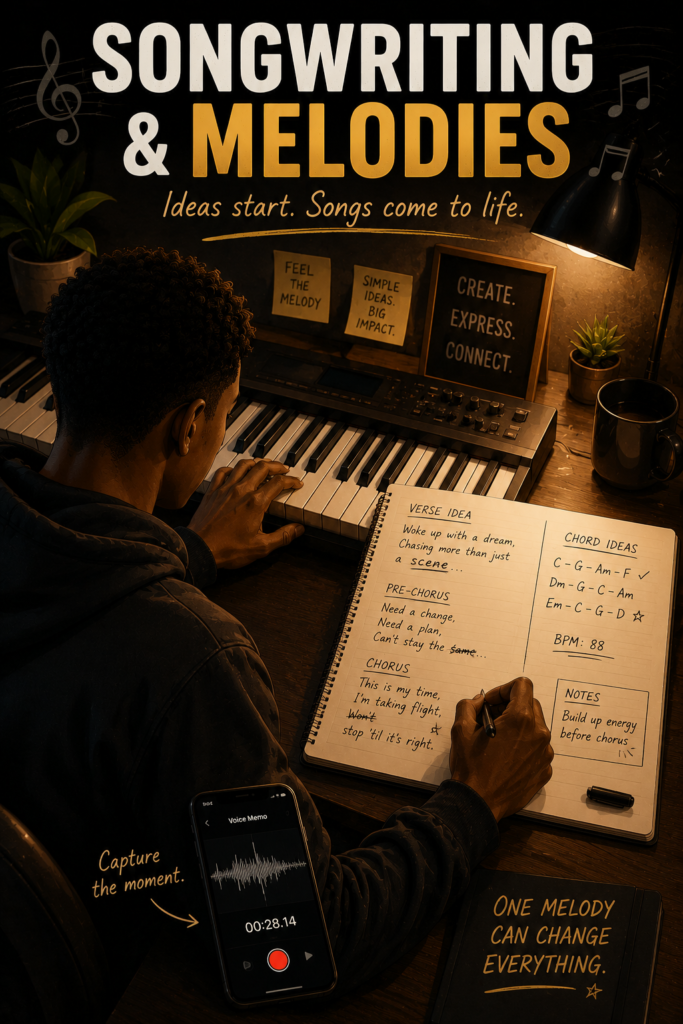
If you’re a vocalist or rapper, piano skills can also help you think differently about the music surrounding your lyrics. Instead of only writing over an existing instrumental, you can participate in creating the musical foundation itself.
You might discover the chord progression first, hum a melody over it, develop a rhythm, and then begin writing lyrics.
Learning the instrument doesn’t replace creativity. It simply gives that creativity another way to come out.
If you’re interested in writing lyrics, learning to build the musical foundation yourself can also change the way you approach verses, hooks, and melodies.
Piano Skills Translate Naturally Into Music Production
Modern music production gives the piano another major advantage: the MIDI keyboard.
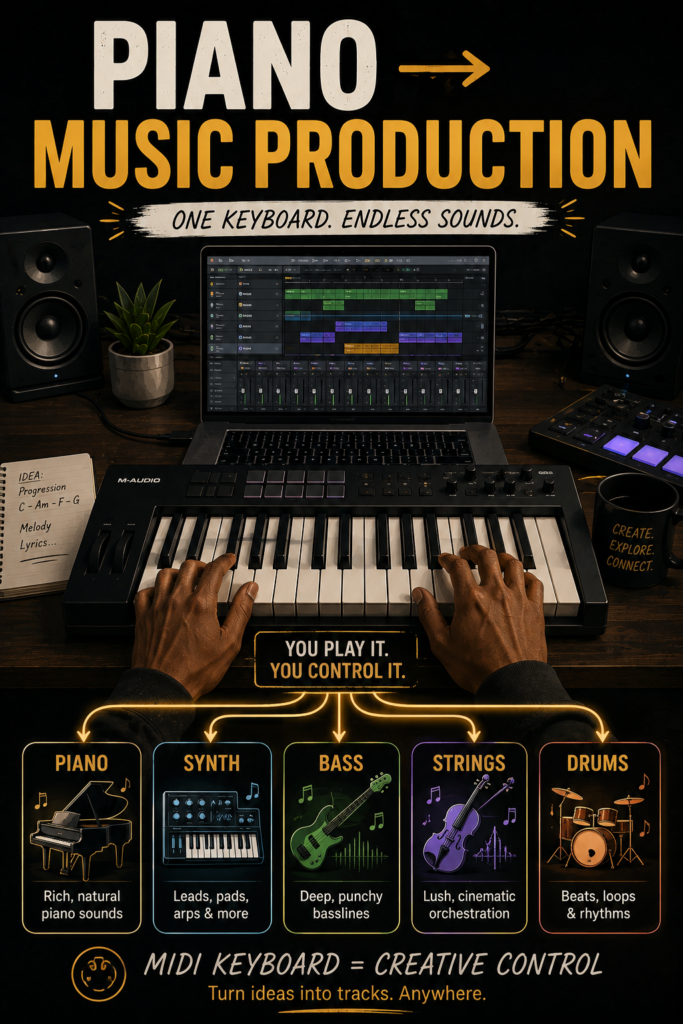
Open many digital audio workstations and you’ll find virtual pianos, synthesizers, basses, strings, drums, and countless other sounds that can be controlled through a keyboard.
That means the skills you develop while practicing piano can eventually be applied to sounds that don’t resemble a traditional piano at all.
A producer could play a chord progression using a grand piano sound, switch the instrument to a synthesizer, and suddenly have the foundation of an electronic or hip-hop track.
The same keyboard can be used to experiment with basslines, melodies, samples, and virtual instruments.
You certainly don’t need to know piano to make beats. Plenty of producers create great music without traditional instrumental training.
However, knowing your way around a keyboard gives you another method for turning ideas in your head into actual music.
These skills become even more useful when you’re producing music at home, where a MIDI keyboard can give you control over dozens of virtual instruments from one workspace.
Guitar Is Another Good Instrument for Songwriters
Piano isn’t the only strong starting point.
Guitar is another popular choice because of how naturally it works with songwriting. Once you learn a collection of basic chords, you can begin playing progressions behind your own vocals relatively quickly.
It’s also portable in a way that a traditional piano isn’t.
The experience is different from learning keyboard, though. Notes aren’t arranged in one continuous visual line. The same note can appear in multiple positions across the fretboard, so understanding the instrument requires learning different shapes and patterns.
That isn’t necessarily a disadvantage. It simply offers another way of thinking about music.
Someone interested in rock, folk, pop, blues, R&B, or singer-songwriter styles may find guitar particularly rewarding. And once again, the musical knowledge you develop doesn’t have to remain limited to that instrument.
Drums Are Great for Developing Rhythm
Not everyone needs to start with melody.
If rhythm is what grabs your attention first, drums may be one of the best instruments to learn.
Drumming teaches timing, coordination, groove, and the relationship between different rhythmic patterns. Those abilities matter far beyond a traditional drum kit.
Think about hip-hop production. Kick drums, snares, hi-hats, percussion, and samples constantly interact to create a groove. Understanding rhythm can help a producer recognize why one drum pattern feels energetic while another feels relaxed or awkward.
Rappers and singers can benefit from this understanding too. Vocal delivery has rhythm of its own.
You don’t necessarily need a full acoustic drum kit either. Electronic kits, practice pads, drum machines, and MIDI controllers can all provide ways to explore rhythm.
Your Voice Is an Instrument Too
One instrument tends to get overlooked because we carry it around every day: the human voice.
Singing can teach pitch, melody, rhythm, breath control, phrasing, and listening skills. Even musicians who don’t consider themselves singers can benefit from developing their ear and becoming more comfortable matching pitches.
This can be particularly useful for songwriters.
Sometimes the fastest way to capture an idea isn’t finding the correct note on a keyboard. It’s humming the melody into your phone before you forget it.
Rappers also use the voice as an instrument through cadence, tone, pitch changes, rhythmic placement, emphasis, and vocal texture.
Learning music doesn’t always mean buying another piece of equipment. Sometimes developing the instrument you already have can change how you approach everything else.
Conclusion: Start With the Instrument That Supports Your Goals
There isn’t one instrument that everyone has to learn.
Guitar can be excellent for songwriting. Drums can develop your understanding of rhythm. Your voice can improve melody and musical expression. Each instrument teaches music from a slightly different perspective.
Piano, however, is one of the strongest all-around choices for someone who wants a broad musical foundation.
The keyboard gives you a visual way to understand notes and chords while also providing practical skills for songwriting, beat making, music theory, and modern production.
Most importantly, don’t wait until you understand everything before you start playing.
Learn a few notes. Build your first chord. Try a simple melody. Make mistakes. Then try something else.
A good instrument gives you something to practice.
A great instrument makes you curious enough to keep learning.