This stems from the question: How do I use my passion for music in day-to-day life?
My response is through connection building.
Connection Building
Connection building specifically through music is the popular thing to do. Personally I feel it’s overly trendy to where most miss the point, but I’ll probably feel better about it after discussing it personally a bit. One rough idea that I feel could work is finding collaboration opportunities with videographers to co-produce.
Working directly with the influence of music
Working directly with the influencer of music still requires building connections. It could be argued that it requires more than average since it’s such an emotional staple in people’s lives.
Musical influences lead to some of the most passionate conversations you’re ever gonna experience. It’s actually some of that intensity that leads to creating some of the most influential personalities in media. That’s something to consider when you’re working on discovering your purpose musically.
Let’s say you’re someone that considers becoming a musician and you’re not too sure with what part of music actually empowers you. Well first, you have to understand it completely rewires your brain—not just helps you learn music. The way you hear conversations become different, way you see the world, watch movies, and anything else that calls for sound becomes changed to a different tint when viewing the world.
If someone were to ask me if listening to music works for you productivity wise when working, I wouldn’t really know what to say definitely. I strongly stand on the side of where if you make music yourself, at some point it has to get quiet because you’re making the sound eventually. Then again there’s some people that are wired in such a unique way where they could be amongst the noisiest crowd and still find some way to remain creative over the seemingly dominant environment.
Freely Discussing Concerns With Areas of Passion
When you’re operating from an area of passion, freely discussing your concerns is important because it maintains harmony.
Would you do it for free?
Does it matter how much time you spend on it?
Are your interests shared among the community that you function in?
Are you keeping up with me here?
These things keep the integrity and authenticity of any campaign you’re managing.
If you’re someone that hates faking passion just for the sake of pandering to others, you’re in a position that needs to be reconsidered.
Things you’re passionate about should just appear naturally to you.
There might be a struggle you’re experiencing with consciously finding awareness of what you’re passionate about. But that shouldn’t hold you back from developing related qualities.
Freely discussing areas of concern you’re passionate about is critical, because it’s exercising what should be a universal right to express.
I’m speaking idealistically by the way.
It shouldn’t be much of a surprise that there’s areas in the world where others aren’t able to share their opinions openly.
We creatives have to express our ability to do at the fullest extent.
Let me be clear too in sharing that this should not be confused with an endorsement of telling anybody else to follow their passion.
It’s actually advice that shouldn’t be applicable to every single body.
Sometimes you need to move forward before you’re sure where you’re going.
Learning and appreciating music starts with getting a handle on a few core ideas. I see music as a way to connect with emotions and people, not just a set of technical skills or rules. For anyone curious about what makes music meaningful and memorable, understanding the basics makes a huge difference. In this article, I’ll share what I’ve found to be the real fundamentals in music: creating, understanding, and communicating. I’ll break these down so they make sense even for someone just starting out, and I’ll include insights from my own experience making and listening to music.
The Heart of Creation: Feeling Over Formula
Making music starts well before learning chords or reading notes. I’ve noticed that my favorite music always comes out of a feeling, sometimes excitement, sadness, or even confusion. Instead of chasing after what’s popular, I try to lean into my emotions and explore sounds that fit what I’m feeling. This goes beyond logic or following charts. Creating is about trusting myself and being willing to take risks.
Working on a new song, I often experiment with sounds that might seem odd or break the usual rules. I’ve found that the process works best when I stop worrying about being perfect and instead let myself mess up once in a while. Some of my most interesting ideas have come from mistakes or trying out a new instrument or tone.
Here are some practical ways I use emotion and creativity in my process:
Jamming with No Plan: Sometimes I just hit record and play whatever comes to mind, letting feelings guide my choices.
Switching Instruments: Picking up an unfamiliar instrument can spark new songs or melodies that I wouldn’t have written otherwise.
Recording Voice Memos: When an idea strikes, even humming into my phone helps catch an emotional spark before it fades.
Trying New Sounds: I add effects or tweak settings in my software just to see what surprises pop up.
Making music from a place of curiosity has been way more productive for me than trying to fit someone else’s mold. I trust my ear, and I make space for trial and error. That’s how I stumble upon what really matters to me as an artist.
It’s important to mention that while skill is important, enjoyment and playful exploration should always be at the center. Even music legends got their best ideas by simply letting loose and allowing spontaneity into their creative process.
Understanding Music: Listening and Growing
Before I started making my own music, most of what I learned came from listening. Really listening, not just having songs play in the background. I try to approach every new track or unfamiliar genre with an open mind. This part is all about receptiveness, being willing to hear what’s different and take in the details.
The more I expose myself to music from different cultures or from genres I don’t usually listen to, the more ideas I have for my own projects. When I listen, I pay attention to what stands out, whether that’s a cool rhythm, a strange instrument, or the way a melody twists.
Here are the steps I follow to get the most out of listening:
Choose a Song on Repeat: Playing the same track a few times lets me notice new sounds, textures, or layers each time.
Focus on One Element: Sometimes I listen only to the drums or the harmony, which helps me understand how individual parts fit together.
Seek Out New Styles: I make a point to listen to artists from places I’ve never been or genres I know nothing about. This has opened up many creative paths for me.
Analyze Why Something Works: If a song moves me, I try to pinpoint what makes it effective, the arrangement, lyrics, or the sound of the instruments.
I’ve learned that understanding music means staying open to what’s different. Every new piece of music I study adds to my own style. Over time, listening deeply shapes the way I write, play, or even think about music. This habit helps me break out of ruts and keeps my songwriting fresh.
Don’t underestimate the value of asking yourself what feelings are stirred up when you listen closely. This step helps you step up your appreciation and gives a boost to your creative potential.
Communicating: Music as Message
Music is a language, even when there are no words. I always keep this in mind when I write or perform. Whether I’m using lyrics, melodies, rhythms, or even noisy textures, I try to make sure my music says something. Sometimes that message is obvious, like a protest song with clear lyrics. Other times, it’s more subtle, like an instrumental track that reminds me of a specific memory or place.
Every artist, in my view, brings a unique background and story that shapes their music. Sound can be a signal, a way to represent a group, a region, or a feeling. Certain musical sounds, like the use of steel drums in Caribbean music or distinct beats in hip hop, often say something about where the artist comes from and what they want their audience to feel.
Here’s how I focus on communication in my music:
Write With Intent: Before I start a song, I ask myself what story or feeling I want to put across, even if it’s only a mood or a vibe.
Lyrics or No Lyrics: Sometimes words are necessary to tell the message, but I pay just as much attention to the instrumental parts to make sure the feeling comes through.
Referencing Place or Identity: I sometimes use local sounds, languages, or rhythms as a nod to where I’m from or what matters to me.
Considering the Audience: Thinking about who might hear my music helps me shape it to be direct, or to leave just enough mystery for listeners to fill in the blanks themselves.
For me, the most lasting music always communicates something, directly or in whispers. If I’m honest and thoughtful about what I want to say, my songs reach people, even if we don’t speak the same language.
It’s helpful to notice how music lets us send messages without words, creating a connection between artist and listener that’s often deeper than any conversation.
Working Through Challenges in Music Fundamentals
Sticking with these fundamentals isn’t always easy. I sometimes get stuck in creative ruts or find it hard to listen to new styles without old opinions getting in the way. It’s easy to feel like what I want to say has already been said by someone else. Here’s how I keep myself going:
Accepting Imperfection: I try not to get hung up on every mistake or failed experiment. A messy draft can become the most meaningful piece after a few tries.
Fighting Creative Fear: Trying a sound that feels risky or new is scary, but sticking with familiar patterns doesn’t help me grow. Even if nobody else likes it at first, I remind myself that it’s part of the process.
Building Trust in My Process: Over time, I’ve built routines, like daily jam sessions or setting limits on gear, that help me get into creativity without second-guessing myself all the time.
Balancing Message and Audience: Sometimes what I want to say doesn’t land with listeners. When this happens, I try to learn from the feedback but still stay true to my core message.
Making Mistakes Productive
I used to think every song or idea had to work on the first try. Now, I see that what I call mistakes are usually just steps in figuring out my sound or message. Sometimes failing to nail a melody opens the door for a fresher, more honest riff. I record almost everything so I can look back for hidden gems later.
Allowing mistakes into your workflow is such a relief. The freedom it brings to experiment is often what leads to music that really surprises you and your listeners.
Drawing Inspiration from Different Genres and Cultures
When I started listening to music from outside my usual comfort zone, I ran into sounds and ideas that at first felt strange, even offputting. But after spending time with them, I started to pick up cool techniques or patterns I could use. It’s become a way for me to keep things interesting and make my music stand out.
You can find inspiration in places you least expect. World music, folk traditions, and even electronic soundscapes can each teach you something new about expressing feeling through sound.
Developing Authentic Communication
I sometimes worry my message will be misunderstood. To work through that, I play my works in progress for friends or even strangers. Their feedback helps me see whether my ideas are coming across clearly or if I need to rethink how I’m using sounds, lyrics, or arrangements.
Sharing works early on is a key part of making sure your message comes through. Honest feedback can reveal new possibilities or shed light on parts of your song you might not have noticed before.
Core Concepts and Terms to Know
For anyone new to music fundamentals, there are a few terms and ideas that come up often:
Melody: The main tune of a piece, usually the part you hum or sing along with.
Harmony: Notes or chords that support and enrich the melody.
Rhythm: The pattern of beats and timing, what makes you want to tap your foot.
Texture: How many musical layers are happening at once in a song.
Timbre (Tone Color): The unique quality of a sound, like how a violin sounds different from a piano.
Form: The structure or layout of a song, like verse chorus or ABA.
Getting comfortable with these ideas helps me analyze and understand both the music I hear and what I try to make myself.
When you get to know these core concepts, you can start to break down songs you love and find opportunities to step up your own music in fresh ways. Every new idea you track down gives a boost to your toolkit and makes music making more enjoyable.
Frequently Asked Questions
Here are some questions I often hear when talking about music fundamentals:
What should I focus on first when learning music? Answer: Try starting by just listening deeply to music you like as well as music you don’t usually hear. Don’t worry about being technical at first, focus on noticing what moves you and why.
How do I start writing my own song? Answer: Start by playing around with sounds or words that feel true to you. You can hum, tap, or record on your phone. It’s not about having the right equipment or theory knowledge right away, it’s about exploring what you want to say or feel.
How can I tell if my music is sending the right message? Answer: Play your music for others and ask for feedback. Sometimes, hearing what a listener gets from your song can help clarify your message or show you what’s coming through most clearly.
Music Fundamentals for Every Artist
Anyone making or enjoying music works with the basics of creating, understanding, and communicating. Focusing on emotion, welcoming unfamiliar sounds, and thinking about the purpose behind every song helps me keep my music honest and memorable. Whether you’re writing your first song, learning an instrument, or just hitting play on a new album, these fundamentals set the stage for musical growth and connection.
Hip Hop and R&B. Both of these are genres that defined my childhood and help make sense of my emotions. The culture that makes these genres up represent me aesthetically, emotionally, and in most cases mentally. It’s influenced me so much to the point where I continually create music that would fall in these categories.
What is it about hip hop that I value the most?
There’s a few things about hip hop that I value highly in reflection.
From the CDs, to the concerts, clothing that would be worn, and even parties.
They were all my introduction and hub for truly enjoying this genre of music.
I look at my circumstances growing up and realize that hip hop music was the extension of my masculine energy in many cases that helped me stay accountable to being the type of person that I claim myself to be.
It was important for me because of the activities I chose to get involved with through my earlier adolescent years.
If you’re skeptical about that same thing, I’m letting you know as a real person that was and still is a product of hip hop music: it can be a huge asset.
I find it to be some of the least expensive forms of therapy available.
You’re not guaranteed to have a voice that’s heard, or even placed among people that could benefit from hearing your response on what they had to say.
That includes comfortable and uncomfortable topics that regardless on how you feel about it initially, it helps to discuss.
Why does R&B affect me so much on an emotional level?
R&B music affected me so much growing up.
I might not have appreciated it as much at the time, but music has a funny way of leaving an impression that could have delayed effects.
I believe that this genre helped me get more in touch with my feminine energy in a helpful way.
It helped guide my objectives when it came to earning the attention of the opposite gender.
In a way it showed me when it was time to “clock out” from my own personal desires that I would have as a young man.
Listen to this and see if you can get an idea of where I’m coming from:
It showed me there was a time to really think of somebody outside of myself.
I think of lessons I would even get in intimacy thanks to this music.
It obviously meant hearing songs that would commonly lead to sex.
That’s not necessarily the official manual of how to learn about those topics, but it doesn’t hide topics that me myself and other friends that would be in tune with would be interested in.
I would hear a good majority of this type of music when hanging with elders, and the local radio stations that played it.
I’m talking about WGCI, V103, and Power 105 to give you a better idea. It wasn’t too much work to find a place that would play it.
Maybe because it’s so powerful. What do you think?
Expand your existing music palette
Improving your music palette is as simple as actively choosing to step out of your comfort zone.
If you go to more parties where you don’t control the aux, you’re guaranteed to expand your range.
That counts for operating in a singular genre as well. This also helps you get better with the discussion of music theory too.
That’s true because it will challenge you and allow you to break down pieces that you truly believe in the music.
You can dissect this opportunity and turn it into a better one in where you can become even more validated in your opinion of music because your range is expanded.
Music can really shape moods, spark memories, and bring people together from all over the world. Whether you’re relaxing at home or headed out for a night on the town, there’s a genre of music out there that fits pretty much any occasion. Genres of music aren’t just labels; they help us organize and understand all the sounds and styles you might come across. Knowing a bit about different genres can definitely help you track down new favorites and appreciate how diverse music can be.
If there’s any music genres we’re missing, please email us.
What Are Music Genres and Why Do They Matter?
Genres of music are basically categories that describe a song’s overall style, sound, or cultural roots. You’ll hear people talk about rock, jazz, pop, hip hop, country, and plenty of other genres all the time. These labels give you a quick idea of what to expect from a track or artist. Groups like The Beatles, Kendrick Lamar, or Taylor Swift feel totally different because their music comes from unique genres, each shaped by history, community, and even new technology.
Genres make it easy to find the sort of songs you want to listen to and connect with artists who have a style you vibe with. Streaming platforms like Spotify and Apple Music use genres to organize huge libraries, helping you jump straight to rap, folk, or classical playlists depending on your mood.
A Quick Look at Major Music Genres
Music has so many genres, and even within each category, you’ll find smaller styles and unique twists. Here are the genres I hear about the most, along with a bit about what makes each one stand out:
Pop: Short for “popular,” this genre is all about catchy melodies, steady beats, and hooks that stick in your head. Think of artists like Ariana Grande, Justin Bieber, or BTS. Songs are usually easy to sing along to and get a lot of radio play.
Rock: Electric guitars, drums, and strong vocals set the tone here. You’ll find everything from classic bands like The Rolling Stones to newer artists like Foo Fighters. Subgenres include punk, indie rock, and classic rock, each bringing its own energy.
Hip Hop & Rap: This genre centers on rhythmic vocal delivery (rapping), creative beats, and lots of wordplay. Pioneers like Tupac and newer stars like Cardi B all belong here. Hip hop is known for its influence on fashion, dance, and social movements.
Jazz: Known for improvisation, swing rhythms, and complex harmonies, jazz can feel smooth or wild, depending on the subgenre. Miles Davis and John Coltrane are names you’ll run into if you check this out. Jazz also branches off into funk, fusion, and bebop.
Country: Rooted in American folk music, country uses guitars, fiddles, and heartfelt storytelling. Modern stars like Luke Combs and classic singers like Dolly Parton give the genre staying power. Subgenres include outlaw country and bluegrass.
Classical: Dating back centuries, classical music includes orchestras, pianos, and big compositions. Composers like Mozart and Beethoven wrote pieces played all over the world. Even movie soundtracks, like those by John Williams, draw inspiration from classical music.
Electronic (EDM): Built on synthesizers, drum machines, and computers, electronic music powers clubs and festivals. Artists like Calvin Harris, Deadmau5, and Tiësto pump out tracks that often go viral. Styles under this umbrella include house, techno, and trance.
R&B (Rhythm & Blues): Blending soulful vocals, groovy beats, and personal lyrics, R&B has evolved with artists like Beyoncé, Usher, and H.E.R. It often overlaps with pop and hip hop these days.
Where Did These Genres Come From?
Music genres don’t just appear out of nowhere. Most grow out of certain regions, time periods, or communities. Jazz grew up in New Orleans, shaped by African American musicians mixing blues and ragtime. Hip hop started in New York City’s Bronx in the 1970s, using turntables and rhymes to create a brand new style.
Technology and migration have also changed how genres form. For example, electronic music wouldn’t have existed without computers and synthesizers, while reggae came from Jamaica and spread thanks to radio play. Country music roots go deep into American folk and gospel music, telling stories about real life and struggles. Each genre has its own flavor, shaped by people’s experiences and what was happening in the world in that era.
Getting Into a New Genre: A Beginner’s Guide
Trying out a new music genre might feel weird at first, especially if it’s way different from what you usually listen to. Here are some tips that make exploring new genres smoother and more fun:
Pick a Playlist: Streaming apps have plenty of beginner playlists for every genre. They shine a light on popular tracks and big names so you get a feel for the basics.
Ask Friends for Recs: Friends often have solid suggestions for artists or albums that could become instant favorites. Word of mouth is pretty handy for stumbling upon lesser-known songs.
Watch Live Performances: Whether it’s a concert on YouTube or a music festival stream, live shows let you see how genres look and sound in a real-world setting.
Check Out Documentaries: Movies about music history (like “Hip Hop Evolution” or “Country Music by Ken Burns”) can give you a behind-the-scenes look at how genres start and grow.
Follow Social Media Pages: Many radio stations, podcasts, or genre-themed accounts offer song breakdowns and new release alerts, making it easy to keep up with what’s fresh.
Things to Keep in Mind About Genres and Taste
People often get attached to their favorite genres, but it’s good to remember that genres aren’t walls. Musicians mix things up all the time, and loads of songs blend two or more genres together. Trends like country rap (“Old Town Road” by Lil Nas X) or pop punk have taken over charts because fans are open to hearing new combinations.
Staying open-minded is super important if you want to make the most out of your music adventure. You might find yourself loving a classical symphony after years of only listening to trap beats, or maybe you’ll start enjoying EDM remixes of your favorite rock songs.
Genres Change: New artists bring their own twist to old genres, keeping things interesting and making room for fresh subgenres all the time.
Personal Taste Shifts: What you enjoy today can totally switch up in a few months or years. Exploring helps you find awesome hidden tracks you weren’t expecting.
No Right or Wrong Way: Listening to music is all about what feels good to you. There’s no “perfect” genre, just the sounds that match your mood or the vibe you’re seeking.
Music and Social Identity
Genres can also connect people or identify communities. Punk and hip hop fans, for example, sometimes dress a certain way or follow unique trends. It’s not just about sound; it’s about belonging and finding your crowd. Online groups and festivals centered on a genre give fans a space to share playlists, opinions, and cool songs in real time.
Some Unique Genres Worth Checking Out
If you want to branch out, here are a few genres that are less common but totally worth a listen:
Reggae: Coming from Jamaica, reggae uses steady drumbeats and relaxed rhythms. Artists like Bob Marley helped make reggae a worldwide favorite.
K-Pop: Kpop, which comes from South Korea, mixes pop, hip hop, electronic, and even rock. Groups like BTS and BLACKPINK have huge fan bases across the globe.
Metal: Heavy metal cranks up the guitars, drums, and vocals for intense, high-energy music. Bands like Metallica and Iron Maiden are pretty famous in this world. Subgenres include death metal, thrash, and symphonic metal.
Folk: Folk music uses acoustic instruments and simple melodies. Lyrics often tell stories or share traditions. Artists like Bob Dylan made folk huge in the ’60s, and you’ll hear folk influences in modern indie music.
Latin: Latin music covers a wide range of danceable genres like salsa, reggaeton, and bachata, coming from Latin America and Spain. Artists like Shakira and Bad Bunny blast these sounds worldwide.
Frequently Asked Questions About Music Genres
These are some of the questions I’ve heard from people curious about music genres and what they mean:
Question: Can a song belong to more than one genre? Answer: Totally. Songs these days often mix hip hop with pop, rock with electronic, or other combos. It’s really common for artists to try out fresh styles by blending different sounds together.
Question: Are genres still important now that music is so easy to stream? Answer: Genres still help people explore and organize music, even if boundaries are more flexible. Playlists, recommendations, and radio stations often use genres as a starting point, so they’re still pretty useful.
Question: How do I find my favorite genre? Answer: Try out a bunch of playlists, watch music videos, and keep exploring. Sometimes your new favorite genre pops up where you least expect it!
Wrapping Up
Getting to know different genres of music makes listening a lot more interesting and helps you connect with music lovers everywhere. Whether you stick with what you know or branch out into new sounds, there’s always something out there to match your mood. Keep an open mind, and you’ll always find new songs and artists worth your time. And with so many platforms making it easier to sample fresh music, your next eye-catching favorite might be just a click away!
Analyzing song lyrics is something I get excited about, especially when I want more than just a catchy tune stuck in my head. This deeper connection with music is one of the reasons I enjoy exploring different aspects of the art form, from songwriting choices to the creative process behind artists. My work with EQ Heat focuses on celebrating music, creativity, and the different ways people connect with songs beyond just the sound itself.
In this article, I’m sharing how I approach song lyrics for a deeper understanding, breaking things down step by step, with examples and tips anyone can use.
Spotting the Main Theme or Message
The main theme of a song is where I always start. I ask myself: what is this song actually about? Sometimes the answer is obvious, and other times it’s open to interpretation. Each listener brings their own background and feelings, which means a song’s message can feel different depending on who is hearing it and what they are going through.
When I listen for the first time, I pay attention to repeated lines, chorus lyrics, and the overall feeling the music delivers. For example, if the song keeps coming back to the idea of change or losing someone, that often points toward the core theme. Sometimes artists use words that can seem random at first, but as I look at the verses and how they connect, a message starts to come through.
I read the lyrics without the music, too. This helps me focus on the words themselves, without being influenced by melody or rhythm. By doing this, I notice phrases or lines that keep coming up or ones that surprise me because they stand out so much.
Sometimes, I write down the lines that feel the strongest to me, then ask myself what is repeated or emotionally charged. This process lets me check out both the surface and the hidden elements of the song’s message. For songs that seem confusing at first, I try to point out any line that sticks with me, as these often hold the key to the overall theme.
Understanding the Storytelling in Lyrics
The way a song is structured often tells its own story. I’ve noticed lyrics are often organized with a beginning, middle, and end, just like a book or movie. Sometimes, the story is about a character or a real-life event, and other times it’s more abstract. Even songs that feel repetitive usually hint at some sort of adventure if I pay close attention.
I look for details about who is involved (the main voice of the song), where the action takes place, and what is happening. In some songs, these are very clear: there might be a named character, or specific locations like “walking down Main Street.” In others, the story is emotional rather than literal, focusing on feelings or a mood.
For me, piecing together the narrative is a way to connect with the intention behind the lyrics. Songs with strong stories spark my imagination and feel more personal, almost like I’m being let in on a secret or a memory.
Looking at these patterns also reminds me how every artist develops their own creative identity. Through EQ Heat, I enjoy exploring music from a broader perspective by highlighting the creativity, influences, and ideas that shape the artists and songs people connect with.
It is also interesting to compare how different genres tell stories. For instance, country songs might follow a story arc with a beginning, conflict, and resolution, while indie or experimental genres may prefer open-ended or fragmented narratives. No matter what style, the act of following the central thread can reveal surprises about the intention behind each song.
Looking for Metaphors, Imagery, and Other Devices
Figurative language is something I think makes lyrics extra interesting. Many of my favorite songs use metaphors, similes, personification, and all sorts of imagery that make their meaning less direct but more powerful.
A metaphor, for example, is when a lyric compares one thing to another without using “like” or “as.” When someone sings “You are my sunshine,” they are not literally calling someone the sun, but it shows how warm and bright that person makes them feel. Imagery works similarly, painting a picture with words. A line like “the rain fell like silver needles” makes me visualize the scene more clearly.
Sometimes, there are layers of meaning in just a few words. It pays to ask, “What pictures come to mind when I hear this line?” or “Is the singer using this word literally, or are they hinting at something else?” Many artists reference literature, news, or cultural topics. Looking up references I don’t understand gives me more context and can change my interpretation completely.
As I check out poetic devices, I make a note of symbolism or recurring images across songs by the same artist. This can reveal signature styles or ongoing themes in their body of work, making each analysis richer.
Breaking Down Key Lines and Verses
When I find a line that feels really important, I give it extra attention. I write it down, say it out loud, and even paraphrase it in my own words. This helps me see if the meaning changes with new wording, and if I understand it beyond face value. Sometimes I’ll relate it to real-world events or emotions I’ve experienced, and it makes the lyric more personal and helps with a deeper connection.
This technique works well with choruses or bridges, too. These sections are often repeated or written to stand out, which means the artist likely wanted to stress their message at those points in the song.
I also ask myself why certain lines are emphasized or repeated, and whether they connect back to the song’s main theme. The way key lines are delivered—softly, powerfully, or almost whispered—can give me clues to their importance and emotional weight.
Placing Lyrics in Musical and Social Context
Understanding when and why a song was written helps me see the bigger picture. Some songs are tied to specific historical events, movements, or genres. For example, protest songs from the 1960s carry different weight when I know about the social upheaval happening at that time. Pop songs from the early 2000s reflect trends and attitudes of their era.
I also look at the genre and musical arrangement. A gentle piano ballad with emotional lyrics often has a different mood than a rapidfire rap verse. Sometimes the music supports the lyrics directly, while other times it creates contrast, making the message more complex or surprising.
Watching artist interviews or reading about how a song was made can give me insight I wouldn’t get just by listening. If the songwriter shares what inspired a lyric, that context can bring new layers to my understanding. If I don’t have interviews to go to, even learning about the artist’s life, influences, or previous albums can help put things into perspective.
It can also be useful to notice trends in music styles or social movements that may have influenced the songwriter. For example, songs inspired by personal struggles or world events usually carry emotional or political undertones that can be easy to overlook without some background knowledge. Context gives depth to lyrics that might otherwise seem straightforward.
Challenges I Face When Analyzing Lyrics
Some songs are tough to interpret. Lyrics can be vague, experimental, or in a language I’m not fluent in. When this happens, I try not to get frustrated. Instead, I see it as a way for me to get involved creatively and form my own interpretation.
Ambiguous Language: Some artists use phrases that don’t have a clear meaning. I find it helpful to read fan discussions online, or compare possible meanings until I find one that clicks for me.
Cultural References: References to events, slang, or customs I don’t know can be confusing. When I come across something unfamiliar, I search for explanations, especially if the lyric feels important to the song’s message.
Symbolic Content: Sometimes, entire songs use symbolism that isn’t obvious at first. Over time, with more listens or research about the artist, I begin to notice these patterns and understand them better.
Dealing with Translation and Non-English Lyrics
If I like a song in another language, I look up lyric translations to help with understanding. But translations are not always exact, so it’s worth checking different versions or finding discussions that explain regional sayings or idioms. This brings me closer to the original meaning, even if I’m not fluent in the language.
Ways to Practice Lyric Analysis
Practicing lyric analysis gets easier with time. I keep a notebook or document where I write down lyrics that catch my eye and jot down any thoughts or feelings they spark. Sometimes, I try to write a summary of what I think the song is about in my own words, pulling together themes, storylines, devices, and context. This helps organize my ideas and spot patterns across songs or artists.
Compare Multiple Songs: I’ll listen to other tracks by the same artist, or compare covers and remixes, to see how lyrics change meaning in new settings.
Join Discussions: Sometimes I share my interpretations in forums or music groups. Other people’s ideas can point out meanings or themes I missed.
Connect Lyrics to Art or Film: Links between music, movies, and art can give me new angles for interpretation and help connect bigger cultural ideas.
Trying to write my own lyrics inspired by songs I analyze can make me appreciate how challenging lyric writing really is. It also opens me up to creative expression, even if just for fun.
Frequently Asked Questions
Question: How do I know if my interpretation of a song lyric is correct? Answer: There’s rarely a single “correct” reading for any lyric. Artists often leave their work open to interpretation. If my explanation is backed up by the lyrics and fits with the broader message, that’s a sign I’m on the right track. Comparing with interviews or statements from the artist can provide more guidance, but personal experience still matters a lot in how I understand a song.
Question: Are there tools or resources to help with lyric analysis? Answer: Online lyric sites, annotation projects like Genius, and academic articles are really helpful. When I want reliable explanations, I look for sources that provide references or direct input from the artist.
Question: What if a song’s lyrics are really simple or repetitive, does that mean there’s nothing deeper? Answer: Not at all. Even simple lines can have emotional or cultural depth. Sometimes less is more, and simplicity is used for emphasis or accessibility. Repetition usually means the idea or phrase is really important to the artist’s message.
Tuning in with My Own Emotional Reactions
At the end of the day, my favorite part of analyzing lyrics is the personal connection I make with music. Sometimes I find comfort in a line that describes exactly how I’m feeling, or inspiration from a phrase I hadn’t considered before. Making space to reflect on my emotional response helps me appreciate what the artist created and remember why music matters to me.
Let’s discuss a violation that earned attention about the recent Coachella event around the Golden Rule.
I’m leading with music theory today because I’m speaking from the perspective of someone that hasn’t performed on a stage the size of one that I’m discussing.
How Do I Practice The Golden Rule on a stage like Coachella?
Keeping the environment safe, making yourself approachable, and operating with an upgrade the surrounding area mindset while enjoying yourself will enforce the golden rule in a highly effective way at a stage like Coachella.
It’s usually valued so much that it gets the cooperation of security and everybody else to make sure everybody else’s experience is in fact safe.
That could be things such as keeping entry and exit points clear for the appropriate traffic to flow through, or not bringing too many people on stage with you and creating a fire hazard.
THE SECOND RULE OF FESTIVAL BUDDIES: Enjoy Yourself The Same Way You Would Have Guests Enjoy Themselves
You’re at a festival at this point! You should expect to have fun and make it the same way for everybody else around you.
There might be a group of friends next to you trying to enjoy the show.
It wouldn’t hurt to introduce yourself, whether you’re alone or in a group too.
Being approachable is a quality that’s supremely slept on and could be demonstrated enough to where it changes the experience of the entire venue if done correctly.
For those unaware of what the golden rule, it means to do for others the same thing that they would do to you. It’s one of the core foundational principle of success.
We learn to apply this in our lives individually among each other, but what about when you’re sharing a stage with several other artists?
I believe the concept is the same, but there’s a slightly unique circumstance that happens in where you have to scale and even parallel the point.
I’m going off speculation and the muscle of my memory, but I recall Justin Bieber selling a portion of his catalog (masters specifically) to some of his greatest hits.
If that’s how it really went down then that’s where integrity should kick in.
I’m not saying Justin Bieber doesn’t have that by the way.
It’s simply judging things from a fair perspective. Put it this way: a label paid something close to $200 million and ultimately acquired the rights to songs he made. You don’t perform them then! He’s made music after that point, so give the new sounds a chance to get some spotlight.
Image created with the assistance of AI Tools, complimentary of Wealthy Affiliate
The golden rule applies here because you’re honoring the value of fund you acquired. That an equivalent exchange that should be honored.
I’ve came to the conclusion that it had to be that issue or not honoring the rules of the venue.
I’m going off the fact he headline, so there wasn’t anyone going on after him, but the location itself has what I’d believe to be strict guidelines. Your set has to end on time.
That’s another demonstration of exercising the golden rule. If you were putting on an event and wanna keep everything running smoothly, set times have to end as scheduled.
THE THIRD RULE OF BEING A FESTIVAL BUDDY: UPGRADE the rest of the audience by personally taking positive actions
Upgrading the experience of the venue should be top priority for everyone that’s part of the show.
There’s gonna be plenty of pictures being taken, videos shot, people dancing, and everything else you could think of.
You should be able to spend enough money to enjoy yourself, avoid confrontation, and keep it player.
You’re not on a job there, although you may, but for the majority I’m speaking to, you can have fun.
Just keeping everybody else’s fun in mind too can enhance everything.
Fundamentals are the basics and typically are the things that captivate prospects into a genuine interest in whatever was displayed. If we apply it to Bieber here with this Coachella performance, we’re discussing another artist here that has about 2 decades worth of history that many would easily label as successful.
I got a chance to watch the performance live on YouTube with my Music subscription. And could confirm that he shared his earlier work that revealed some of what’s considered the basics of success.
I’ve tried making music from several different backgrounds. Pop, hip hop, country feels, and even other music genres. I’ve gotten to experience the challenge of sharing these contrasting sounds because I understand that it calls for winning over people way different than me, whether that’s from having different traditions, expectations or whatever.
I’m confident with each day moving forward that I’ll get to the point I need to be in order to expand this audience.
Justin however, showed clips that included him working with mentors. The focus of the music proved he stayed concentrated on his own material. Love. That’s what I got out of it, and clearly the Coachella production team got that too. There were a few shots of him singing to his wife in the crowd.
I don’t wanna yap, but if this would be a direct message to Justin Bieber, it would be to stick to the methods that got him to Headlining such a prestigious event. You sold that work which you performed, so you have to let it go.
I’ve mentioned on other platforms how intellectual property can easily be leveraged.
That’s where some of your greatest work should be cherished, but incorporate more of that forward motion mindset. If you need insurance in that it’ll work again, let’s take a moment to reflect on Pareto’s Principle: that earlier work got you up to that point. It’s your job as an A list celebrity to find the time to revisit what sparked that fire and duplicate it (if you got it in you to do it again).
Final Thoughts
Justin Bieber is an incredible artist that even my Aunt would likely agree with as being my “+1” for that live Coachella event.
There’s things that might not be public about this claim exactly, but once a success rule got alleged to be violated, I felt compelled to speak up.
Call this criticism if you want, but at least allow me to add that it’s constructive too!
If there was a lesson out of this, I’d want it to be that it’s much more trickier to apply the Golden Rule when you have an individual that’s a brand combined with the likes of a high end event. There has to be a happy medium that could be satisfied in a situation like this, but these are my thoughts. And as an artist myself, this was one of the toughest things I had to do yet.
Let’s talk about why listeners can tell when emotion in a song is forced.
Why Listeners Can Tell When Emotion in a Song is Forced
Human brains are highly tuned to recognize subtle cues in vocal timbre, pitch, and timing. It took a little extra research to fully understand the first piece to this puzzle, but overall they’re tied in pretty well.From my experience as someone that creates music, I’ve noticed that critics can tell because of comments like being able to tell that the lyrics were being read.
Vocal Timbre
Timbre. It’s the alternative to what I and many others would easily classify as tone ID. You recognize the distinction in every artist’s voice when you’re tuned in well to this part of sound for emotion.
I’ve encountered examples and such that supports the validity of timbre being a unique trait that an artist can hold. There’s a plethora of artists that demonstrate this in Hip Hop and R&B. Even some country to boot.
Pitch
The pitch is another way to recognize the emotion in someone’s voice. It ties in to an earlier message that was similar in adding emotion to your melodies when creating music. The pitch has range and can travel from what’s known as flat and sharp sounds.
Timing
It’s yet another indicator that listeners can identify emotion with when dealing with music. If the timing of when a specific part of the song is off, it becomes a direct reflection of emotion in many cases. I find that it’s a standard that becomes enforced on a harsher level once an artist reaches a more established point of their career.
Appearing That Lyrics Are Simply Being Read
The comments section is very telling in this regard. My platforms that I host my music on reveal a group that seems very knowledgeable on what traits show when a recording artist is really putting their best effort into a track.
The comment that they occasionally share which sticks out to me most is when they can tell whe someone’s reading their lyrics off. Personally I don’t see that as being an issue, but then again, I’m someone who records their voice over beats anyways. There’s actually plenty of videos that show when artists literally read off their lyrics into a microphone.
My trick to employ that helps someone gain confidence (because that’s the issue) when recording is being familiar and building that emotional connection with what they said.
With the topic of staying focused when producing your music at home, there are a few key factors that play a role in what has to be done when you are juggling the 2 outcomes.
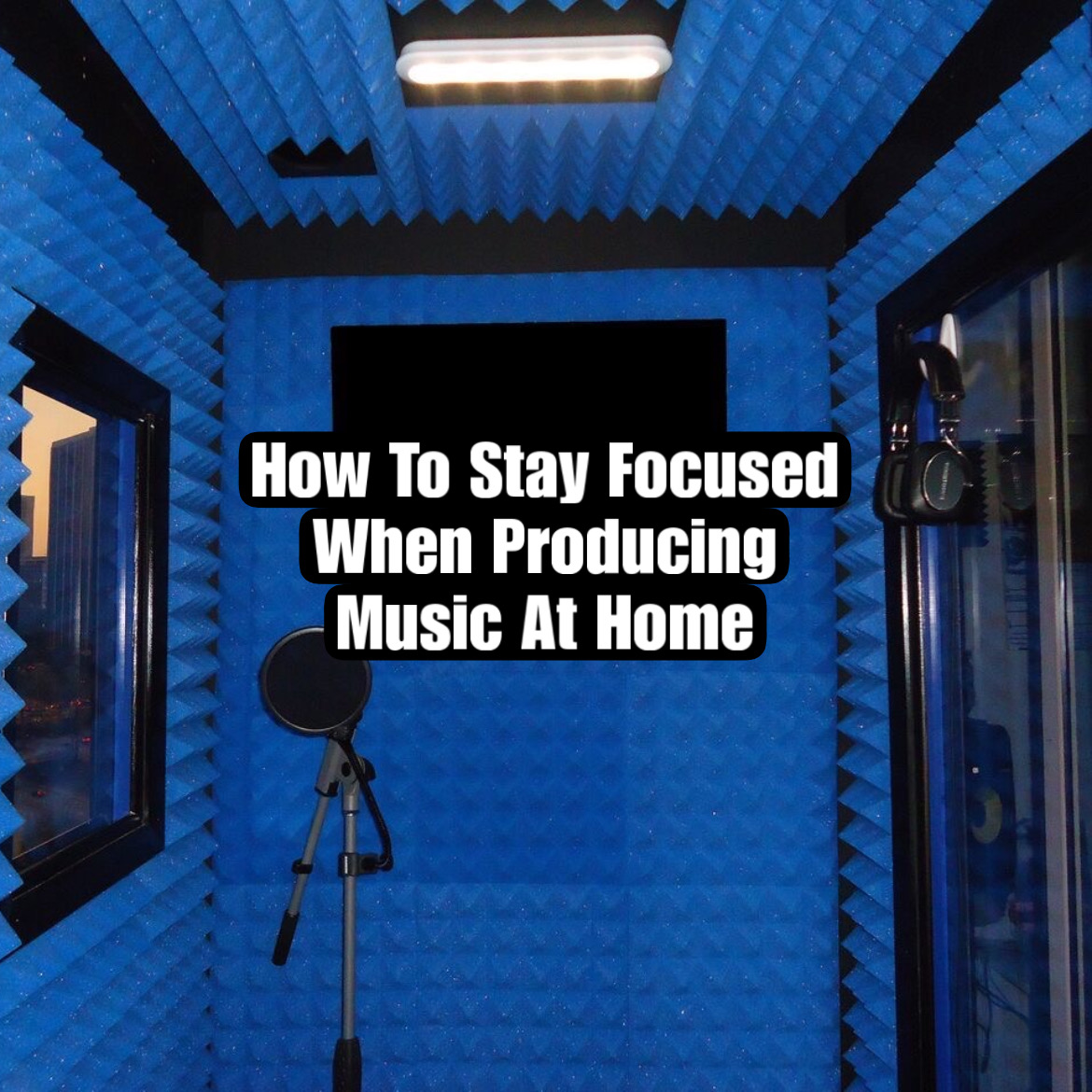
So 1st is your environment and setup. When you think about the actual place that you are creating your music in, it has to be something that you can devote your time and your energy better yet into that specific craft.
This is where the power of focus ends up serving you much better in the long run with the career you’re choosing. Even if it’s a hobby, it comes down to producing your best efforts. Part of that includes having things that put you in the same emotion and mind state that gets the desired goal produced.
It goes into some of the things that we mentioned when it comes to your emotions. If you’re looking to get a specific feeling that you are trying to put out there and draw one out of your intended crowd, your environment itself could do that.
For example, It could be cold in the room you’re at, and it ends up playing a role in what you’re saying, plus, how it’s being said.
There’s a lot of ways you can capture your own feelings and self when it comes to your actual environment, the setup, even the cleanliness of it. If you are in a cluttered spot, it might be a lot more tough to actually get much production out of the music you’re looking to create when this happens. And some people might be able to do it with a more hectic space going on.
They might like a crowded area and it brings out the best in them.
It’s more in finding out what is best for you and how that happens is usually from being able to do your research on what people who make your type of music do as well. If you can relate to their methods, and there’s several different mediums and documentaries or whatever for a media that you prefer to get an insight for, how these musicians and artists end up going into the studio. Next for staying focused is the mental discipline that is constantly overlooked. This can be the distractions that many people would deal with, whether they’re making music or not. And that can sometimes be your cell phone, television, even the people around you sometimes, there might be someone that, as much as you love them, they’re too much of a distraction for you in the place that you are looking to work at. You have to find out what is it that distracts you and either minimize or eliminate it? It sounds simple, but there’s more to it than what most of the world is willing to admit is the case. It’s, uh, discipline that can really make a difference in your output overall if you find a way to take control over this. The Ways that I actively manage and eliminate these distractions will be putting myself in a spot with little distractions, not many things there. So the actual area that I record, most of my music. has a very minimalist setup. Just usually it’ll be the light itself, maybe a few Vents. And I try to actually record around that too, where it’s not much of a hindrance with anything that I do. But yeah, maybe a minimum, maybe a minimalist set up might be best for you, or you might want something that’s a little more extravagant. It’s a trial and error thing and it doesn’t usually take long to figure out what it is that works best for you. Then is your session structures. This is another discipline that you can look to get a grasp on that’ll make a difference too. This will be. Maybe. Picking a certain time that you choose to do a certain aspect of your music production, whether that’s browsing through a array of beats or maybe it’s writing lyrics, gathering your inspiration, viewing your muses. or doing anything that you consider as your profit producers, if we’re still looking at it as a business. Things that are specifically towards your music and you creating the way you’re going to see it and take it seriously. Once you are able to capture what that activity is and make a list of what these things are, you might have a set structure for when you actually start working on these, or even a set place that you end up doing this as well. And then with that is your creative direction. If you have an intention on what it is that you are looking to get out of it, that makes the process itself much more easier. It’s as simple as going in and out of a door at that point because you already understand what the goal, the mission is in that case. Sometimes just having creating a song in mind is too broad of a goal, and from that, you end up spending way, much more time and making it way, much more complicated than what it has to be in order just to get something going creatively. Sometimes there’ll be something that you absolutely already understand that I do not like what I just made, and it’s not even going to be released. But you have your base, the framework of where you’re trying to go with things. You’re gonna be able to review this footage if you are anyone out there that’s an athlete and understand how that goes with reviewing how you did with your last performance. What that is, is you are able to build off of it and improve it for the next thing and you have something to start off of, which will make you that much more confident moving into the next session because you already have something to work with at that point. In time. Then it would be habit building. This is where you start figuring out how seriously you’re taking your craft. This will be when you are thinking about things that you do in the now, which will affect you later when it comes to that, in this case with your music, whether your habits are things that help or hurt you, it’s going to be best to be aware of what these habits are and understanding what they do to influence you. As a musician. It could be something from Smoking, for example, if we need to throw something out there that’s a little more obvious, where some people are not aware of what the trade-offs are. Sometimes people get a little more creative when they do that and they think of that where it’s allowed to help them compose and make concepts that they like a lot. But there’s some things that can affect someone where they realize that that habit actually hurts them. And it could be something from messing with their voice, for their vocal presence, whenever they get on a mic, is for anyone that’s more of a lyricist and prefer to put their vocals on top of beats. Or it could be something from biting their fingernails if you’re a guitarist and you understand that you’re going to be having the camera on your fingernails a lot or something, and just these small things, minute, that a lot of people don’t tend to think, make a difference, end up doing that, and it affects your confidence. Ultimately, that’s going to be one of your number one selling points as a musician. So being able to be aware of your habits end up making a huge difference in the music production that you’re going to be doing when you’re at home. And just being able to manage your environment plays a role too. Having more control over the things that happen. It can be something from having a TV that’s on and let’s say that you share a space with others. It’s co-existing, but you’re going to have to do it in an effective way to where it still serves a purpose for you, even if you end up having to make compromises as a result. Whether that’s allowing everyone else to have their fund, but you also are able to remain and stay productive too. This is where you might end up having to feel a little emotionally distant from everyone else, especially if they’re not doing the same thing that you are. But you have to take what you’re doing way more serious than what they are because of that barrier that you could be facing right then and there. Especially with home production. That’s where most people have such a struggle being taken seriously with what it is that they’re choosing to do. Just because they’re so easily accessible with where they’re at. And with that ends up being a energy and mood control challenge that anyone who’s doing a home production might have to go through where there’s different things that you feel and a roller coaster of emotions. whether you’re home or not, but you as the musician has to learn how to capture them and share them ethically and effectively. What you’re going to do is, Do everything possible in order to give yourself a proper chance to capture that. So that’s where you focus more on your bio needs, whether that’s your sleep, hydration, different things that can allow you to confidently and positively go through whatever is happening, to experience your environment and its fullness. This really tweaks your focus ability because of how you are able to perceive things, you might have more patience with what it is that you’re trying to get accomplished if you make these lifestyle choices that you’re sure will affect you one way or another. And glasses with your creative drifts. If you find yourself where you’re bouncing around all the place, thinking of different things, that is okay, especially early on. This is something that you’re going to have to realize is a normal thing. Because once you get most of your ideas out, you’re going to be able to build off the ones that you like the most. Or you can attack the ones that you didn’t like as much and learn to make it something that you like more. But these drifts, it’s just important to document, finding ways to capture what it was that you was thinking in a way that doesn’t really break what you are going through right at the moment, but you get put in that scene, so to speak, and you are able to still perform, act or capture whatever it is that everything else is. doing and what’s going on around you too.
This is an important element of creating rap music. Your lyrics are the core foundation to many that appreciate the craft. Being able to compose them and capture effective communication in this capacity is arguably one of my favorite demonstrations in entertainment. In some cases, spiritual messaging.
It’s one thing to be able to fill a beat up with a bunch of words, but it’s another to tell a story with them. It adds a layer to the craft, and takes it from only a surface level challenge, to a meaningful piece of art that holds real influence and impact with the rest of the world.
Finding the Core Message
Finding the core message in the lyrics of the raps you make is an aspect of creating rap music that arguably gets overlooked. You can do organic methods that reveal what’s really being said with peace and reflection. One of my ways in doing so this exact way is through Tea Journaling.
That’s not the point though! Finding your core message in the lyrics you create is a discovery that if made by the interested, will have a focus that’s imposed on the listener (and in some cases with the person who wrote it) to ‘keep their eye on the prize’ with what really matters.
To truly have the ability to find the core message in a cluster of lyrics, you have to know what the purpose of verses are in a song to begin with. Verses are the actual details of the song. They provide context in some cases, and maybe more questions, depending on how vague they are. Separate from the hook, they typically would be the more complex section of whatever song they’re in. When crafted correctly, they become a medium of conversation between the person who created them, and the other that’s listening.
They don’t always have to be the most profound messages though. The market and industry as a whole confirms that there’s generous representation of rap songs that have different meanings. Some of them are criticized for how thought provoking they can be, and others for what they may lack in terms of substance. We’re not gonna be the judge of that just yet, but there’s a message in just that statement alone. It’s: lyrics of all kind get discovered and captures attention rapidly.
If you’re an artist that creates their own music, and rap lyrics in this case, there’s a huge benefit that you yourself can gain from having clarity in what your core message is. If you gain this knowledge, you’re able to share that you’re aware through the likes of what you title the song, captions you label pictures on social media, and even added audio into visual productions!
Those are practical steps you can take to external validation in many cases, but if you’re trying to understand what the core message is yourself to the lyrics you created, it’s not meant for you to know yet. This might be profound in itself to say, but you as the person who creates lyrics don’t need to know every single nuance of what it is you made. That’s why you potentially will earn fans and critics that’ll fairly inform you on what they believe it to mean.
Perspective & Point of View
Perspective and Point of View is yet another element to creating rap music that’s important to the craft. Perspective is valued more when the individual is already championed for what they bring holistically as an individual. In my experience I find that someone who starts their career in rap has to build up their reputation to a certain point before their opinion and overall perspective is actually valued amongst their peers. History however has showed us that there’s other rappers that built up a reputation before anyone ever heard their music. It works that way too in where the public will give your music (in this case) a chance because of the rep you built up to that point.
Point of View is related, yet also different because of what it’s valued for. There’s not many stories that haven’t been shared yet already. What typically makes them unique though, are experiencing these familiar stories, but through the lens of a different perspective. Some of the best stories of all time got this clever flip, and made some of the largest impacts culturally.
Point of view can be added to the lyrics of your song with a secret ingredient that most neglect when they are writing lyrics to their music, that ingredients is imagination mixed with a bit of the golden rule. This is the most efficient way to go about doing it because It challenges you to think with perspective in mind. You possibly tap into a line of thinking that could be different from your own personal thought pattern, but still get the credit for at least pretending to be believable from that character. The biggest factor that’s gonna play a role in your success here is to be believable, and in most cases it happens by being accurate.
The importance of perspective is even revealed in the whole ecosystem of rap music when you consider that it’s an indicator in many ways. Perspective reveals who’s actually considered “hot” in the genre. It lets us know (usually after discussion) who’s relevant. We get a better idea collectively as to who we really resonate with and feels they speak directly to us when breaking down their lyrics. It actually wouldn’t be too far fetched of a thought to believe that perspective literally connects our mindsets.
Story Structure: Explaining The Beginning, Middle, End
The story structure is the roadmap to the project in general. That applies to both singles and full bodies of work. This concept is actually pretty similar to how our favorite stories are crafted. There’s an origin, eventual conflict, and conclusion of some sort. I find that it’s most applicable when focusing on classic bodies of work. There’s a Man on the Moon physical CD that I still have that proves the technique is employed intentionally with great rewards as a result. Specifically, this album has 3 acts, and actually has a follow-up album that keeps this same theme.
Detail & Imagery
Details are important to have present because from a technical standpoint, they extend the length of a song. They could potentially create opportunity for the artist to continue an entire series potentially! It host been until possibly the last decade arguably in where specifies that’s added to a song actually connects the dots for issues that would potentially return to bite the rapper later on down the line.
Rhyme Schemes & Narrative Flow
Rhyme schemes are probably one of the most entertaining parts about rap lyrics, at least from a listener’s ear. This can be one of the technical parts of rap that gets over emphesized actually. It can be a tremendous focus to balance because of how well people believe they have to be in this area when making rap lyrics of their own.
Emotional Authenticity
Emotional authenticity, whether it’s admitted to be or not plays a role in how an overall song is perceived. But when applied specifically to rap lyrics, emotions are a huge source of leverage when you notice rap sub genres that’s making noises because of their popularity in specific areas.
Algorithms for DSPs are getting even more sophisticated in identifying what’s popular with mainstream cultures and beyond. Clearly songs that specifically tug at
emotional strings are gaining favor. And from an artist standpoint, this tends to come across as genuine when you’re able to communicate what you really care about.
Punchlines & Memorable Moments
Punchlines and even memorable moments are the next factor that’s taken into consideration with creating rap lyrics. This is where your Witt comes into play. You’re able to really show how clever you can be when making your words rhyme and releasing at the times you do.
The Impact of Audio Branding: Elevating Brand Identity through Logo Music Production
Audio branding is one of the single most important things you’re going to learn in home music production.
It makes up your brand identity. You have to understand the importance of that to really appreciate what it can do.
Your brand audio wise is going to be the sound’s genetic code. Your audience will have a distinct memory with your sound.
Drums, Guitars, Piano Strings, these are all sounds that will make up the sound that most people will hear when they think of your brand. That can be highly impactful when that should be the goal when building your fanbase. Tack on lyrics and anything extra, you then get an even greater responsibility on the image of your brand. Not to sound psychic but that tells a story of how powerful music can be in how you’re perceived. It taps into emotions that helps in these ways.
Understanding the Importance of Brand Identity: How Audio Branding Fits In
Audio branding is an aspect that‘s really under-appreciated when you’re defining brand identity.
But to really understand what it is, you have to also understand what the traditional aspects are as well.
This typically includes your principles, values, amongst other intrinsic things.
Don’t forget your external attraction points either! These are the Things that are seen visually by other people.
Your logos, the way you dress, it could even be your dances. They’re things you’re known for doing.
There’s a variety of Things that are aesthetically pleasing that’ll help set you apart from other musicians and performers alike.
One aspect that‘s highly important are your audio cues. I define them as your ad libs and catchphrases.
They honestly set a good majority of artists apart from the next Joe Blow that decides to create music.
Being compared is something that’s going to happen inevitably, and it happens at all stages of your career.
Your adlibs could possibly change, although when you create it, it usually sticks.
There’s not many people that change it, but that doesn’t mean it can’t.
Sometimes it’s a high screech. It can be a unique tone.
Even a co-sign from a familiar ambassador for whatever gender you choose can be the cue.
It’s usually added into a mix of some sort.
And that applies whether it’s a song you create, or even a video production with an intro.
There are different times that your audio queue will speak for itself.
In many ways, you could think of it as having your own bat signal.
It’s Something that puts your stamp or trademark on anything that’s Including you as the recording artist.
The emotionally engaging experience of your brand is the culmination of all these things.
So to have a Great idea of how all that works is ideal, But if you’re also looking just to increase the Development of your brand’s experience, You will benefit greatly from Being in tune with your own emotions.
If you can understand yourself, then it will be much better and easier to understand others.
You’re gonna continually pour into yourself in a way where it’s going to continue to grow and flourish.
And with that, it invites other personalities.
This is when you really start to expand (and even add) more layers to who you are personally because you‘re captivating the attention of other people that might not necessarily be the same as you, but they appreciate who you are.
And if you’re doing your job, then you’re also looking to grow with them as well.
But when you’re growing with them, you’re going to be including the emotions that they experience too within your craft.
Psychological Impacts of Logo Music: Creating emotional connections through sound
Creating emotional connections through your sound is a psychological impact when you’re creating what’s known to be logo music.
Depending on what the artist is shooting for, there will be intentional feelings that eventually become extracted subconsciously from listeners when they’re in the process of composing.
This is where being in touch with your internal values and principles become a factor with the messages that are shared.
They ultimately bring out something from the people who are listening as well.
These things that motivate you become part of your brand, And with the marketing efforts that you incorporate with them, it creates brand familiarity.
That brand familiarity is highly important When you’re creating in this process, because: the more you create sonically, It feeds your visual as well.
This gets to where People, Include what I like to call a ‘yin yang effect’, where once they see your visuals, they think of the music that you have behind it.
It works vice versa too, where the music that you create becomes a reflection of the visuals that you put out as well too.
If I were to recommend an artist something that they can do just to get the listeners to really remember what they’re putting into their music, It’s: creating a challenge within your art.
Challenges are one of the things that stick with people for the long term, Because you’re either going to accomplish that goal or you’re not.
And these have an effect that can be traumatic in nature or blissful.
It’s important to remind you: it boils down to the results that they got.
These results stick with them. They‘ll remember that because they ended up getting an activity posed through the media that you create as an artist.
A last point to make, that’s arguably most important is the brand recognition.
Specifically how it translates to emotional loyalty.
When people decide to attach themselves and align with your brand, they will gain numerous experiences.
Potentially Your brand could be the difference in whether they are enjoying life as they continue going on about it or dislike what they’re going through.
You become either a blessing or a burden at this point, And when they continually recognize and see your brand, whether it’s posted on social media or even Seeing on a flyer in the streets of the city, The people that become aware of what your brand is, are going to see how others feel when your brand comes up.
It can be that or What they feel already with the experience they have with your brand already.
So with that, their Emotional loyalty can either be solid or fickle, But that really boils down again to what it is that your brand did for them Individually.
So use that creativity If you’re in tune with the demographics, of what, type of people actually support your brand.
You continually focus on serving them, and You’re going to start experiencing real power and feeling the fruits of nurturing your identity.
Case Studies of Effective Audio Branding: Exploring real-world examples highlighting success and challenges
Today I want to discuss an effective producer I believe qualifies for branding their audio at a professionally high level.
That audio artist is Metro Boomin.
Metro Boomin is an Atlanta-based producer that has a plethora of hits which could be studied.
And that’s to anybody that would like to get an idea of effective audio branding.
But I picked Him, because He does what this lesson is about, At a level that’s worth Studying, especially if you are learning about Audio branding still.
One of the projects that he’s put out that I feel qualifies the best is with the Across the Spider-Verse project.
This is fairly recent Although the movie’s been out for a few years now.
But because of his catalog and how popular the music that he produced, blew up to be, I believe it opened up doors for other productions outside of music alone to incorporate his style and flair into their projects.
This qualifies for audio branding at an effective level, if you ask me.
We can look at some of the songs that he produced that would have led him up to that point, And it won’t be too much trouble to find records that he produced, which would go on to be gold and platinum, even diamond before the time of getting the deal with Sony for the Spider-Man movie.
And he’s not the only producer that is able to do this, I believe.
There’s some I believe are just as qualified and capable, granted, the same circumstances where they have A highly respectable catalog.
Those producers Could be. Mike will Made It, Tay-Keith, hit-boy, and Even some more classic names, like Jermaine Dupree.
There’s just a bunch where once you have a sound that’s stamped, it’s almost a guaranteed hit with an artist that gets on that beat.
They become a signature in a way that becomes a product in itself.
The Role of Sound in Differentiating Brands: Setting brands apart from competitors with unique soundscapes
Sounds are an important part of differentiating brands apart from each other.
They do this through Creative means.
Some have regular jingles that gets played typically whenever any type of advertisement or marketing campaign is employed.
Others can even be even more simple in the case where they have audio recordings that reflect the views of the brand that they are pushing at that point in time.
The specific differentiator (in this case) could be as minuscule or large as you want it to be.
It can cover the familiarity of a specific voice, Or The speed of the sound.
It could even be the method of how the sound is available to be shared.
It depends on how particular you want to get as the person who manages the audio portion of your brand.
It’s important to have this presence with any brand you create though.
That’s because it adds variety to your methods of Promotion.
One of the most common (and perhaps always be that way) is the text version.
So having your Reading materials that represent your brand is probably the most common.
Everybody has to read to some effect, but the next would be, most likely, the audio—something that you can listen to.
It could be visuals as well, but Audio is up there with the important variations of media and brand development.
So, Putting this type of effort towards adding variety to your brand is, without a doubt, worth your time.
FAQs
How does a sound logo (a short musical signature or audio logo) help a brand stick in people’s minds better than just visuals alone?
It’s effective additions to our senses and getting more bang for buck for lack of better terms maybe, but it sticks with challenging our memories in creative ways.
If someone couldn’t picture something in the moment, but can hear the sound that’s associated with the brand, it suddenly becomes easier to tie with the imagery.
It’s incredibly helpful with visual projects to have exclusive sound that belongs only to the production.
Imagine watching a movie or your favorite tv show without any music whatsoever in the final cut.
It’s hard to picture it being the same.
That should be a great idea of how powerful the adding of things as simple as a musical score which actually is not far from common to be presented with the logo of some of pop culture’s beloved productions.
What emotions and values do you want your brand’s music to convey when someone hears it?
The emotions and values that you want to communicate through your brand’s music should be situational in observation. It should reflect the same feelings you have when thinking about the intention behind it. There’s studies and research available that could suggest which pain points are most effective, and with that type of information, you can craft messages that are able to be conveyed through that emotion.
That information should give you better understanding with what narrative to move forward with when creating each song. This actually supports the earlier point about where creating music that matches a video works well for the recording artist, because they have screenplays available to reflect on and guide them through the concept of each track.
The goal for this brand is to provide meaning with each sound. If you connect our brand logo to a particular sound, it’s stamped that we’re part of it. Ultimately it’s discovering identity within an industry with plenty of different sounds and such that could be categorized.
Songwriting has always been a big part of my life.
I’ve spent countless afternoons scribbling phrases in notebooks, listening to artists from different genres, and playing with rhymes just for fun.
For me, writing songs is more than just putting words next to each other—it’s a way to tell my story and connect with people who might be feeling the same things as I am.
The Power of Storytelling in Songwriting
Great lyrics have a way of drawing people in, making them feel seen, heard, or understood.
When I approach songwriting, I try to remember that every line has the potential to hold a memory or spark an image in someone’s mind. Storytelling in a song isn’t always about grand scenes; it can be about a single moment, a feeling, or a tiny detail that becomes special through music.
People have been telling stories through song for centuries. Folk ballads, rock epics, and hip hop verses all pass down emotions, warnings, jokes, and dreams from person to person.
It’s wild to think a three-minute track can carry as much emotional weight as a novel. The best part: I don’t always know who will hear my song, but I know that lyrics leave an impact.
Building Your Songwriting Foundation
My own adventure with songwriting started by drawing from my hobbies and values.
I look to the books I read, the movies I love, and the small details from my daily life; sometimes even the way the light cuts through my window sparks ideas. Being open to art in all its forms helps my writing stay fresh. For anyone starting out, I’d suggest the same: soak in poetry, photography, or whatever inspires you, and see it from your perspective. When lyrics come from a place you care about, they connect more strongly with others too.
I keep a running log of things that catch my attention—something funny I realized from an earlier conversation, a feeling after a without, or a youtube video. I might write these down, whether in a notebook or in my phone, gives me material to revisit when I’m feeling stuck. Sometimes the smallest moments turn into the backbone of a song.
How to Structure Lyrics for Impact
Lyrics are most effective when they have some structure. A classic song often follows a pattern like verse, chorus, verse, chorus, bridge, and then chorus again. The verses move the narrative along, while the chorus sums up the main feeling or message. I like to spend extra time on my choruses, finding a phrase that is easy to sing and remember, while still having depth.
Sometimes, I freestyle with words just for the fun of it. I’ll play around with sounds, rhymes, and rhythms, letting myself try weird or unexpected combinations. Not every experiment makes it into a finished song, but this type of play keeps my writing fresh. It also helps me stumble upon new ways to say things or to tell a story from a new angle.
Verse: Introduces the story or emotion in detail.
Chorus: The key message or feeling, the part you hope everyone sings back to you.
Bridge: Offers a twist or new perspective before resolving the song.
Writing lyrics with a clear emotional arc—from a problem or scene to discovery, change, or resolution—makes songs more satisfying for listeners. Simple language works well, especially when it’s honest.
Making Time and Space for Songwriting
Setting aside physical time for writing is something I find really important. I treat my practice like an appointment (even if it’s only ten minutes during a busy day). A habit of regular writing means I get better over time, just like with playing an instrument. The more I write, the easier it is to express what I actually want to say, and I notice this helps me become a better speaker too, which is super helpful when it’s time to record or perform.
I also try changing up my writing space; sometimes I write at my kitchen table, other times in a park or at a friend’s place. New surroundings can spark inspiration in surprising ways. Occasionally, I even rearrange my writing supplies or swap out my instruments, which brings a fresh vibe to my process.
Challenging Yourself and Growing as a Writer
Testing my skills by entering songwriting competitions or joining open mics has pushed me to improve my craft. Having a deadline makes me finish songs I’d otherwise leave half-done, and getting feedback gives me ideas for what to try next. Even if a contest feels intimidating, it’s a great way to get outside my comfort zone. Often, I stumble upon different styles or meet other writers who share my passion.
Sometimes, I set up little challenges for myself. For example, I’ll write a song about an object in the room or try to use a new word in every line. These exercises force me to be creative and intentional with every choice I make in my lyrics. Not only does this step up my skills, but it often leads to really eye-catching lines I wouldn’t have written otherwise.
Experimenting With Your Songwriting Voice
Finding my own voice as a songwriter took time and a lot of trial and error. At first, I copied the artists I admired. Eventually, I realized my favorite songs had a unique point of view that only I could write. I experimented by switching between singing and speaking lines, writing from a fictional character’s view, or pushing myself to explore feelings that were hard to pin down.
Sometimes, I revisit old lyrics and try singing them in different ways; a little faster or slower, bright or moody. Recording myself and listening back helps me pick up on what works and what doesn’t. The more I experiment, the closer I get to a style that feels comfortable and authentic. There’s something really rewarding about uncovering my unmistakable artistic fingerprint over time.
Learning From Other Songwriters
I try to spend time listening intentionally to a wide range of music. Rather than just enjoying the melody, I pay attention to the lyrics: what makes them stick in my memory, which lines hit the hardest, and how verses build toward the chorus. I look for patterns and note what I appreciate, like clever wordplay or a raw, simple admission.
When I find something that resonates with me, I ask myself how I can bring that into my own work. Maybe it’s the way an artist uses repetition, or how they paint a scene with specific details. This practice isn’t about copying, but about growing from what I appreciate and tracking down new directions for my own songwriting. Sometimes, I even research interviews or behind-the-scenes stories from songwriters, which offers a deeper look into their creative process and inspires fresh approaches.
Involving Community and Sharing New Finds
I find it really helpful to share new music I stumble upon with friends and to encourage them to do the same. Hearing other people’s favorites often pushes me to step outside my usual listening habits. These swaps make the process more fun and help us all track down new sources of inspiration.
Building a little songwriting community, whether online or in person, brings in fresh perspectives and keeps encouragement flowing. Sometimes, a comment or idea from a friend opens up a new way for me to tell my story. Keeping the conversation going and making space for everyone to share their experiences helps everyone grow as writers. Recently, we’ve even started a monthly song circle, where everyone shares a new song—even unfinished ones—which leads to great support and constructive feedback all around.
Frequently Asked Questions
Question: How can I start writing lyrics if I’ve never tried before? Answer: Start by writing a simple story or feeling from your own life. Focus on a specific moment or detail and use clear, honest language. Don’t worry about making it perfect; just put your thoughts down. Over time, your writing will get stronger the more you practice.
Question: I can’t play an instrument. Can I still write songs? Answer: Definitely. Some of my ideas come when humming or speaking thoughts aloud, and I jot them down before putting them to music. There are plenty of free tools for making simple melodies online, or you can join forces with musicians who enjoy working with lyricists. Also, recording on your phone or experimenting with singing over backing tracks is a good way to get started.
Question: How do I know if my lyrics are good? Answer: If your lyrics feel honest and help you express what you intended, you’re on the right track. Sharing your work with others and hearing feedback can help too. Songs grow stronger with rewrites and time. Being open to constructive feedback while trusting your gut will push your writing forward.
Question: What do I do when I’m stuck for ideas? Answer: I go back to my list of notes and experiences, or I listen to music I wouldn’t normally pick. Sometimes I try a quick exercise, like writing a song about yesterday or describing a place I love. Giving yourself permission to write something silly or experimental can open up creative doors. Taking a walk or doing something unrelated to music sometimes helps the mind reset so ideas can flow naturally.
Wrapping Up: Embracing the Adventure of Storytelling Through Song
Writing lyrics that tell a story is both challenging and rewarding. My best songs have come from real experiences, honest feelings, and a willingness to try new things. Whether you’re keeping a notebook of lines, listening for inspiration everywhere you go, or sharing tunes with a community who cheers you on, you’re building your own voice as a songwriter, one word at a time. Sometimes all it takes is setting aside a little time, being open to different kinds of art, and having fun with language to unlock something special. The more you put yourself out there and let your curiosity lead you, the more songwriting becomes an adventure all its own.