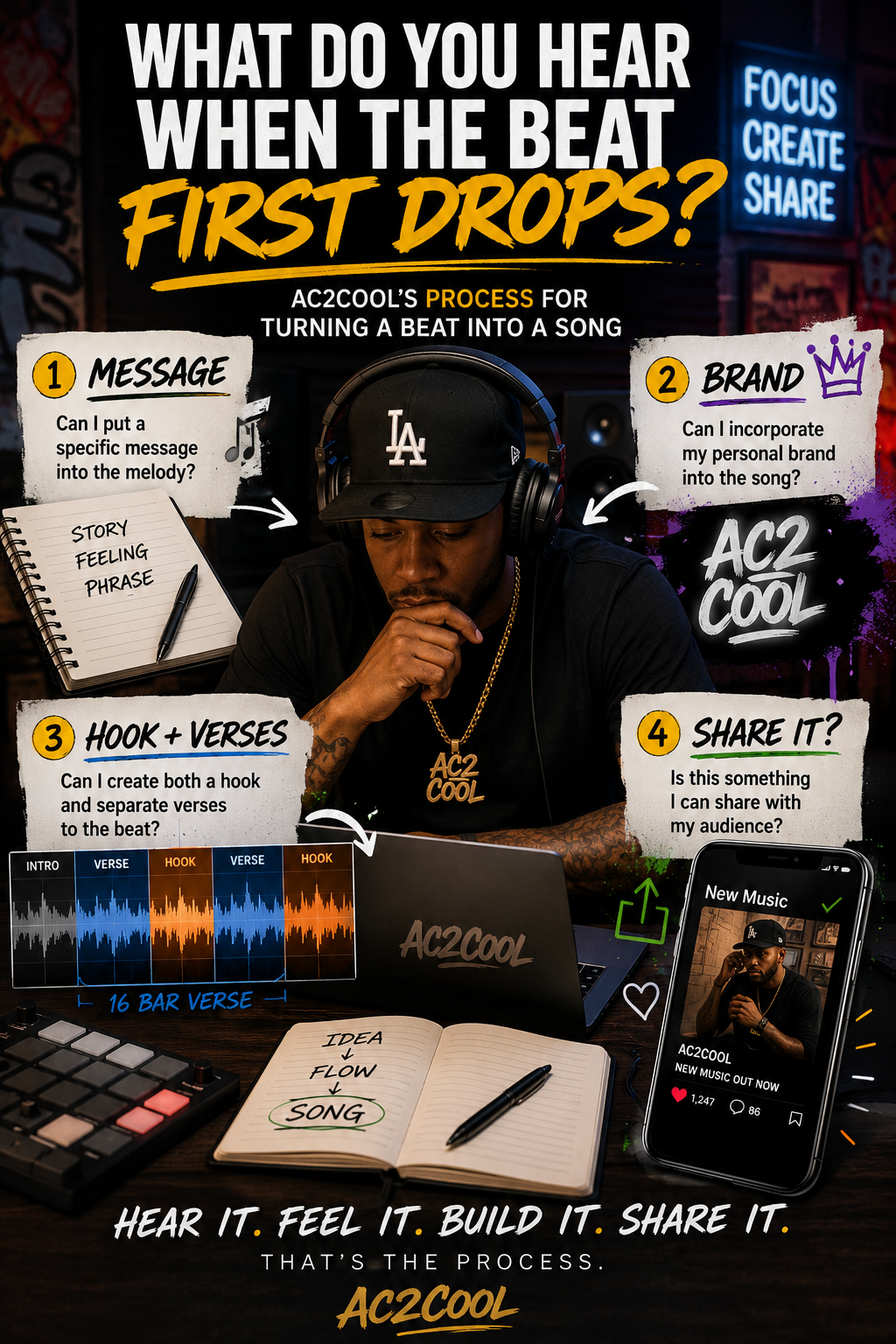
When I first hear a beat, I’m not necessarily trying to write immediately. I’m listening for what the beat makes me want to do—where I naturally hear my voice fitting, what kind of energy it creates, and whether a flow starts forming before I’ve even decided what I want to say.
What Is Your Process When First Hearing a Beat to Rap On?
I’ll first decide on if there’s a specific message I’m able to put in the melody. From there I’ll find ways to incorporate my personal brand into different things like the bars and design of the song. I’ll also look for if I’m able to create both a hook and separate verses to the beat. And last is probably something along the lines of if I’m able to share this on my socials.
Can I Put a Specific Message Into the Melody?
One of the first things I listen for in a beat is whether its melody and tempo give me an opportunity to communicate a specific message. Sometimes a change in the tempo will immediately make me think of a word or phrase that simply feels good to say at that exact moment. Once I hear something like that, I can start building the lyrics around it.
The instrumental becomes something I’m constantly writing around. For the most part, I may already have a general structure for what I’m trying to say, but actually hearing the beat can completely change how that idea needs to be expressed. A certain pace might sound more appropriate for an emotional topic, while another beat might make the same idea feel better as something energetic or straightforward.
That’s also why I don’t necessarily know what form the finished song will take when I first press play. The sound can influence whether I turn an idea into an entire story or build the record almost like an ode to a particular phrase that stood out to me.
I’ve also noticed that West Coast-inspired beats tend to put me especially in the moment. There’s something about that style of production that makes it easier for me to react to what I’m hearing instead of overthinking what I’m supposed to write.
That’s ultimately what I’m looking for during this stage. I may know what I want to say, but I want the instrumental to show me how that message wants to sound.
Can I Incorporate My Personal Brand Into the Song?
This is one part of the process where you really have to be in tune with what your personal brand is through the thick of it all. For me, getting on a beat isn’t only about finding words that rhyme or proving that I can rap over the instrumental. It’s another opportunity to communicate something about myself.
The more I focus on this, the more I start noticing moments that genuinely resonate with me. There may be parts of my personality, experiences, interests, opinions, or ambitions that I don’t feel I’ve shared through my music yet. Every time I get on another beat, I have an opportunity to bring some of those things forward.
That can show up directly through the bars, but it can also influence the entire design of the song. The references I make, the perspective I approach a subject from, the attitude behind a line, and even what I decide is worth talking about can all contribute to making the record feel connected to my identity.
I don’t necessarily want every song to explain everything about me. Instead, I look at each record as another piece of the larger picture. One song might reveal something about my sense of humor, another could reflect an experience I’ve had, and another might show what I’m trying to accomplish.
That’s why knowing your personal brand becomes so important. The beat gives you somewhere to rap, but what you choose to reveal on it gives people another reason to understand and remember who you are.
Can I Create Both a Hook and Separate Verses to the Beat?
At this point, I’m obviously thinking more about songwriting. It’s more than putting a few rhymes together that might sound good. I’m listening for where certain topics and ideas are supposed to go within the song because some moments are simply more appropriate for them than others.
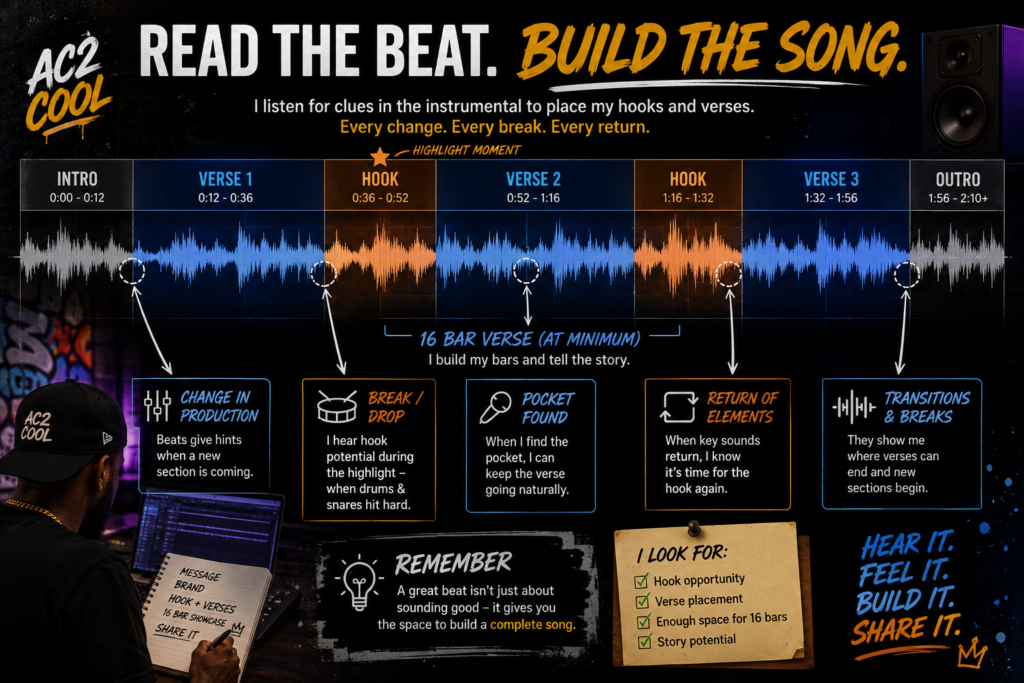
One thing I’ll listen for is where a hook could fit. I tend to hear that opportunity around a break from what I consider the highlight of the song. If I’m hearing a section where the drums, snares, and overall production feel especially strong, for example, I’ll pay attention to what happens around that moment and whether there’s space for something memorable and repeatable.
Verses come a little more naturally to me. I tend to lean heavily on my bars because I’m most comfortable creating something that’s meant to keep going. Once I find a pocket, I can usually continue building on it rather than immediately looking for a place to stop.
The beat itself can provide plenty of indicators for where those verses are supposed to go. Changes in the production, transitions, breaks, or the return of certain sounds can help me recognize different sections. I’m usually finding opportunities to add verses throughout the beat rather than restricting myself to one obvious spot.
A lot of the beats I gravitate toward also give me enough room to create at least a 16-bar showcase. That’s important because even if I don’t end up turning every instrumental into a complete song with multiple verses and a hook, I want to hear enough potential in it to really demonstrate what I can do lyrically.
That’s one of the questions I’m ultimately answering when I first hear an instrumental: does this beat only give me a few good rhymes, or does it give me enough to actually build a song?
Can I Share What I Create With the Rest of My Audience?
It’s perfectly normal to consider whether you’re actually going to be able to do anything with the song once you’ve made it. I can like a beat, come up with a message, write the bars, and hear where the hook should go, but I still want to know whether I’ll be able to share the finished result with the rest of my audience.
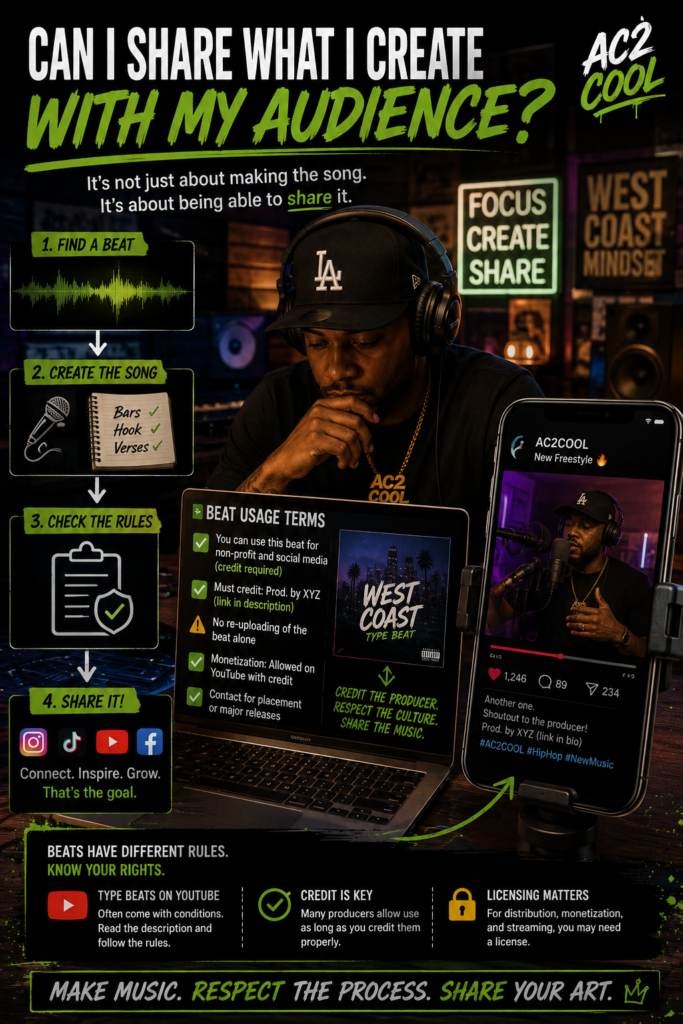
This became especially important for me because I started out finding type beats on YouTube. When you’re using beats that way, you can come across different rules surrounding what you’re allowed to record, post, distribute, or monetize. That’s why I’ve learned to be a little more cautious about which beats I decide to rap over and potentially reshare.
In some cases, the producer may allow artists to use a beat as long as proper credit is given. Other beats may have different licensing requirements depending on what you plan to do with the finished song. I don’t assume that finding a beat publicly available automatically means I can use it however I want.
That matters because social media is another opportunity for the music to reach people. If I create something I’m excited about, there’s a good chance I’ll want to turn part of it into a post, performance clip, preview, or another piece of content for my audience.
So this becomes one of my final considerations when I’m first hearing a beat. I’m not only thinking, “Can I rap on this?” I’m also thinking, “If I make something I’m proud of, will I actually be able to share it?”
For me, that’s worth figuring out before putting a lot of creative energy into the song.