Songwriting has always been a big part of my life.
I’ve spent countless afternoons scribbling phrases in notebooks, listening to artists from different genres, and playing with rhymes just for fun.
For me, writing songs is more than just putting words next to each other—it’s a way to tell my story and connect with people who might be feeling the same things as I am.
The Power of Storytelling in Songwriting
Great lyrics have a way of drawing people in, making them feel seen, heard, or understood.
When I approach songwriting, I try to remember that every line has the potential to hold a memory or spark an image in someone’s mind. Storytelling in a song isn’t always about grand scenes; it can be about a single moment, a feeling, or a tiny detail that becomes special through music.
People have been telling stories through song for centuries. Folk ballads, rock epics, and hip hop verses all pass down emotions, warnings, jokes, and dreams from person to person.
It’s wild to think a three-minute track can carry as much emotional weight as a novel. The best part: I don’t always know who will hear my song, but I know that lyrics leave an impact.
Building Your Songwriting Foundation
My own adventure with songwriting started by drawing from my hobbies and values.
I look to the books I read, the movies I love, and the small details from my daily life; sometimes even the way the light cuts through my window sparks ideas. Being open to art in all its forms helps my writing stay fresh. For anyone starting out, I’d suggest the same: soak in poetry, photography, or whatever inspires you, and see it from your perspective. When lyrics come from a place you care about, they connect more strongly with others too.
I keep a running log of things that catch my attention—something funny I realized from an earlier conversation, a feeling after a without, or a youtube video. I might write these down, whether in a notebook or in my phone, gives me material to revisit when I’m feeling stuck. Sometimes the smallest moments turn into the backbone of a song.
How to Structure Lyrics for Impact
Lyrics are most effective when they have some structure. A classic song often follows a pattern like verse, chorus, verse, chorus, bridge, and then chorus again. The verses move the narrative along, while the chorus sums up the main feeling or message. I like to spend extra time on my choruses, finding a phrase that is easy to sing and remember, while still having depth.
Sometimes, I freestyle with words just for the fun of it. I’ll play around with sounds, rhymes, and rhythms, letting myself try weird or unexpected combinations. Not every experiment makes it into a finished song, but this type of play keeps my writing fresh. It also helps me stumble upon new ways to say things or to tell a story from a new angle.
- Verse: Introduces the story or emotion in detail.
- Chorus: The key message or feeling, the part you hope everyone sings back to you.
- Bridge: Offers a twist or new perspective before resolving the song.
Writing lyrics with a clear emotional arc—from a problem or scene to discovery, change, or resolution—makes songs more satisfying for listeners. Simple language works well, especially when it’s honest.
Making Time and Space for Songwriting
Setting aside physical time for writing is something I find really important. I treat my practice like an appointment (even if it’s only ten minutes during a busy day). A habit of regular writing means I get better over time, just like with playing an instrument. The more I write, the easier it is to express what I actually want to say, and I notice this helps me become a better speaker too, which is super helpful when it’s time to record or perform.
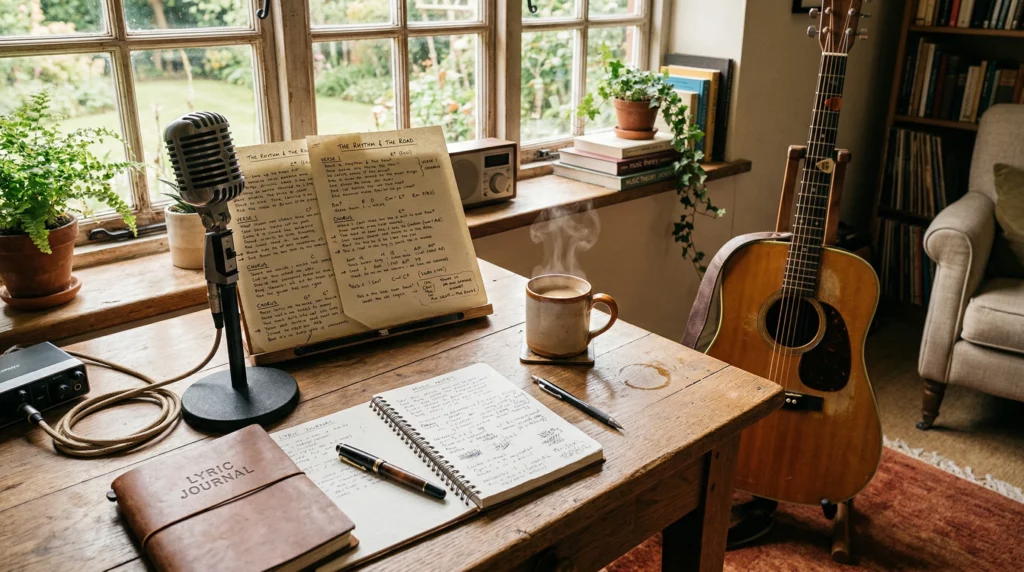
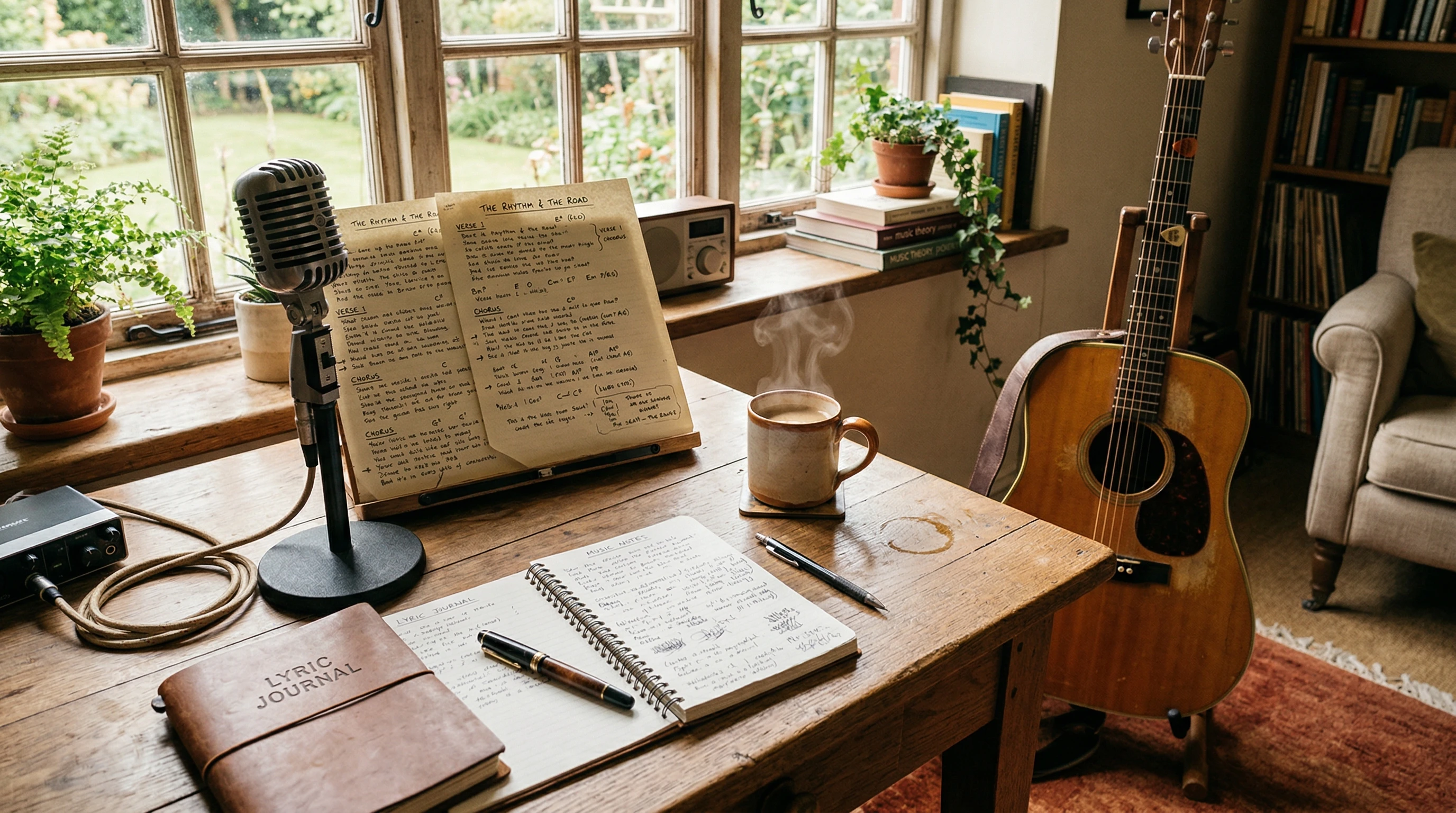
I also try changing up my writing space; sometimes I write at my kitchen table, other times in a park or at a friend’s place. New surroundings can spark inspiration in surprising ways. Occasionally, I even rearrange my writing supplies or swap out my instruments, which brings a fresh vibe to my process.
Challenging Yourself and Growing as a Writer
Testing my skills by entering songwriting competitions or joining open mics has pushed me to improve my craft. Having a deadline makes me finish songs I’d otherwise leave half-done, and getting feedback gives me ideas for what to try next. Even if a contest feels intimidating, it’s a great way to get outside my comfort zone. Often, I stumble upon different styles or meet other writers who share my passion.
Sometimes, I set up little challenges for myself. For example, I’ll write a song about an object in the room or try to use a new word in every line. These exercises force me to be creative and intentional with every choice I make in my lyrics. Not only does this step up my skills, but it often leads to really eye-catching lines I wouldn’t have written otherwise.
Experimenting With Your Songwriting Voice
Finding my own voice as a songwriter took time and a lot of trial and error. At first, I copied the artists I admired. Eventually, I realized my favorite songs had a unique point of view that only I could write. I experimented by switching between singing and speaking lines, writing from a fictional character’s view, or pushing myself to explore feelings that were hard to pin down.
Sometimes, I revisit old lyrics and try singing them in different ways; a little faster or slower, bright or moody. Recording myself and listening back helps me pick up on what works and what doesn’t. The more I experiment, the closer I get to a style that feels comfortable and authentic. There’s something really rewarding about uncovering my unmistakable artistic fingerprint over time.
Learning From Other Songwriters
I try to spend time listening intentionally to a wide range of music. Rather than just enjoying the melody, I pay attention to the lyrics: what makes them stick in my memory, which lines hit the hardest, and how verses build toward the chorus. I look for patterns and note what I appreciate, like clever wordplay or a raw, simple admission.
When I find something that resonates with me, I ask myself how I can bring that into my own work. Maybe it’s the way an artist uses repetition, or how they paint a scene with specific details. This practice isn’t about copying, but about growing from what I appreciate and tracking down new directions for my own songwriting. Sometimes, I even research interviews or behind-the-scenes stories from songwriters, which offers a deeper look into their creative process and inspires fresh approaches.
Involving Community and Sharing New Finds
I find it really helpful to share new music I stumble upon with friends and to encourage them to do the same. Hearing other people’s favorites often pushes me to step outside my usual listening habits. These swaps make the process more fun and help us all track down new sources of inspiration.
Building a little songwriting community, whether online or in person, brings in fresh perspectives and keeps encouragement flowing. Sometimes, a comment or idea from a friend opens up a new way for me to tell my story. Keeping the conversation going and making space for everyone to share their experiences helps everyone grow as writers. Recently, we’ve even started a monthly song circle, where everyone shares a new song—even unfinished ones—which leads to great support and constructive feedback all around.
Frequently Asked Questions
Question: How can I start writing lyrics if I’ve never tried before?
Answer: Start by writing a simple story or feeling from your own life. Focus on a specific moment or detail and use clear, honest language. Don’t worry about making it perfect; just put your thoughts down. Over time, your writing will get stronger the more you practice.
Question: I can’t play an instrument. Can I still write songs?
Answer: Definitely. Some of my ideas come when humming or speaking thoughts aloud, and I jot them down before putting them to music. There are plenty of free tools for making simple melodies online, or you can join forces with musicians who enjoy working with lyricists. Also, recording on your phone or experimenting with singing over backing tracks is a good way to get started.
Question: How do I know if my lyrics are good?
Answer: If your lyrics feel honest and help you express what you intended, you’re on the right track. Sharing your work with others and hearing feedback can help too. Songs grow stronger with rewrites and time. Being open to constructive feedback while trusting your gut will push your writing forward.
Question: What do I do when I’m stuck for ideas?
Answer: I go back to my list of notes and experiences, or I listen to music I wouldn’t normally pick. Sometimes I try a quick exercise, like writing a song about yesterday or describing a place I love. Giving yourself permission to write something silly or experimental can open up creative doors. Taking a walk or doing something unrelated to music sometimes helps the mind reset so ideas can flow naturally.
Wrapping Up: Embracing the Adventure of Storytelling Through Song
Writing lyrics that tell a story is both challenging and rewarding. My best songs have come from real experiences, honest feelings, and a willingness to try new things. Whether you’re keeping a notebook of lines, listening for inspiration everywhere you go, or sharing tunes with a community who cheers you on, you’re building your own voice as a songwriter, one word at a time. Sometimes all it takes is setting aside a little time, being open to different kinds of art, and having fun with language to unlock something special. The more you put yourself out there and let your curiosity lead you, the more songwriting becomes an adventure all its own.